
 Worksheets
Unit 9 Review (21-22) pt 1
Total questions: 25
Worksheet time: 15mins
Who was a fervent anti-Communist and a great admirer of Benito Musolini?
Adolf Hitler
Joseph Stalin
Francisco Franco
Vladimir Lenin
One of the new political parties to rise during the political and economic chaos in Germany after World War I was the National Socialist German Workers' Party, also known as the ____________ .
Socialist Party
Nazi Party
Fascist Party
Bolshevik Party
Adolf Hitler's autobiography
isolationism
Axis Powers
fascism
Mein Kampf
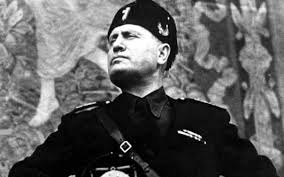
What was Mussolini's nickname?
Il Duce
Il Re
Il Sovrano
Il Monarca
What is the best definition of Fascism?
An extreme form of nationalistic militarism
An ideology that guaranteed basic rights for all citizens
An ideology that got rid of social classes
Who was Vladimir Lenin?
Communist revolutionary who went against the Russian King
Russian soldier in WWI
Wealthy businessman from Holland
Germany spy
Totalitarianism is a form of government that
asserts total control over the lives of its citizens
allows for individuality
equality distributes the wealth of the nation to its people
does not have any historical examples

How did the League of Nations respond to the Japanese invasion of Nanjing in China?
It made no statement on the invasion and took no action.
It condemned the invasion and approved military intervention.
It condemned the invasion but took no other action.
It made no statement on the invasion but gave weapons to China.

Use the historical excerpt to answer the question.
“I ask the fifty-two nations not to forget today the policy upon which they embarked [began] eight months ago, and on faith of which I directed the resistance of my people against the aggressor whom they had denounced [condemned] to the world. Despite the inferiority of my weapons, the complete lack of aircraft, artillery, munitions, hospital services, my confidence in the League was absolute. I thought it to be impossible that fifty-two nations, including the most powerful in the world, should be successfully opposed by a single aggressor. Counting on the faith due to treaties, I had made no preparation for war, and that is the case with
certain small countries in Europe.”
—Haile Selassie, Emperor of Ethiopia, Address to the League of Nations in Geneva, June 30, 1936
This appeal was in response to which of the following events?
The German annexation of the Sudetenland
The Japanese invasion of Manchuria
The Spanish Civil War
The Italian Expansion into Africa

Use the list to answer the following question.
In 1936, Hitler moved 22,000 troops into the Rhineland’s demilitarized zone. In 1938, Hitler invaded Austria and declared Anschluss. At the end of 1938, Hitler annexed Sudetenland.
Which event does the list describe?
the German violation of the Treaty of Versailles
the German alliance with Italy and Japan
the German Nuremberg Laws
the German invasion of Russia

Which eastern European country was given land which resulted in Germany being split in two?
Czechoslovakia
Poland
Hungary
Russia



