Worksheets
Unit 7 Review
Total questions: 40
Worksheet time: 2hrs 0mins

Here is a diagram with several angles (labeled with the capitalized blue letters). Identify a set of supplementary angles and explain how you knew they were supplementary.
Angle BWF and Angle FWE
Angle AWB and Angle BWF
Angle EWD and Angle DWC
Angle DWC Angle CWB
State if the statement is always true, sometimes true (could be true or false), or always false:
Adjacent angles can be complementary.
Always True
Sometimes/Could Be True
Always False
State if the statement is always true, sometimes true (could be true or false), or always false:
Vertical angles can be supplementary.
Always True
Sometimes/Could Be True
Always False
State if the statement is always true, sometimes true (could be true or false), or always false:
Complementary angles can be supplementary.
Always True
Sometimes/Could Be True
Always False
State if the statement is always true, sometimes true (could be true or false), or always false:
Complementary angles equal 90 degrees.
Always True
Sometimes/Could Be True
Always False
State if the statement is always true, sometimes true (could be true or false), or always false:
Vertical angles are next to each other.
Always True
Sometimes/Could Be True
Always False
State if the statement is always true, sometimes true (could be true or false), or always false:
Adjacent angles equal 180 degrees.
Always True
Sometimes/Could Be True
Always False
State if the statement is always true, sometimes true (could be true or false), or always false:
Right angles equal 90 degrees.
Always True
Sometimes/Could Be True
Always False

Here is a diagram of angles. Angle GAB is 170 degrees. Angle EAD is a right angle. GC is a straight line and FB is a straight line.
Find the measurement of ∠BAC.
10
20
70
15
Here is a diagram of angles. Angle GAB is 170 degrees. Angle EAD is a right angle. GC is a straight line and FB is a straight line.
Find the measurement of ∠CAD.
10
60
70
65

Three lines meet at a point as shown in the figure below. Set up an equation to find the value of c.
180-c=43
37+43+c=360
37+43+c=180
180-c=37
Three lines meet at a point as shown in the figure below. Find the value of c.
c = 137
c = 100
c = 47
c = 53

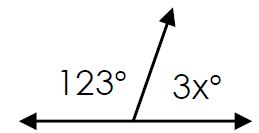
Two lines meet at a point as shown in the figure below. Set up and solve an equation to find the value of x. Find the measurement of one of the vertical angles.
x = 32
x = 21
x = 60
x = 4

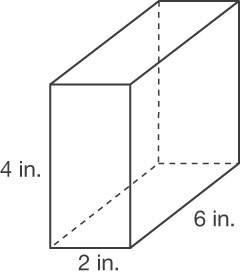
Find the surface area of the following:
76
108
48
92
Find the volume of the following:
76
108
48
92

Find the surface area of the following:
4096
1536
256
96
Find the volume of the following:
4096
1536
256
96

Find the value of x and the missing angle.
x = 31
x = 13.75
x = 39
x = 8.75

Check all that apply.
complementary
supplementary
adjacent
supplementary and adjacent


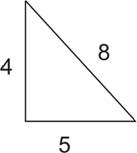
Area of triangle? A= 1/2 Base x Height
17 units2
20 units2
10 units2
16 units2


Complementary angles add up to...
45°
90°
180°
360°
Supplementary angles add up to...
45°
90°
180°
360°