
 Worksheets
Revision Quiz
Total questions: 23
Worksheet time: 29mins
Which of the following statement best describes an ionic bond?
The sharing of electrons between two ions
The strong electrostatic forces of attraction between cations and electrons
The transfer of electrons between two atoms
The strong electrostatic forces of attraction between oppositely charged ions


Which of the following properties of metal indicates that it can be drawn into wires?
Which of the following are some general physical properties of giant covalent compounds
High melting and boiling points
Insoluble in water
Able to conduct electricity
Brittle
Which of the following compounds does not contain covalent bonds?
HCl
NaNO3
(NH4)2CO3
CuCl2
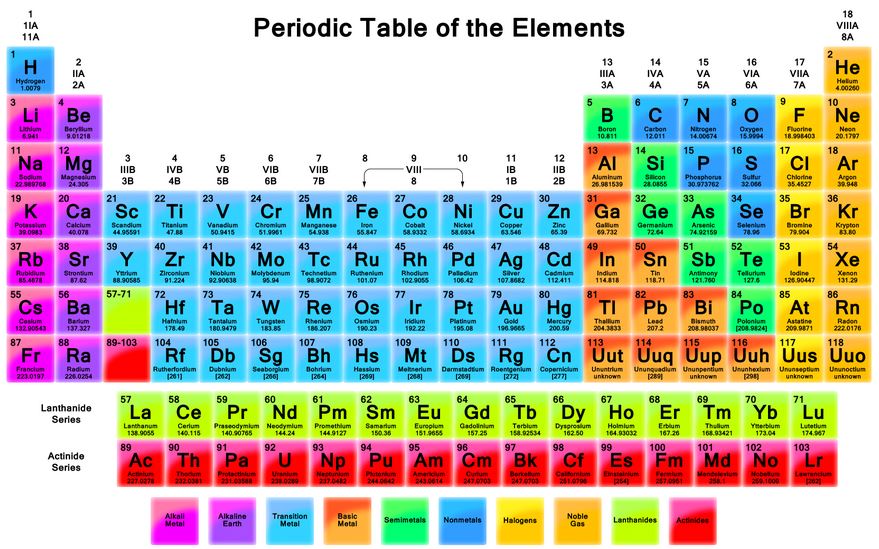
What is the little number after an element in a chemical formula mean?
Example: H2
It's just a number there is no meaning
It means that there is a certain number of molecules in the substance
It means that there is a certain number of atoms/ions of the element in the molecule
Which of the following gives the correct chemical formula for the compound dinitrogen monoxide?
Is the equation balanced?:
2H2O + O2 → 4MgO+Fe
Balance the following equation
2 , 2 , 1
2 , 3 , 2
4 , 2 , 1
4 , 3 , 2
What is the right ratio of chemicals for the balanced chemical equation?
..... AgNO3+..... MgI2 → ..... AgI+..... Mg(NO3)2
1 , 2 , 1 , 2
1 , 2 , 2 , 1
2 , 1 , 1 , 2
2 , 1 , 2 , 1
Which of the following statements is INCORRECT?
0.5 mol of potassium manganate(VII), KMnO4 contains 1.0 mol of ions.
1 mol of water contains 6.02×10²³ water molecules
The mass of 1 mol of CaO is 56 g.
In 152 g of carbon disulfide, there are 2.5 mol of carbon disulfide molecules.
Determine the number of moles of calcium oxide formed when 10.0 g of calcium is burnt in a plentiful supply of oxygen?
0.125 mol
0.250 mol
4.00 mol
6.00 mol
Find the empirical formula of a compound which contains 49.5% carbon, 5.2% hydrogen, 28.8% nitrogen and 16.5% oxygen by mass.
C2HN2O2
C4H5N2O
C8H5N4O2
C19H2N11O6
Given that the empirical formula of a substance is CHO2 , what is molecular formula of a substance with a molar mass of 90.0 g/mol?
CHO2
C2HO2
C2H2O2
C2H2O4
Phosphorus(III) chloride, PCl3 , is made by the direct combination of phosphorus and chlorine.
P4 (s)+6Cl2 (g) → 4PCl3 (l)
125 g of P4 was reacted with 323 g of Cl2 gas to produce phosphorus(III) chloride. Determine the limiting reactant in the reaction.
Phosphorus
Chlorine
Phosphorus(III) chloride
Phosphorus(III) chloride, PCl3 , is made by the direct combination of phosphorus and chlorine.
P4 (s)+6Cl2 (g) → 4PCl3 (l)
125 g of P4 was reacted with 323 g of Cl2 gas to produce phosphorus(III) chloride. Determine the mass of PCl3 produced in the reaction.
104 g
417 g
554 g
626 g
2.13 g of sodium chlorate(V) was heated to produce sodium chloride and oxygen.
2NaClO3 (s) → 2NaCl (s)+3O2 (g)
What is the theoretical yield of the oxygen liberated from the reaction?
0.160 g
0.32 g
0.480 g
0.960 g
2.13 g of sodium chlorate(V) was heated to produce sodium chloride and oxygen.
2NaClO3 (s) → 2NaCl (s)+3O2 (g)
The theoretical yield of oxygen liberated is 0.960 g. However, only 0.775 g of oxygen was liberated. What is the percentage yield of the reaction?
53.8 %
80.7 %
124 %
I don't know
Iron(III) oxide reacts with carbon monoxide to produce iron and carbon dioxide.
Fe2O3 (s)+3CO (g) → 2Fe (s)+3CO2 (g)
10.0 g of a sample of Fe2O3 was reacted in excess CO and the iron produced was collected and measured. The mass of iron obtained was 5.60 g. Determine the percentage purity of the iron(III) oxide sample.
62.5 %
80.0 %
125 %
160 %

