
 Worksheets
SOM Review
Total questions: 25
Worksheet time: 18mins
According to the kinetic molecular theory, a gas consists of molecules in constant fixed motion.
True
False
According to kinetic molecular theory-Gas molecules influence each other only by collision; they exert no other forces on each other.
True
False
According to the kinetic molecular theory, all collisions between gas molecules are inelastic; all kinetic energy is lost.
True
False
According to the kinetic molecular theory, the volume actually occupied by the molecules of a gas is negligibly small; the vast majority of the volume of the gas is empty space through which the gas molecules are moving.
True
False
In the KMT, pressure is the force exerted against the wall of a container by the continual collision of molecules against it.
True
False
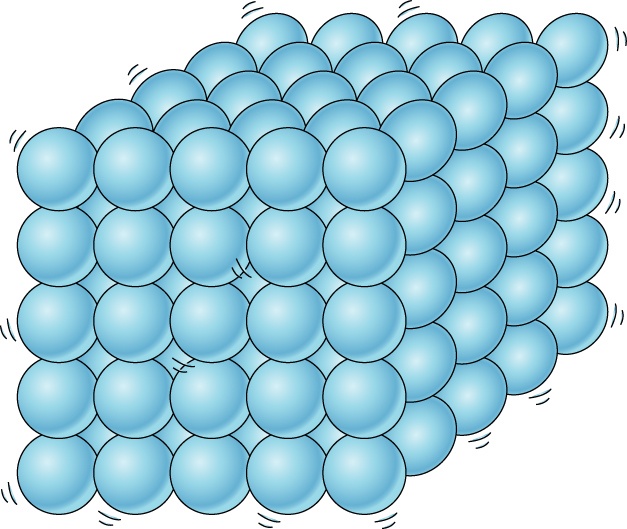
What state of matter?
Solid
Liquid
Gas
Plasma!!!
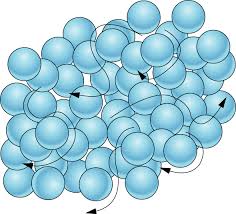
What state of matter?
Solid
Liquid
Gas
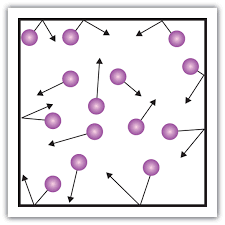
What state of matter?
Solid
Liquid
Gas

What letter on the diagram represents a gas?
A
B
C
D
What letter on the diagram represents a liquid?
A
B
C
D
What letter on the diagram represents a solid?
A
B
C
D
What letter on the diagram represents the triple point?
A
B
C
D
What is the melting point of this substance at 1 ATM of pressure?
40
60
100
110
What is the boiling point of this substance at 1 ATM of pressure?
40
60
100
110
What would the state of this substance be at 0.5 ATM of pressure at a 100 degrees Celsius?
Solid
Liquid
Gas
Michigan
What would the state of this substance be at 1 ATM of pressure at a 80 degrees Celsius?
Solid
Liquid
Gas
Michigan
Which substance would have the weakest intermolecular forces of attraction?
CH4
NaCl
H2O
MgF2

Which is the dominant intermolecular force for: NH3
Dispersion Force
Dipole dipole
Hydrogen bonding
Which is the dominant Intermolecular force present in HCl?
Which substance has the weakest intermolecular forces?
Substance A, boiling point of 75 °C
Substance B, boiling point of 105 °C
Substance C, boiling point of 25 °C
Substance d, boiling point of 45 °C
The weaker the intermolecular forces of a substance the _____________ the boiling point
higher
lower

Intermolecular forces for: CO2
Dispersion Force
Dipole dipole
Hydrogen bonding
covalent bond
London forces
hydrogen bond
dipole-dipole attraction

