Wayground logo

Free Printable Worksheets

Font size

S
M
L
XL
Worksheets

Unit 8: Week 2 Spiral Review

Total questions: 20

Worksheet time: 29mins

Name
Class
Date
1.

Which one of the examples below is physical weathering?

a)

lichens growing on rock

b)

acid rain wearing away limestone

c)

oxidation (rusting) of a flag pole

d)

frost wedging splitting a rock apart

2.

Cuckoo/Warbler


A cuckoo lays its eggs in the nest of the warbler. The cuckoo’s eggs hatch first and the young kick the warbler eggs out of the nest. The warbler raises the cuckoo babies and the warbler babies aren’t hatched.

a)

Parasitic

b)

Commensalistic

c)

Mutualistic

3.
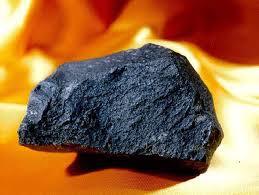
This rock was found near the mouth of a volcano. What type of rock is this?
a)
Sedimentary
b)
Igneous
c)
Metamorphic
4.
the process of sediment being glued together
a)
compaction
b)
weathering
c)
erosion
d)
cementation
5.

This type of boundary occurs when tectonic plate move together.

a)

covergent

b)

divergent

c)

transform

d)

none of the above

6.

When one piece of crust gets pushed under another one, it called:

a)

radial fracture

b)

lingering

c)

subduction

d)

leverage

7.
Which statement about photosynthesis is correct?
a)
Plants get the energy they need for photosynthesis from water.
b)
Plants get the energy they need for photosynthesis from soil.
c)
Plants get the energy they need for photosynthesis from sunlight.
d)
Plants do not require energy to perform photosynthesis.
8.
Which gas is removed from the atmosphere during photosynthesis?
a)
hydrogen
b)
oxygen
c)
nitrogen
d)
carbon dioxide
9.
Why is photosynthesis important?
a)
creates oxygen for animals to breath
b)
creates energy for heterotrophs to use
c)
creates food for plants to use
d)
all of these are correct
10.
all matter is made of what 
a)
energy 
b)
atoms 
c)
electrons 
d)
compounds 
11.
The positive particles of an atom are 
a)
electrons 
b)
positrons 
c)
neutrons 
d)
protons 
12.
Particles in an atom that are neutral and have no charge are 
a)
negatrons 
b)
electrons 
c)
neutrons 
d)
protons 
13.
Where are neutrons located in the atom?
a)
shells/orbitals
b)
rings
c)
center
d)
nucleus
14.
When there is higher biodiversity
a)
more organisms are likely to die because they can't adapt to environmental changes.
b)
there is less diversity.
c)
there is more diversity and higher sustainability of life.
d)
there is more diversity and lower sustainability of life
15.

Which of the following forms of biodiversity describes the differences between individuals within the same species?

a)

Species

b)

Habitat

c)

Genetic

d)

None of the Above

16.

In general, as you move from the equator to the poles, what happens to biodiversity>

a)

Increases

b)

Decreases

c)

Remains the same

17.
Measure of the amount of matter 
a)
mass
b)
volume
c)
weight
d)
density
18.

Which of the following best represents the Law of Conservation of Energy?

a)

Energy CAN be created but NOT destroyed

b)

Energy CAN be destroyed but NOT created

c)

Energy can NOT be created Nor destroyed

d)

Energy CAN be created and CAN destroyed

19.
The OLDEST seafloor is located? 
a)
Closest to the mid-ocean ridge
b)
Farthest from the mid-ocean ridge
20.

What was Wegener's hypothesis called?

a)

The Pangea

b)

sea floor spreading

c)

The Continental Drift

d)

Techtonic Plates