
 Worksheets
ELA EOG Review 2
Total questions: 20
Worksheet time: 15mins
How does the first stanza develop the speaker’s point of view of the boy?
A gentle boy, with soft and silken locks,
A dreamy boy, with brown and tender eyes,
A castle-builder, with his wooden blocks,
And towers that touch imaginary skies.
by describing the boy as good-looking, strong, and wealthy
by describing the boy as an extremely talented and rare builder
by describing the boy as clueless and only concerned with toys and playing
by describing the boy as a young and sweet individual who is enjoying his youth
How does the use of the words fumbled and trembling affect the tone of the poem?
I fumbled at my nerve,
I scanned the windows near;
The silence like an ocean rolled,
And broke against my ear.
I fitted to the latch
My hand, with trembling care,
Lest back the awful door should spring,
And leave me standing there.
They indicate that the author was apathetic.
They indicate that the author was nervous.
They indicate that the author was careful.
They indicate that the author was excited.
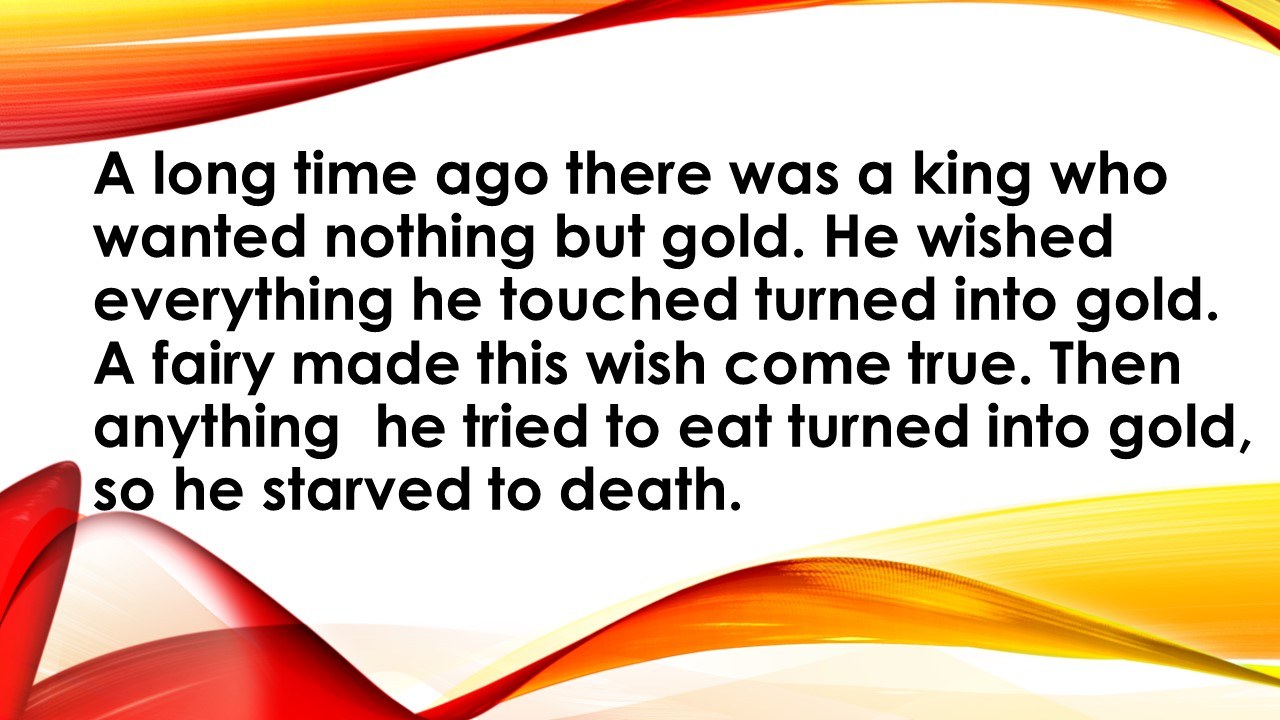
What is the theme of this story?
Being greedy can have negative effects.
Work together to be successful.
Respect your elders.
Don't steal.
Tracy was really feeling down in the dumps.
Martha believes she can win the gold medal. She refuses to listen to anyone who says it is an impossible task. She stays the course and refuses to give up. Which word best describes Martha?
grumpy
tenacious
remorseful
resourceful
Kristen couldn't believe she dropped her sister's brand new computer. She just kept repeating "I'm so sorry". Kristen can best be described as
obedient
determined
sincere
remorseful
I am committed to learning a new language. It will take lots of time, effort, and hard work but I will attain my goal. What am I?
obedient
determined
unselfish
sensitive
What does justify mean?
investigate
research
to prove
defend
What does signify mean?
Use details to give the listener or reader a clear image of what you are trying to say
A general retelling of the story without all of the details
Reach a decision at the end
What something shows, why it matters, why it’s important
When something is ironic or has irony, it means?
The opposite of what is expected
Reference to something, someone, or an event
To make something more believable by providing evidence
To make something more believable by providing a way out.
What is the best definition of dialogue?
A conversation between characters
A battle scene between characters
A conversation between scenes
A dance between two people
"Now, the Law of the Jungle lays down that if there is any dispute as to the right of a cub to be accepted by the Pack, he must be spoken for by at least two members of the Pack who are not his father and mother."
What does the word dispute mean?
argument
opinion
reason
feeling
"Our star, the Sun, is what astronomers call a field star. It is so far away from other starts that is doesn't really interact with them. Based on our experience of the Sun, it's easy to think all stars are field stars. However, scientists know this isn't true. Stars actually have all kinds of relationships."
What does the word astronomer mean?
a designer and maker of telescopes
an astronaut who travels to distant solar systems
a writer who creates descriptive names for stars and planets
a scientist who studies stars and other objects in the space
" I love the hazel thickets; and the breeze,
The never resting prarie winds. The trees
That stand like spear points high
Against the dark blue sky"
What do these lines tell about the trees?
The trees wave their branches like soldiers with spears.
The trees can barely be seen against the night sky.
The trees must fight to stand against the constant winds.
The trees rise tall and thin above the empty landscape.
Which lines in the poem show nature is frightened by winter?
What do you know about nature from the question?
Winter weather is happening.
Nature is frightened by winter.
Nature is a part of winter.
Nature loves the winter season.
Lightening rods are only sometimes effective.
Which sentence supports this idea?
The lightening-rod robbed the thunder-storm of its terror to the timid.
He had felt the power of the Leyden-jar discharge, and through it has nearly lost his life.
A building may be electrified by an electrified cloud passing over it.
In surging back and forth, the lightening may skip from the lightening rod to some metal object within the building, such as a stove or radiator.
Which quote supports the theme of intelligence in animals?
“My mother captures all my attention. And she’s ruled my heart too.”
“Now all of you know, of course, that a dog is bigger than a chick.”
“When he discovers that it is just a leaf he comes back and sits on his rear paws.”
“ ‘The rabbit knows to be afraid of those who might eat him.’ ”

