
 Worksheets
STAAR SOCIAL STUDIES REVIEW
Total questions: 246
Worksheet time: 7hrs 56mins
New Hampshire, Massachusetts, Connecticut, Rhode Island
Middle Colonies
Southern Colonies
New England Colonies
New York, Pennsylvania, New Jersey, Delaware
New England
Middle
Southern

New England
Middle
Southern

New England
Middle
Southern

New England
Middle
Southern
Maryland, Virginia, North Carolina, South Carolina, Georgia
New England
Middle
Southern
short summers; long, cold winter; short growing season
New England
Middle
Southern
moderate climate
New England
Middle
Southern
mild climate; hot, humid summers; long growing season
New England
Middle
Southern
rocky soil, thick forests, fast-flowing rivers, deep harbors, inland hills and mountains
New England
Middle
Southern
deep rich soil, timber, iron ore, deep harbors, inland hills and mountains
New England
Middle
Southern
fertile soil, coastal plain to rolling hills and mountains in the west
New England
Middle
Southern
fishing, whaling, cottage industries, overseas trade, subsistence farming
New England
Middle
Southern
"Breadbasket Colonies," staple crops such as corn and wheat to export to other colonies, livestock, cottage industries, subsistence farming
New England
Middle
Southern
exported cash crops such as tobacco and rice, some cottage industries, subsistence farming
New England
Middle
Southern
settlers mostly from England, few slaves
New England
Middle
Southern
settlers from all over Europe, some slaves
New England
Middle
Southern
settlers from England, Scotland, Ireland; many slaves
New England
Middle
Southern
largely Puritan
New England
Middle
Southern
mixture of religion such as Quakers, Catholics, Lutherans, and Jews
New England
Middle
Southern
mixture of religions such as Anglicans and Baptists
New England
Middle
Southern
Maryland, Virginia, North Carolina, South Carolina, Georgia
New England
Middle
Southern


What was the dramatic act of defiance that some colonists carried out to protest harsh British taxes?
Boston Massacre
Boston Tea Party
Battle of Lexington and Concord
Intolerable Acts
This British law designated the area West of the Appalachian Mountains as the Indian Territory.
Stamp Act of 1764
Proclamation of 1763
Townshend Acts of 1767
Intolerable Acts of 1774
The first armed conflict of the American Revolution.
Boston Massacre
Boston Tea Party
Lexington & Concord
Proclamation of 1763
Why were the First and Second Continental Congress held?
To vote for the first president
To decide when to go to war with Great Britain
To discuss a solution to the colonists’ complaints of Great Britain
To write the Constitution
Which of the following is a famous quote of the Virginia delegate (Patrick Henry) who convinced the members of the House of Burgesses to prepare for war?
Unhappy Boston see thy sons deplore!
Give me liberty or give me death!
Liberty will reign in America!
Let freedom ring to the mountain tops!
How did the British policy of "salutary neglect" affect the American Colonist?
It left American Colonists without sufficient resources to provide for their economic needs
It allowed American colonist to govern themselves without interference from Great Britain
It required American colonist to pay heavy taxes on the crops and goods they produced.
It prevented American colonist from developing their own institutions of government
The Coercive Acts of 1774
Boston Port Act (closed Boston Harbor to trade),
Massachusetts Government Act (extended British control over the Massachusetts government),
Administration of Justice Act (Gave the colonial governor the power to move trails of royal officials accused of crimes in Massachusetts to another colony or Great Britain),
Quartering Act (established new provisions in all colonies for lodging British soldiers)
WHY DID AMERICAN COLONIST OBJECT TO THESE MEASURES?
They reduced the number of British troops that protected the colonist
They expanded the rights of colonist everywhere except in Massachusetts
They required colonist to make and carry out laws without British support
They eliminated the power of Massachusetts colonist to govern themselves
During the early to mid-1700s, the British policy of salutary neglect toward the American colonies contributed to
a decline in colonial maufacturing
the decline of slavery in the northern colonies
a decrease in French and Spanish influence in North America
the development of independent American colonial trade practices and self government
56 delegates met at Carpenters Hall to take actions against the British government. Where is Carpenters Hall located?i
Phialdelphia
New York City
Charlotte
Chicago
Washington DC
The Delegates encouraged colonists to continue ______________British Goods.
robbing
stealing
boycott
buying
purchasing
The delegates at the First Continental Congress said that the new British Tax laws violated the “______", which were the principle found in the English constitution, and the several charters” of the colonies.
laws of nature
mankind rights
biblical laws
social contract
In September 1774, _______ delegates gathered in Philadelphia. They had come to set up a political body that would represent Americans and challenge British control. The delegates called this body the Continental Congress.
100
56
13
50
All, except_______ were the goals of the First Continental Congress.
create a political body to represent American interests
challenge British control
Create battle plans to take back the Ohio River Valley, a plan that they fought for and won.
The Congress approved the_________ , a document that was prepared by the people of Massachusetts. These resolutions stated that the Coercive Acts were illegal.
Articles of Confederation
Suffolk Revolves
Declaration of Independence
Sons of Liberty Mandates
The First Continental Congress issued a statement of grievance calling for the repeal of 13 acts of Parliament.
True
False
The delegates at the First Continental Congress voted to ______ British trade.
boycott
increase the value of
sell more
all of the above
The delegates agreed that Coercive Acts were illegal and called on colonists to arm themselves and ___________ against the British
create markets
create peace alliances with Prussia
create militias
None of the above
“The distinctions between Virginians, Pennsylvanians, New Yorkers, and New Englanders are no more. I am not a Virginian, but an American” Which delegate at the First Continental Congress made this statement.
Benjamin Franklin
Sam Adams
Patrick Henry
John Jay
All of the following are part of the Articles of Confederation, EXCEPT---
it did not grant a federal power to tax or regulate commerce.
it did not establish a common currency.
it did not limit the power to the national government.
it did not establish an executive or judicial branch.
it was difficult to make decisions in the newly formed United States under the Articles of Confederation because---
the national government was too controlling.
the approval to amend the articles was not priority.
the approval of thirteen states was required to ratify.
the approval of nine states was required for ratification.
Strengths
*ability to declare war
*ability to make treaties
*ability to operate post offices
This information is found in what government document ?
the Treaty of Paris of 1783
The Franco American Treaty
The Articles of the Confederacy
The Articles of Confederation
Having one vote under the Articles of Confederation raised questions regarding---
limitations to the larger populated states.
limitations to the smaller populated states.
the selection of representatives.
how much taxes to charge.
When the delegates wrote the Articles of Confederation, all the questions below were considered EXCEPT---
How do we finance a war?
How do we increase the power of the central government?
Who has the power to negotiate treaties?
How do we prevent the executive from becoming too powerful?
Which makes more sense?
A weak national government can run a country effectively.
A weak national government can overrun state government.
A strong national government is more stable than a loose confederation of states.
A loose alliance of states is ideal for a brand new nation.


What is the name of the series of protests in 1786-87 by American farmers concerning debt and foreclosure?
American rebellion
Dorr Rebellion
Shays' Rebellion
Whiskey Rebellion

What action did Shays and his followers take to protest the injustices of high taxes and land foreclosure?
an armed takeover of state courts
hanged the governor
all moved out of the state
robbed banks
True or False: Slavery was allowed in the Northwest Ordinance.
True
False

What was the name Congress gave to the lands that were won from the British after the Revolution?
Northwest Territory
Indian Territory
Ohio River Valley
Black Swamp
How many sections are in a standard township?
12
36
100
6
How many acres are in one section of a township?
640
320
80
40
How big is one section of a township?
1 square mile
36 square miles
6 square miles
What was banned in the Northwest Territory?
slavery
public education
religious freedom
How many people needed to live in a territory before it could apply to become a state?
5,000
60,000
100,000
Which state was not part of the land that was once the Northwest Territory?
Ohio
Michigan
Kentucky
Indiana
Which state was not part of the area that was the Northwest Territory?
Wisconsin
Illinois
Michigan
Pennsylvania
The Northwest Territory was located...
north and west of the Ohio River, including present day Ohio
south and east of the Louisiana Purchase
in the present day Northwest region, including the states of Oregon and Washington
in present day Canada
Which of the following present day states were a part of the Northwest Territory (select all that apply)
Ohio
Michigan
Indiana
Illinois
Wisconsin
Which documents are in the correct chronological order?
Declaration of Independence, Northwest Ordinance, The Constitution
Northwest Ordinance, Declaration of Independence, The Constitution
The Constitution, Northwest Ordinance, Declaration of Independence
Declaration of Independence, Constitution, Northwest Ordinance
By winning what war did the U.S. gain the land from the Atlantic in the east to the Mississippi River in the West?
The Civil War
The Revolutionary War
The Spanish-American War
The War of 1812
The Northwest Ordinance of 1787 said that people within the territory had all of the following rights EXCEPT...
To own slaves
Religious freedom
Right to a trial by a jury
To have a say in the government (if you were a free white landowning male)
When a territory gained _______ free adult people, it could write a Constitution and apply to the U.S. government to become a state
5,000
50,000
60,000
Any number of
Why did Thomas Jefferson want to make new states out of the Northwest Territory?
So he can name one after himself
So existing states won't fight over the land
To better represent Native American interests
So fur traders can have a place to call their own
The lasting impact of the Northwest ordinance of 1787 was...
that slavery would be made illegal forever after in the U.S.
that the U.S. was unable to compromise.
that we would be dragged into another war.
that it provided instructions on how the U.S. should add new states to the U.S. in the future.
What did Congress sell to pay off their debts?
food
money
they couldn't pay back their debts
land in the Northwest Territory
This Federalist is know as the "Father of the Constitution"
Thoas Paine
Thomas Jefferson
James Madison
Who would say: a strong president is necessary to protect the country against foreign attack and make sure laws are carried out properly.
Federalist
Anti-Federalist
Why did the Anti-Federalists demand a Bill of Rights?
they wanted to keep the government small
they wanted a provision for Taco Tuesday
they wanted to keep the government big and strong
they wanted to make sure individual states rights were protected
How did Federalists and Anti-Federalists "compromise" to ratify (approve) the U.S. Constitution?
they added the Bill of Rights (first 10 amendments)
ensured due process of law
they outlawed cruel and unusual punishment
the Federalists threatened the Anti-Federalists with war
They thought the Constitution gave the national government too much power.
federalist
antifederalist
The Federalist Papers were a series of newspaper articles published in 1787 to 1788 to win support for the
construction of an interstate canal system
ratification of the United States Constitution
right of the colonies to rebel against Great Britain
right of a state to succeed from the Union
Who would say: The President created by the Constitution is really just a king.
federalist
antifederalist
What was the antifederalists' greatest concern about ratifying the United States Constitution?
lack of a bill of rights
lack of a federal court system
lack of legislative veto power
lack of a strong military
Alexander Hamilton and James Madison were...
Federalists
Anti-Federalists
Who would say: I believe that laws should come from a strong national government.
Federalist
Anti-Federalist
We must start with a fresh document, fixing the Articles of Confederation isn’t enough.
Federalist
Antifederalist
The Constitution contains no Bill of Rights to protect individual liberties like freedom of speech, trial by jury, and the right against searches and seizures.
Federalist
Antifederalist
A strong President is necessary to protect the country against foreign attack and make sure laws are carried out properly.
Federalist
Antifederalist
The Constitution gives too much power to the central government, overpowering the states.
Federalist
Antifederalist
Nothing in the Constitution says the federal government has power to limit people’s freedoms in the first place.
Federalist
Antifederalist
The President created by the Constitution is really just a king.
Federalist
Antifederalist
The Constitution says federal laws are “the supreme law of the land,” so the federal government could just take complete control.
Federalist
Antifederalist
The Constitution is a Bill of Rights because it guarantees citizens a role in government.
Federalist
Antifederalist
The United States is too large to have a central government. People won’t know their leaders and will lose control over the government.
Federalist
Antifederalist
The Constitution already contains a few rights, so we may as well add a whole Bill of Rights.
Federalist
Antifederalist
It will not be possible for the federal government to overpower the states because the states are a necessary part of the federal government.
Federalist
Antifederalist
Other countries do not respect America because we do not have a strong leader.
In 1934, _____ demanded a Constituent Assembly for the first time.
Indian National Congress
Swarajya Party
Forward Block
Communist Party
The Indian Constitution was drafted by _____.
Congress
Constituent Assembly
Judicial Assembly
Hindu Mahasabha
In Nepal, the struggle for democracy started in _____.
1990
1991
1992
1994
The father of Indian Constitution is ____.
B R Ambedkar
Liaquat Ali Khan
Rajendra Prasad
S C Sinha
To ensure greater economic and social reforms, the Constitution introduced
Directive Principles of State Policy
Fundamental Rights
Judiciary Rights
Executive Rights
______ is a group of people who make laws and run the government.
Congress
Judiciary
Government
Executive
Shri Jagjivan Ram was the first _____ minister of India.
labor
health
Parliamentary Affairs
Home
Human trafficking and forced labor are prohibited under ____.
Culture and Educational Rights
Right against Exploitation
Right to freedom of Religion
Right to Property
The existence of more than one level of government in any country is called ____
Democracy
Federalism
Universal Adult Franchise
Monarchy
The Indian government is a _____ form of government.
Monarchy
Military
Parliamentary
Dictatorship
Right to Move Freely falls under ____.
Right against exploitation
Right to Property
Right to freedom
Culture and Educational Rights
The system of courts in the country is collectively referred to as ______.
Judiciary
Congress
Ministers
Executive
____ were urged by B R Ambedkar to join government and civil services.
Hindus
Pashtuns
Schedule castes
Muslims
The Whiskey Rebellion challenged the idea that-
the federal government had the power to pass and enforce tax laws
a national military was needed for dealing with foreign threats
the federal government could raise tariffs to protect industries
a national court system was needed for resolving disputes between states

Which action completes this diagram?
oversee state government agencies
regulate the creation of new businesses
establish a national bank
eliminate protective tariffs

The list provides examples of -
topics discussed during the Second Constitutional Convention
domestic issues faced by the leaders of the new republic
weaknesses of the government under the Articles of Confederation
issues leading to the ratification of the first constitutional convention
According to Alexander Hamilton, which action was necessary to ensure the stability of the nation's economy?
The passage of a trade embargo against Great Britain
The abolition of consumption taxes
The creation of a trade alliance with France
The establishment of a national bank
Which problem did George Washington encounter when he became President?
Southern states were threatening to secede from the Union.
The United States had large debts from the American Revolution
Great Britain was refusing to trade with the United States.
The Articles of Confederation needed to be replaced with a stronger constitution.
The organization of the first U.S. political parties resulted in large part from disagreements over which issue?
The purchase of the Louisiana Territory from France
The election of George Washington to second tern as President
The establishment of the First Bank of the United States
The attack on the Port of Tripoli in North Africa
The first political parties in the United States formed mainly in response to disagreements over-
taxation without representation
the doctrine of judicial review
territorial expansion to the west
the extent of federal power

Disagreements between these two cabinet members led to-
the creation of reservations for American Indians
a struggle to ratify the Bill of Rights
the establishment of the first U.S. political parties
a compromise over slavery in western territories
The Federalists and the Democratic-Republicans emerged as separate political parties partly as a result of disagreement over-
how the nation should develop economically
whether to enforce the Monroe Doctrine
how the nation should admit new states
whether to approve the Declaration of Independence
The first political parties in the United States were established in the 1790's largely because of political differences between-
John Adams and Benjamin Franklin
Alexander Hamilton and Thomas Paine
George Washington and James Madison
Thomas Jefferson and Alexander Hamilton

Which of the following is the source of statement on foreign policy?
George Washington's Farewell Address
The Monroe Doctrine
Abraham Lincoln's first inaugural address
The Federalist Papers

Which phase completes this excerpt?
colonial settlements
protective tariffs
permanent Alliances
territorial Disputes

The U.S. foreign policy illustrated in this cartoon was intended to-
prevent further European colonization in the Western Hemisphere
deter Spain from inciting revolution in former U.S. colonies
encourage European powers to invest in Latin America
keep the war between France and Spain from spreading to Latin America
Which of these best summarizes the Monroe Doctrine?
The immigration of Europeans to the United States must be discouraged.
International peace can be maintained without complicated alliances.
The power to nullify federal laws is necessary to preserve sovereignty.
Further colonization of the Americas by European countries is prohibited.
How did the provisions of the Northwest Ordinance affect U.S. Expansion?
By funding a transportation network in uninhabited regions
By establishing a process for territories to govern themselves
By promoting the growth of southern plantation economies
by creating a national bank to loan money to land investors
The Northwest Ordinance established guidelines for the orderly expansion of the United States by instituting-
method to purchase territory from foreign powers
procedure for military takeovers of existing countries
process through which states could be added to the Union
compromise line that prohibited slavery in the West
The Northwest Ordinance is considered a historical milestone because it-
more than doubled the size of the United States
established a method for admitting new states to the Union
encourages state legislatures to ratify the Constitution
proposed treaties with American Indians to allow the peaceful settlement of new territories
After the end of the Revolutionary War, states were eager to expand into newly available territory. The states of New York, Connecticut, Massachusetts, and Virginia argued over competing claims to land west of the Appalachian Mountains. This conflict was addressed by the-
Missouri Compromise
Wilmot Proviso
Northwest Ordinance
Kansas-Nebraska Act
The Second Great Awakening was a movement that promoted -
spiritual revival and the need for social reform
the use of reason and scientific theory
states' rights and governmental reform
mercantilism and the development of global trade

A tourist would most likely go to the location shown on the map to visit -
the Elizabeth Cady Stanton House in Women's Rights National Historical Park
Historic Jamestowne in Colonial National Historical Park
Independence Hall in Independence National Historical Park
George Washington's Headquarters in Valley Forge National Historical Park

Why did Congress honor this woman by putting her on a coin?
Because she was an influential First Lady
Because she designed the nation's first flag
Because she fought for women's' suffrage
Because she was the first woman elected to Congress
The rreform efforts of Dorothea Dix during the mid-nineteenth century led to -
improved education for immigrant children
the creation of worker safety regulations
the expansion of suffrage for women
improved facilities for the mentally ill and disabled

This leader inspired followers of the abolitionist movement by -
writing Uncle Tom's Cabin
publishing the anti-slavery newspaper The North Star
organizing the Underground Railroad
becoming the first African American senator
Which of the following was an argument made against slavery in the Thirteen Colonies?
Manufacturers argued that slavery discouraged the development of industry.
Farmers argued that using slave labor was expensive and inefficient.
Quakers argued that slavery violated Christian principles.
Puritans argued that the slave trade encouraged materialism.
Which group was among the first to all for an end to slavery?
American Indians, because they viewed the plights of slaves as similar to their own
Quakers, because slavery contradicted their religious beliefs
British loyalists, because Great Britain had ended the slave trade
Puritans, because the New England economy did not rely on slavery

How did the growth of these organizations most affect the role of women in U.S. society?
By providing economic opportunities for women in urban areas
By expanding the participation of women in social reform
By increasing the number of women teachers in rural areas
By securing the establishment of private universities for women
What was one major effect of the Second Great Awakening?
Churches turned away from public politics and focused on internal religious issues.
People were inspired to join reform movements to address social problems.
Religious leaders petitioned legislatures to extend suffrage to women.
Politicians were encouraged to promote states' rights rather than federal unity.

The speaker quoted above was a supporter of the movement to -
end the international slave trade
establish strict limits on immigration
expose corruption in the federal government
discourage the consumption of alcoholic beverages

The theme represented in this painting is most associated with -
the nineteenth century temperance movement
books and songs supporting the nativist movement
the works of artists from the Hudson River School
the nineteenth-century industrial boom

Which movement did Emerson lead?
Temperance
Abolitionism
The Second Great Awakening
Transcendentalism


Which are elements found in a Free Enterprise? CLICK ALL
Profits
Controlled by central authority
Competition
Buy and sell freely


Economic System of the United States
Market Economy (free enterprise)
Communist Economy
Theocracy Economy


CLICK ALL THAT APPLY. ALL the following describe life for girls at the Lowell Mill.
Work long hours
Very dangerous
Get raises fairly easily
Very stressful and demanding job

The following is a picture of the...
Erie Canal
Cumberland Road
National Road
Ohio River
States ignoring a federal law is called --
nullification
spoils system
suffrage
resettlement
Giving government positions to supporters is the process of --
judicial review
the Whig Party
the spoils system
states; rights
This political party was created by critics of Andrew Jackson --
Democratic-Republicans
Federalists
Democratic Party
Whig Party
The right to vote is called --
tariff
nullification
suffrage
states' rights
When a region cares more about its interests rather than the nation's interests, this is called --
nullification
sectionalism
states' rights
Judicial Review
The Supreme Court case Marbury v. Madison established the court's right to --
judicial review
pass tariffs
allow suffrage
establish a new political party
This political party was established by Andrew Jackson and his supporters --
Democratic-Republicans
Whig Party
Federalists
Democratic Party
The settlement of people in a new and different place is known as --
suffrage
resettlement
spoils system
tariff
When a tax is placed on foreign goods it is because the government passed --
a tariff
judicial review
nullification
states' rights
Powers that are held by the state governments rather than the national government are known as --
spoils system
judicial review
states' rights
resettlement
What was the primary question regarding the Nullification Crisis?
can the federal government regulate interstate commerce?
can a state regulate a federal agency?
can a state overturn a federal law?
can the federal government levy taxes on states?

Which of the following correctly completes this activity?
Jackson annexes land west of the Mississippi River
Jackson ignores a supreme court ruling
Jackson introduces a bill to Congress
Jackson vetoes an act passed by Congress
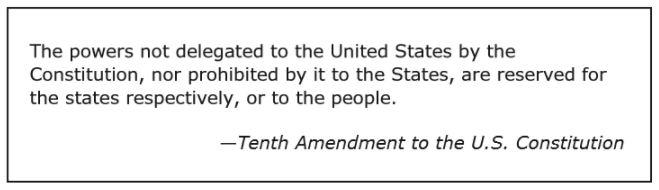
Conflicting interpretations of this amendment led to the --
Bank War
Nullification Crisis
Corrupt Bargain
XYZ Affair
Why was Jackson determined to shut down the National Bank?
he was trying to help the economy
his supporters were pressuring him
the bank kept passing tariffs
he believed it was too powerful and unconstitutional
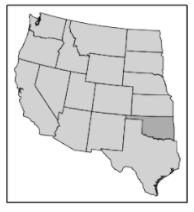
Indian Territory was established for the Indians who had been removed from their homelands. It is now known as the state of --
Texas
Oklahoma
Kansas
New Mexico
Who was elected President in 1860?
Stephen Douglas
Abraham Lincoln
John Bell
John Breckinridge
Which compromise outlawed slavery above the 36 30' line in the Louisiana Territory?
Missouri Compromise
Compromise of 1850
Kansas-Nebraska Act of 1854
Louisiana Compromise
This law required the return of runaway slaves even in free states and affected free African-Americans as well.
Runaway and Return Act
Underground Railroad Act
Fugitive Slave Act
Southern Slave Act
Which region had an economy primarily based on agriculture and slave labor.
North
South
West
Which of the following was NOT an event that caused division between the North and South?
Wilmot Proviso
Kansas-Nebraska Act of 1854
Dred Scott v. Sandford
Indian Removal Act
This individual sued his slave owner for his freedom but lost his case as was declared a slave for life.
Frederick Douglass
W.E.B. DuBois
Dred Scott
Hiram Rhodes Revels
"People can now vote on slavery! There has been so much fighting and bloodshed lately!" Which act/event is best described by this statement?
Missouri Compromise
Compromise of 1850
Kansas-Nebraska Act of 1854
Wilmot Proviso
Which set of words best describes the "Nullification Crisis"?
tariffs, manufacturing, James K. Polk, Alabama, cotton, nullify
South Carolina, tariffs, unconstitutional, cotton, John C. Calhoun, nullify
Andrew Jackson, Native Americans, Georgia, Cherokee, Supreme Court
Andrew Jackson, tariffs, Mexican Cession, manufacturing, Cherokee, Florida
This novel by Harriet Beecher Stowe brought awareness to slavery and helped increase abolition.
The Underground Railroad
The Scarlet Letter
Uncle Tom's Cabin
The Narrative of the Life of Frederick Douglass
Which two states were added as a result of a compromise passed in 1820?
Kansas and Nebraska
California and Nebraska
Kansas and Missouri
Missouri and Maine


Which map shows the boundaries of the United States just after the Treaty of Guadalupe Hidalgo?
A
B
C
D


What piece of land was purchased in 1853 in order to build something in the South? What did they want to build?
Mexican Cession/Trails
Louisiana Territory/Canals
transcontinental/Oregon Country
Gadsden Purchase/Railroad

Which document had these characteristics in the image?
Declaration of Independence
U.S. Constitution
Northwest Ordinance
In 1846, war broke out between the United States and Mexico. What was the main cause of this war?
a dispute over the number of settlers in the Oregon Territory
issues arising over the boundaries of Texas (border dispute)
the discovery of gold in California
the relocation of American Indians from the Southeast
The Northwest Ordinance is considered a historical milestone because it —
more than doubled the size of the United States
established a method for admitting new states to the Union
encouraged state legislatures to ratify the Constitution

Before becoming part of the US this territory was claimed by
Spain
France
Britain
With the signing of the Treaty of Guadalupe Hidalgo after the US Mexican War what did the US acquire?
mineral rights to gold in California
the Louisiana Territory
several territories from Mexico
Which of these would be an Economic Motive For Manifest Destiny Policies?
New Markets, inexpensive farmland, gold
religious persecution, spreading faith
security and spreading of democracy
What was the main reason Chinese immigrants came to America?
to experience the wagon trail
to search for Gold in California
to help America fight Mexico