
Font size
 Worksheets
16.4 Evidence for Evolution
Total questions: 10
Worksheet time: 20mins
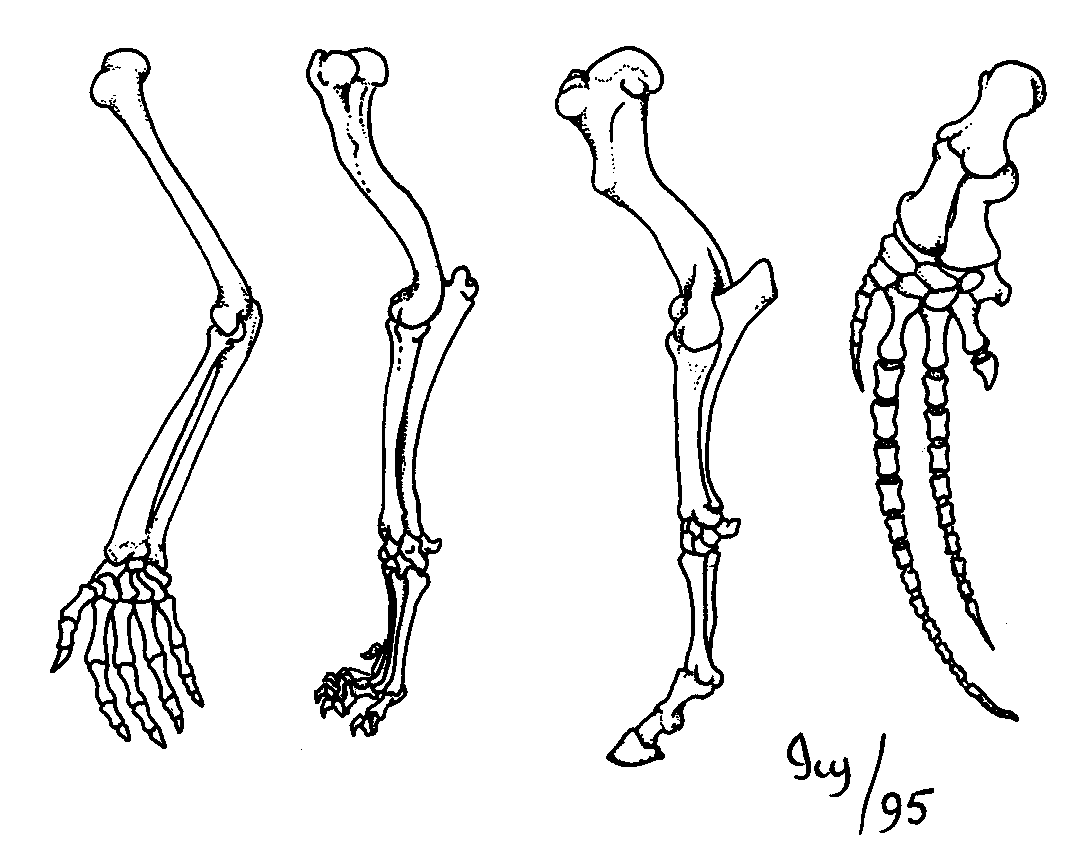

A category of body structures that are formed in similar ways during embryonic development and share similar patterns of bone structure.
Homologous structures
Analogous structures
Vestigial structures
Bone structures

What type of structure does this image illustrate?
Analogous structures
Homologous structures
Vestigial structures
Select the two most important characteristics that distinguish homologous structures.
Similar bone structures
Similar function
Similar embryonic development
Similar species

What type of structure does this image illustrate?
Homologous structures
Analogous structures
Vestigial structures
What are the most important characteristics of analogous structures?
Structures that perform the same function
Structurally different
Structurally the same
Structures that perform different functions

Does the presence of homologous structures in genetically different animals suggest common ancestry?
Yes
No
Which of the following is NOT considered a vestigial structure in humans?
Eye lashes
Appendix
Wisdom teeth
Tail bone

