
 Worksheets
LESSON 9-10|THEORETICAL EXPERIMENTAL PROBABILITY
Total questions: 55
Worksheet time: 2hrs 49mins
What type of probability is a way of estimating the probability of an event happening based on repeated trials?
Experimental Probabillity
Theoretical Probability
What type of probability is used to find the probability of an event when all outcomes are equally as likely. "What COULD happen"
Experimental Probability
Theoretical Probability
Jon made 15 out of 35 free throws.
What is his experimental probability as a fraction?
**SIMPLIFY THE FRACTION!**
3/7
15/35
1/2
5/7
Theoretically what is your chance of making a free throw?
Pick out your answer written as a percent.
25%
50%
75%
100%

Kate spun the spinner 75 times and landed on "3" thirty times.
What is the experimental probability as a percentage?
20%
30%
40%
50%

Theoretically, what is the probability that you will land on a 3?
25%
50%
75%
0%

Sarah hit the ball 3 times out of the 8 times.
What is the experimental probability (as a percent) that she will hit the ball next?
22.5%
37.5%
45%
3%

Theoretically, what is the probability that Sarah will miss the next ball? Write your answer as a fraction.
0
1/2
3/4
1

Jill rolled a "5" fifteen times out of 20 rolls on a dice.
What is the experimental probability as a SIMPLIFIED FRACTION!
3/7
3/6
3/5
3/4

What is the theoretical probability of rolling a 5 on a dice?
1/6
5/6
6
15
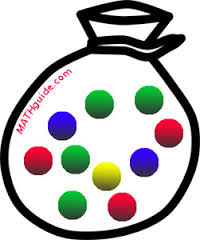
A bag has 4 green marbles, 3 red, 2 blue and 1 yellow. What is the theoretical probability of pulling a red?
3/10
3/6
1/9
1/3

Theoretical P(4)
3/6
1/6
1/2
4/6

Theoretical P(Yellow)
2/8
3/8
2/3
1/4

Theoretical P(Green or Red)
2/6
1/5
2/5
1/5

Theoretical P(Even #)
1/3
1/2
3/6
2/6

Theoretical P(Orange)
2/9
1/4
3/10
3/10

Theoretical P(Blue or Yellow Pop)
4/6
2/5
2/3
1/2

Theoretical P(Odd #)
2/3
4/9
7/10
1/2

Theoretical P(Red or blue)
7/15
10/20
1/2
4/5
Jon made 15 out of 35 free throws.
What is his experimental probability as a fraction?
**SIMPLIFY THE FRACTION!**
3/7
15/35
1/2
5/7
Jill rolled a "5" fifteen times out of 20 rolls on a dice.
What is the experimental probability as a SIMPLIFIED FRACTION!
3/7
3/6
3/5
3/4

The bar graph shows the results of spinning the spinner 200 times. What is the experimental probability of landing on a 3?


Neil tossed a 6-sided die 90 times. The results of his tosses are recorded in the table below: Which number has the experimental probability of 13/90?
1
2
3
4
5

The arrow is spun 15 times and landed 4 times on the section labeled Q. Which statement is true?


The arrow of this spinner was spun 60 times. On 45 out of 60 times, the arrow landed on a section labeled with a multiple of 4. What was the experimental probability of the arrow landing on a section labeled with a multiple of 4?


The table shows the results of 50 rolls of a number cube. According to the data in the table, what was the experimental probability of rolling a 1?


Shannon has a bag of jelly beans. She removed one jelly bean, recording the color, and then replaced it. She repeated the process 44 times and record her results in the table. What is the experimental probability of her selecting a red jelly bean?
3311
31
41
2618
Roll dice: 1, 3, 3, 4, 4
P(1) =
What is the theoretical probability that an even number will be rolled on a number cube?
1/3
1/2
2/3
1/6

What was the experimental probability of how many times an even number was actually rolled using the table?
2/3
5/7
5/12
1/2
If you roll a number cube 36 times, how many times would you expect to roll the number one?
1
6
8
18

How many times was the number one rolled in the experiment?
1
6
8
18
What is the theoretical probability for rolling a number greater than 4?
1/6
1/3
1/2
2/3

What was the experimental probability of rolling a number greater than 4?
1/9
1/6
4/9
5/18
What is the difference between theoretical and experimental probability?
Experimental Probability is what should happen while Theoretical Probability is what does happen.
Theoretical Probability is what should happen while Experimental Probability is what does happen.
There is no difference.
One is a fraction and one is a decimal.
If a car factory checks 360 cars and 8 of them have defects, how many out of 1260 will have defects?
28
45
360
2880
If a car factory checks 320 cars and 12 of them have defects, how many out of 560 will NOT have defects?
21
45
308
539
You plant 30 African violet seeds and 9 of them sprout. Use experimental probability to predict how many will sprout if you only plant 20 seeds?
6
11
18
21
Theoretical Probability is ____
data from our experiment
our prediction
Experimental Probability is ______
data from our experiment
our prediction

A number color spinner was spun 20 times:
1 (Yellow) was spun 3 times
2 (Red) was spun 1 time
3 (Aqua) was spun 4 times
4 (Red) was spun 2 times
5 (Blue) was spun 0 times
6 (Aqua) was spun 3 times
7 (Blue) was spun 5 times
8 (Red) was spun 2 times
What is the experimental probability of spinning the color blue?
85
202=101
200=0
205=41

Roll dice: 1, 3, 3, 4, 4
P(1) =
If you flip the coin 100 times, approximately how many times could you expect to land on tails?
Shannon has a bag of jelly beans. She removed one jelly bean, recording the color, and then replaced it. She repeated the process 44 times and record her results in the table. What is the experimental probability of her selecting a red jelly bean?


Neil tossed a 6-sided die 90 times. The results of his tosses are recorded in the table below: Which number has the experimental probability of 13/90?
1
2
3
4
5
The bar graph shows the results of spinning the spinner 200 times. What is the experimental probability of landing on a 3?
A coin is tossed 18 times. It lands on heads 12 times. What is the experimental probability of the coin landing on tails? reduce the fraction!



