
 Worksheets
Potential energy diagrams
Total questions: 22
Worksheet time: 15mins
Name
Class
Date
1.
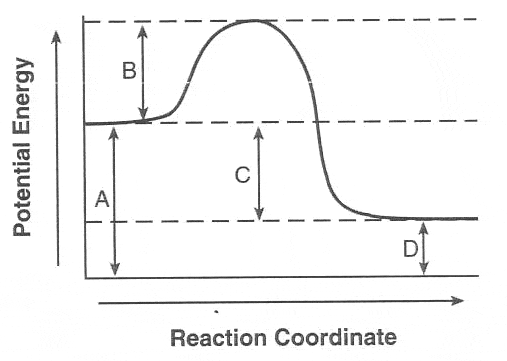
What letter represents the energy of the products?
a)
A
b)
B
c)
C
d)
D
2.
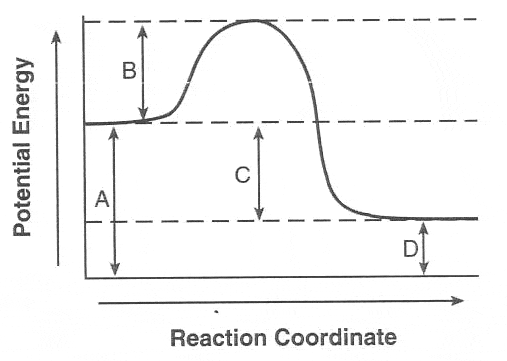
What type of reaction is this?
a)
Endothermic
b)
Exothermic
3.
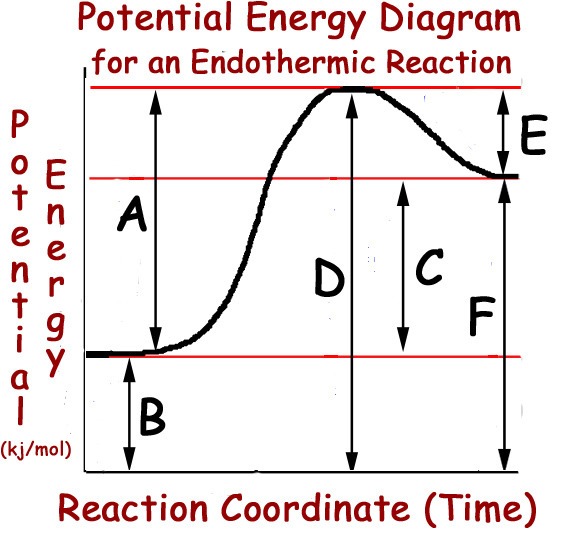
What letter represents the activation energy?
a)
A
b)
B
c)
C
d)
D
4.
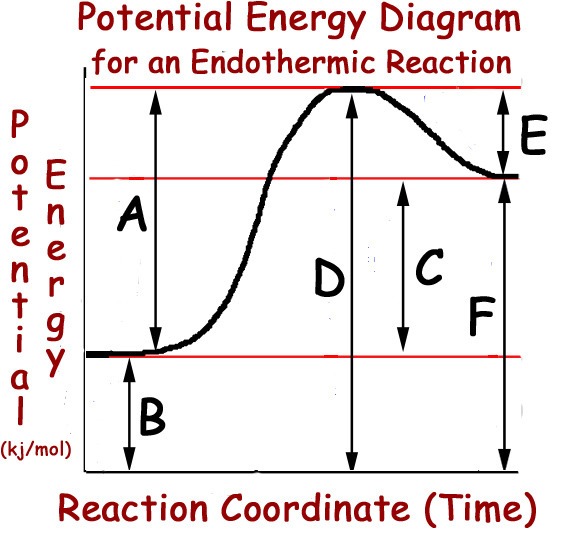
Is this reaction endothermic or exothermic?
a)
endothermic
b)
exothermic
5.
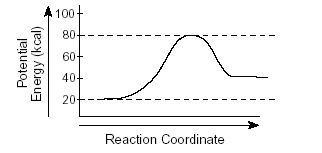
What is the ΔH of this reaction?
a)
40 kJ
b)
20 kJ
c)
80 kJ
d)
-60 kJ
6.
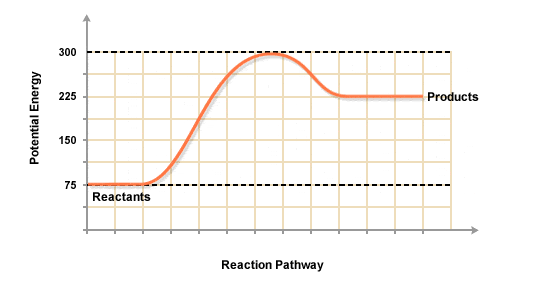
What is the energy of the activated complex?
a)
75 kJ
b)
225 kJ
c)
300 kJ
d)
225 kJ
7.
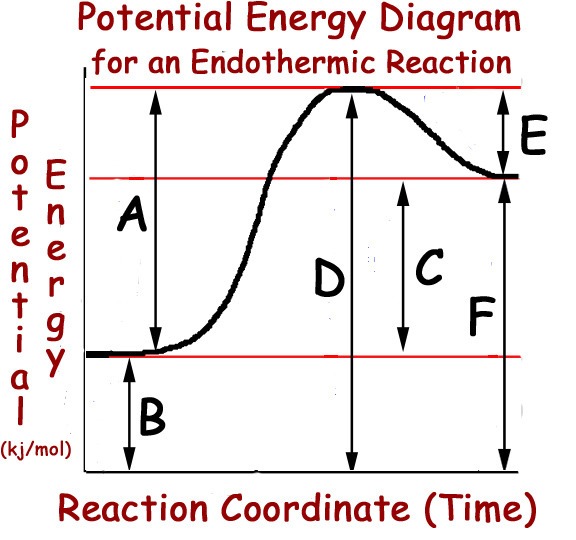
What letter represents ΔH?
a)
A
b)
B
c)
C
d)
D
8.
What is the sign of ΔH for all endothermic reactions?
a)
Positive
b)
Negative
9.
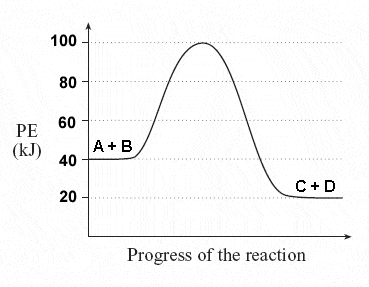
What is the activation energy?
a)
40 kJ
b)
20 kJ
c)
100 kJ
d)
60 kJ
10.
What is the change of the heat of the reaction (ΔH)?
a)
-40 kJ
b)
-20 kJ
c)
100 kJ
d)
60 kJ
11.

Which letter represents the activation energy?
a)
B
b)
E
c)
C
d)
D
12.

What is the PE of the reactants?
a)
100 kJ
b)
175 kJ
c)
50 kJ
d)
75 kJ
13.
What is the PE of the products?
a)
100 kJ
b)
175 kJ
c)
50 kJ
d)
75 kJ
14.
What is the activation energy?
a)
100 kJ
b)
175 kJ
c)
50 kJ
d)
75 kJ
15.
What is the change of the heat of the reaction (ΔH)?
a)
100 kJ
b)
-175 kJ
c)
-50 kJ
d)
75 kJ
16.

Which letter represents the enthalpy change for the reaction?
a)
A
b)
B
c)
C
d)
D
e)
E
17.

What is the energy of the activated complex?
a)
20 kJ
b)
40 kJ
c)
60 kJ
d)
80 kJ
e)
100 kJ
18.
What type of reaction is this?
a)
Endothermic
b)
Exothermic
19.

Which of the following phase changes would this type of energy diagram refer to?
a)
melting
b)
evaporation
c)
sublimation
d)
condensation
20.
What is the ΔH of this reaction?
a)
40 kJ
b)
20 kJ
c)
80 kJ
d)
60 kJ
21.
What is the energy of the activated complex?
a)
75 kJ
b)
225 kJ
c)
300 kJ
d)
225 kJ
22.
What is the sign of ΔH for all endothermic reactions?
a)
Positive
b)
Negative
100 %

