
 Worksheets
Final Exam
Total questions: 25
Worksheet time: 28mins
Heat flows from
Cold to Hot
Hot to Cold
Both of the above
None of the above
What does the 3rd Law of Thermodynamics mean?
Heat flows from Hot to Cold
We are always at Absolute Zero
We can NEVER reach Absolute Zero
Entropy causes a system to move towards disorder
A 0.250 kg cart moving at 0.400 m/s has how much momentum?
A boy kicks a football with a force of 20 N, the time the force acts for is 0.3 s. Calculate the impulse on the ball.

Use the picture to answer the following question:
What type of wave is shown in this diagram?
transverse
compression
electromagnetic
wavelength
amplitude


Are the magnetic field lines in the picture correct?
Yes, because they point from north to south.
No, because they point from north to south (they're supposed to go the other way).
Yes, because the North pole is on the left in all pictures.
No, because the North pole is on the left in all pictures (it's supposed to be on the right).
What process causes the ground to become positively charges during a thunderstorm?
induction by the negatively-charged cloud
induction by the positively-charged cloud
contact with lightning
negatively-charged raindrops
If a storm cloud has a negative charge and the ground has a positive charge, what could occur?
rain
hail
fog
lightning
What is the Voltage of a circuit that has a resistance of 5 Ω and a current of 2 A?
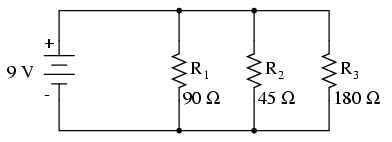
The total resistance of this circuit is...?

What is the equivalent or total resistance (Re) across this circuit?
3 kΩ
10 kΩ
13 kΩ
18 kΩ


Mass energy relation is
E = m×c2
E=T+V
E=T−V
M=E×c2
Photoelectric effect provides the evidence for the ______ nature of light.
dual
wave
particle
electromagnetic
Why are there no Negatives in the Kelvin Temperature Scale?
Scientists don't like it so we just drop the negative
There are negatives in the Kelvin Temperature Scale.
It is an Absolute Scale
Particles that have a positive charge will be attracted to particles with a _______ charge.
Positive
Negative
Neutral
This force occurs when there is an attractive and repulsive force between two POLES.
Magnetic
Electric
Electromagnetism

