
 Worksheets
PREHISTORY 4ºEP
Total questions: 45
Worksheet time: 24mins
Which one is not a period of History?
Ancient History
Modern Age
Paleolithic
Prehistory
Early Modern Age
A century means...
10 years
100 years
1000 years
50 years
What's the meaning of A.D.?
Years and centuries after Jesus was born
Years after Jesus was born
Centuries after Jesus was born
Years before Jesus was born
What's the meaning of B.C?
centuries before Jesus was born
years before Jesus was born
Centuries and years after Jesus was born
Centuries and years before Jesus was born
Ancient History finished when...
people invented writing
French Revolution happened
Columbus discovered America
Roman Empire fell
Modern Age finished with ...
French Revolution
Roman Empire
War of Independence
Writing
Early Modern Age finished..
Columbus discovered America
Roman Empire
French Revolution
Writing
Middle Ages finished when...
Columbus discovered Africa
Columbus discovered America
Around 1492
In 15th century
Prehistory is divided into...
2 periods
3 periods
1 period
4 periods
Nomadic means...
people live in permanently in one place
people went from one place to another
people like agriculture
people built huts
Name the oldest period
Prehistory
Neolithic
Paleolithic
Metal Ages
Which of these words are about Paleolithic?
fire
agriculture
huts and caves
tools
Tools are made of...
animal skins
stones
woods
animal bones
Find three words about Neolithic...
agriculture
nomadic
sedentary
artisans and farmers
Sedentary means...
people stopped moving around
People went from one place to another
People live permanently in one place
People live in caves and huts
Who discovered agriculture?
Paleolithic People
Metal age people
Neolithic people
prehistory people
What's the meaning of TRADE?
Ceramic
Exchange
Artisans
Crops
Bronze and Iron Age people.......... metal to make different shapes
metalworker
evaporated
freezed
melted
After this was invented, people could transport things more easily
Fire
Agriculture
Wall
Wheel
People built this to defend their villages
Wall
Wheel
Window
Wardrobe
__________________ started when people invented writing.
Prehistory
Ancient History
The Middle Ages.
Who is an anthropologist?
A person who studies the origin, history and prehistory through the excavation of sites and the analysis of artifacts and other physical remains.
A person that studies the origin, history, structure, and composition of the Earth.
A person who studies living things.
A person who designs buildings and supervises their construction.
What is a hunter-gatherer?
A person who collect different things.
A member of a nomadic people who live chiefly by hunting and fishing and harvesting wild food.
A person who farms.
A member of the community who helps other.
What is prehistory?
Actual time and events.
The time when written records were kept.
The time before written records were kept.
The time you were born.
What is a fossil?
Decomposed organism.
The remains of ancient cities.
The remains or impression of a prehistoric organism preserved in petrified form or as a mold or cast in a rock.
The remains of organisms after a storm, fire or anatural disaster
Prehistory corresponds to these ages.
Paleolithic, Neolithic and Metal ages.
Paleolithic, Neolithic and Modern age.
Modern age, Ancient age and Prehistory
Stone age, Metal ages and Iron age.

Who lived in the Iberian Peninsula during Ancient Times? (choose TWO answers)
Sumerians
Iberians
Babylonians
Celts
Egyptians
Choose: The ________ lived in castros.
Iberians
Celts
Both
The ____ lived in the east and the south of the peninsula.
Celts
Iberians
Both
The ____ lived in the north and centre of the peninsula.
Celts
Iberians
Both
The _________ traded with the Greeks, Phoeninicians and Carthaginians.
Celts
Iberians
Both
Thy Knew how to do metal work.
Celts,
Iberians
Both
They sculpted the Toros de Guisando.
Celts
Iberians
They were good farmers.
Celts
Iberians
Both
They lived in walled towns in elevated areas.
Celts
Iberians
Both

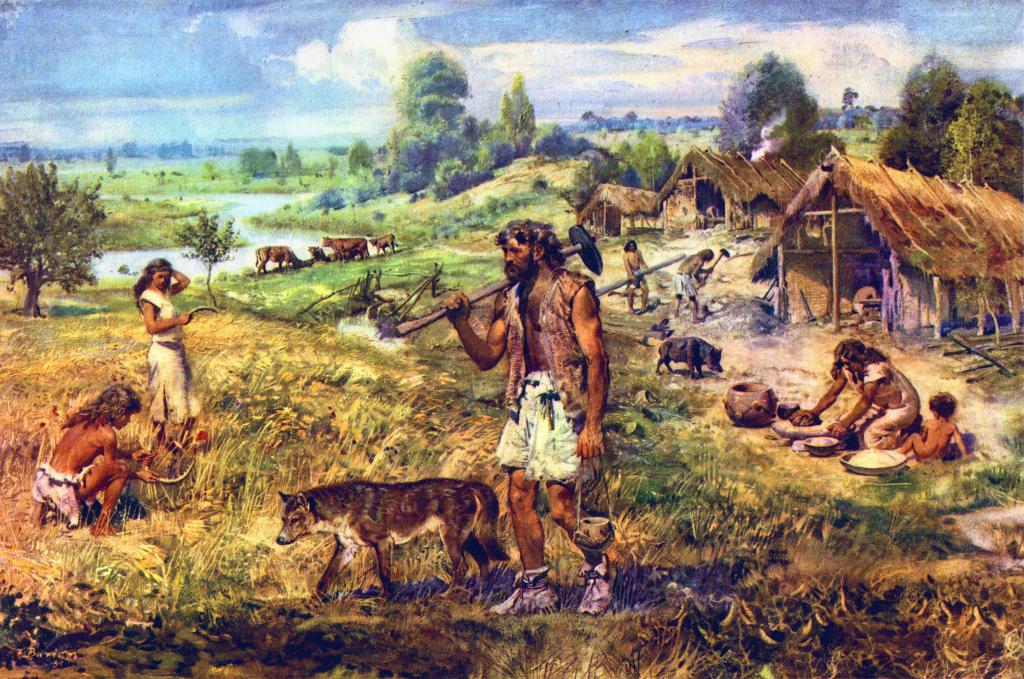
This picture you can see belongs to________
Paleolithic
Neolothic
Metal ages.

This picture you can see belongs to
Paleolithic
Neolithic
Metal ages.

In order to express ideas, early humans
wrote letters
painted in caves
played music
posted on Facebook

What led to the first permanent settlements?
agriculture
megaliths
migration
language

Which of the following were Stone Age tools NOT made of?
stone
bone
bronze
wood

The following describes which Stone Age era?
- Man-made fire
- Domestication of plants and animals
- Agriculture
Mesolithic
Neolithic
Paleolithic
Bronze Age

Historians believe that people first lived in
Asia
Africa
Europe
North America

How did domestication affect community life?
People did not need tools.
People searched for different foods.
People did not need to hunt for food anymore.
People had less food.

Humans had to hunt for food.
Paleolithic
Neolithic

