
Font size
 Worksheets
Science Unit 9-10 Review
Total questions: 36
Worksheet time: 56mins
How does the giraffes long neck help it survive in the African grasslands? This structure functions to help the giraffe
Run very quickly
Reach tree branches
Drink from ponds
Hide from predators
Why might some plants have thorns?
To protect themselves
To look pretty
To take in nutrients
To provide shade for the plant
What is an inherited trait?
A trait handed down to you by your parents.
A trait you developed because of the environment.
A trait handed to you from your friends.
A trait you developed as an adult.
What is NOT an example of an inherited trait?
Eye color
Hair color
Favorite color
Tongue rolling
What characteristic is most likely to be inherited by a baby?
Being hungry
The ability to talk
Crying every 5 minutes
Blue eyes
What do we call the product of parents?
Teenager
Child
Offspring
Infant
What do we call a behavior animals are born to do?
Learned behaviors.
Instincts.
Environmental behaviors.
Physical characteristics.
Curly hair is a _______.
Inherited trait.
Behavioral trait.
Learned trait.
Instinct.
Which is an example of inherited traits in plants?
The plant with purple flowers came from a plant with purple flowers.
The plant with green seeds came from a plant with purple seeds.
The plant with purple flowers is facing the sun.
The plant with yellow leaves drank a lot of water.

Dolphin tricks?!?
Inherited
Learned

The shape of your toes are...
inherited
learned

A student writing his name
Learned
Inherited
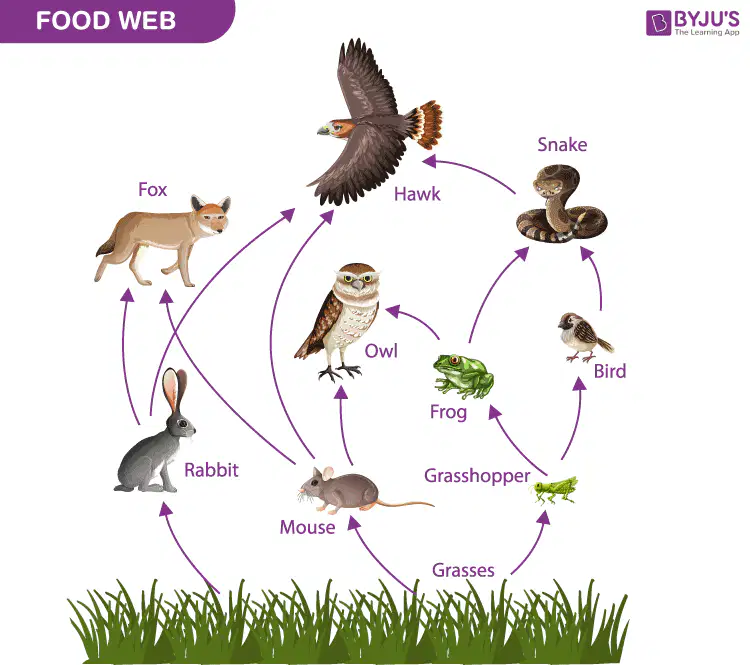
The snake gets energy from the...
Mouse & Owl
Rabbit & Fox
Frog & Owl
Frog & Bird

If the hawk was eliminated from the food web, what would happen to the population of rabbits and mice?
Both populations would increase.
Both populations would decrease.
The rabbit population would increase, and the mouse population would decrease.
The mouse population would increase and the rabbit population would decrease,
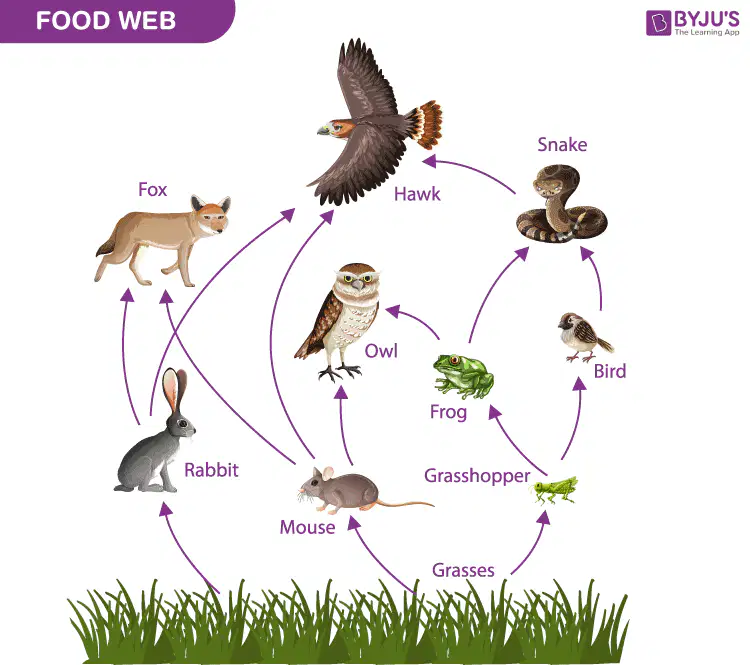
If the grasshopper population was eliminated from the food web, which statement best descibes the effect on the food web?
Frogs, grasses and bird popultions would all increase.
The fox population would decrease.
The sanke and hawk population would decrease.
The grasses would increase and the frog and bird population would decrease.
Which group of organisms are considered producers?
Owls
Cranes
Eagles
Lions
Tigers
Cheetahs
Horses
Cows
Camels
Algae
Trees
Phytoplankton

which statement correctly describes the transfer of energy in a food chain in this ecosystem?
energy is transferred from berries to bears to elk
energy is transferred from grasses to marmots to bobcats
energy is transferred from bobcats to grouses to grasses
energy is transferred from grasses to elk to grouses

Which organisms in this food web only eats producers?
Fruit bats and bandicoots only
insects and fruit bats
rufous owls, bandicoots and pythons only
insects only

Which organisms in this food web eat only consumers?
spider monkey and butterfly only
spider, poison dart frog and butterfly only
jaguar, carcara, spider and poison dart frog only
poison dart frog and jaguar only

plant
rabbit
mouse
hawk
What does a Food Chain always begin with?
Producers
Primary Consumers
Heterotrophs
Grass

What are some of the primary consumers in this Food Web?
Owl
Grasshopper
Mouse
Bird
Rabbit



While hiking in a forest, a girl found a fossil embedded in a boulder. The fossil is shown.
What does the fossil tell us about the nature of the environment in the past?
The area was once covered by water.
The area was once much cooler.
The area was once at a higher elevation.
The area will soon be covered by water.


Which layer is the youngest or most recent?


The diagram shows fossils in different rock layers. Which of these statements about the age of these fossils is most likely correct?
Fossil A and C are the same age
Fossil B is older than fossil C
Fossils A is older than fossil B
Fossil D is older than fossil C

