Wayground logo

Free Printable Worksheets

Font size

S
M
L
XL
Worksheets

Chemistry Final Review

Total questions: 72

Worksheet time: 2hrs 48mins

Name
Class
Date
1.
a)
test tube clamp
b)
tongs
c)
ring stand
d)
buret clamp
2.
a)
test tube clamp
b)
tongs
c)
ring stand
d)
buret clamp
3.
a)
beaker
b)
graduated cylinder
c)
erlenmeyer flask
d)
test tube
4.
a)
scoopula
b)
ring stand
c)
beaker
d)
crucible
5.
Identify the equipment shown here:
a)
concave glass
b)
convex glass
c)
watch glass
d)
glass plate
6.
Identify the equipment shown here:
a)
wire gauze
b)
flame spreader
c)
sieve
d)
mesh
7.

What kind of change is cutting paper?

a)
b)
8.
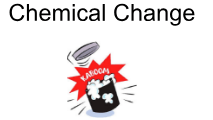
Chemical change or physical change?
a)
Chemical Change
b)
Physical Change
9.
Chemical change or physical change?
a)
Chemical Change
b)
Physical Change
10.
Chemical change or physical change?
a)
Chemical Change
b)
Physical Change
11.

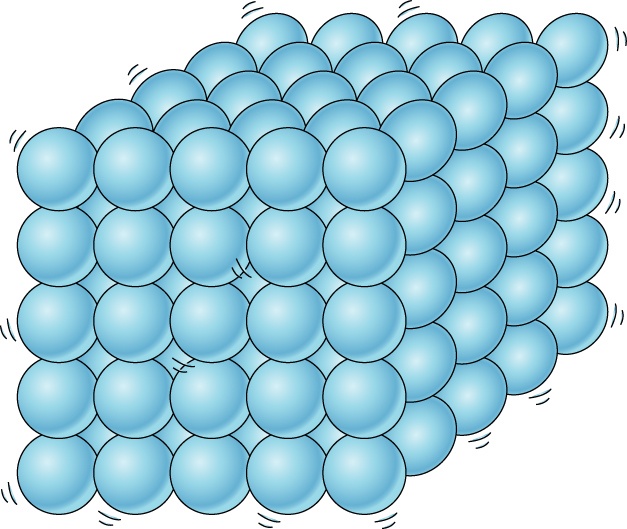
What state of matter?

a)

Solid

b)

Liquid

c)

Gas

d)

Plasma!!!

12.

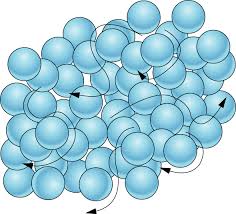
What state of matter?

a)

Solid

b)

Liquid

c)

Gas

13.

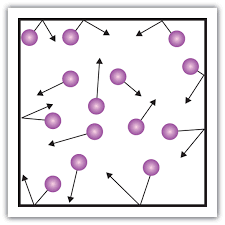
What state of matter?

a)

Solid

b)

Liquid

c)

Gas

14.

The state of matter in which a material has a definite volume and a definite shape is the:

a)

Solid

b)

Liquid

c)

Gas

d)

Plasma

15.
Something that takes up space and has mass.
a)
volume
b)
matter
c)
mass
d)
density
16.
How many significant figures: 216 m
a)
1
b)
2
c)
3
d)
0
17.
How many significant figures: 153.0 mL
a)
1
b)
2
c)
3
d)
4
18.
How many significant figures: 0.012 km
a)
1
b)
2
c)
3
d)
4
19.
How many significant figures: 1000 mL
a)
1
b)
2
c)
3
d)
4
20.
How many significant figures: 100.000 cL
a)
1
b)
3
c)
5
d)
6
21.
Research Question: Does the type of gasoline put in a car effect how fast the car can drive. What is the independent variable?
a)
Type of gasoline
b)
which car the gas is put into
c)
how fast the car can drive
d)
how much gas is put into the car
22.
Which variable do you change in an experiment?
a)
Dependent
b)
Independent
23.

Which subatomic particle has no charge (neutral)?

(a)  

24.

What charge do electrons have?

a)

+1

b)

0

c)

-1

25.
The positive particles of an atom are 
a)
electrons 
b)
positrons 
c)
neutrons 
d)
protons 
26.
What does the nucleus consist of?
a)
Protons + Electrons
b)
Neutrons + Electrons
c)
Atoms
d)
Protons + Neutrons
27.

which explanation of this notation is correct?

a)

12 is proton #

b)

6 tells you there are 6 neutrons

c)

6 tells you there are 6 protons

d)

12 is not a mass # here

28.

What is the mass number of "F"

a)

9

b)

18

c)

17

d)

19

29.
How many neutrons does the isotope of lithium have?
a)
8
b)
3
c)
4
d)
5
30.
How many neutrons would Fe-56 have?
a)
56
b)
26
c)
30
d)
33
31.
How many protons does P-30 have?
a)
30
b)
16
c)
12
d)
15
32.
If an atom of nickel has a charge of +3, how many electrons does the atom have?
a)
28
b)
25
c)
26
d)
31
33.
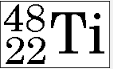
How many protons does this isotope of titanium have?
a)
48
b)
22
c)
26
d)
70
34.
Isotopes are atoms of the same element that have the same number of __________ but different number of __________ . Therefore, isotopes of the same element have different masses. 
a)
protons, neutrons
b)
protons, electrons
c)
neutrons, protons
d)
electrons, protons
35.
What atom matches this electron configuration?
1s22s22p63s23p64s23d10
a)
Zinc
b)
Copper
c)
Nickel
d)
Germanium
36.
What atom matches this electron configuration?
1s22s22p63s2
a)
Neon
b)
Magnesium
c)
Aluminum
d)
Potassium
37.
Group Name and Number for Neon
a)
Alkaline Earth Metals 2 or 2A
b)
Noble Gases 18 or 8A
c)
Halogens 17 or 7A
d)
Alkali Metals 1 or 1A
38.
Group Name and Number for Magnesium
a)
Alkaline Earth Metals 2 or 2A
b)
Noble Gases 18 or 8A
c)
Halogens 17 or 7A
d)
Alkali Metals 1 or 1A
39.
Who first developed the Periodic Table?
a)
Mendeleev
b)
Mosely
c)
Mendella
d)
Murphy
40.
What is the formula to solve for the neutron?
a)
Mass + Atomic Number= Neutrons
b)
Mass x Atomic Number = Neutrons
c)
Mass - Atomic Number = Neutrons
d)
Mass + Number of Protons = Neutron
41.

This is a correct dot diagram for nitrogen (N)

a)

true

b)

false

42.
What is the correct formula for this molecule?
a)
NH
b)
N3H
c)
NH3
d)
NH4
43.
What is the correct structure for BF3?
a)
Option A
b)
Option B
c)
Option C
d)
Option D
44.

This group of elements sit along a stair step line on the periodic table and have properties of both metals and nonmetals. _________________________

a)

luster

b)

metals

c)

nonmetals

d)

metalloids

45.
Which elements are found on the left to middle of The Periodic Table? 
a)
Metals
b)
Nonmetals
c)
Metalloids
d)
Candles
46.
Which elements are found on the right side of The Periodic Table?
a)
Metals
b)
Nonmetals
c)
Metalloids
d)
Water
47.

A bond between a metal and a nonmetal is called a(n)

a)

covalent bond

b)

ionic bond

c)

metallic bond

d)

transfer bond

48.

A bond between a nonmetal and a nonmetal is called a(n)

a)

covalent bond

b)

ionic bond

c)

metallic bond

d)

transfer bond

49.

What type of bond involves the sharing of electrons between atoms?

a)

covalent bond

b)

ionic bond

c)

metallic bond

d)

transfer bond

50.

Identify the following compound as ionic or covalent: MgO

a)

ionic

b)

covalent

51.

Identify the following compound as ionic or covalent: Na2SO4

a)

ionic

b)

covalent

52.

Name the ionic compound, LiCl

a)

lithium chlorine

b)

lithium chloride

c)

lithium chlorate

d)

lithium monochloride

53.

Name the ionic compound, CaCO3

a)

calcium carbide

b)

calcium carbon trioxide

c)

calcium carbon oxide

d)

calcium carbonate

54.

Name the ionic compound, FeBr3

a)

Iron (II) bromide

b)

Iron (III) bromide

55.
K20 - name?
a)
potassium dioxide
b)
potassium oxide
c)
potassium oxygen
d)
dipotassium dioxide
56.

What is the formula for diphosphorus pentoxide?

a)

P2O5

b)

PO5

c)

P5O2

d)

Po2O5

57.
Name the acid: H3PO3
a)
hydrophosphoric acid
b)
phosphorous acid
c)
phosphoric acid
d)
phosphoric hydroxide
58.
What is the formula for hydrochloric acid?
a)
HCl
b)
HClO
c)
H3ClO3
d)
HClO3
59.
What is the formula for nitric acid?
a)
HNO2
b)
HNO3
c)
HNO4
d)
H2NO3
60.
What is the molar mass of fluorine gas?
(beware!)
a)
18.998 g/mol
b)
38 g/mol
c)
9 g/mol
d)
18 g/mol
61.
What is the molar mass of CO2?
a)
12
b)
16
c)
32
d)
44
62.

A mole can be represented by the (SELECT ALL CORRECT ANSWERS)

a)

22.4 liters of a gas at STP

b)

The amount of molecules or atoms in a substance

c)

Molar mass found on the periodic table of elements

d)

The amount of fission or fusion decay over time

63.

2 C2H6 + 7 O2 → 4 CO2 + 6 H2O

Ethane (C2H6) combusts in the above reaction. What is the mole ratio of ethane to oxygen gas?

a)
b)
c)
d)
64.

Find the mass of 3.8 mol of H2O. Round to the nearest tenth.

a)

57.9 g

b)

54.8 g

c)

68.4 g

d)

62.3 g

65.
Balance this equation
_Zn+_HCl-->_ZnCl2 +_H2
a)
1,1,2,1
b)
1,1,1,2
c)
1,2,1,1
d)
2,1,1,1
66.
Balance this equation.
_Mg + _Cl2 --> _MgCl2
a)
1, 2,1
b)
already balanced
c)
2,1,1
d)
1,1,2
67.

What type of reaction involves the breaking down of a substance into simpler substances?

a)

Single Displacement Reaction

b)

Double Displacement Reaction

c)

Synthesis Reaction

d)

Decomposition Reaction

68.

What type of chemical reaction is this one?

Al(OH)3 --> Al2O3 + H2O

a)

Decomposition

b)

Combustion

c)

Synthesis

d)

Single Replacement

69.

What type of chemical reaction is this one?

CUO + CO2 --> CuCO3

a)

Decomposition

b)

Combustion

c)

Synthesis

d)

Single Replacement

70.

What type of chemical reaction is this one?

Ca + MgCl2 --> CaCl2 + Mg

a)

Decomposition

b)

Combustion

c)

Synthesis

d)

Single Replacement

71.

What type of chemical reaction is this one?

C2H2 + O2 --> CO2 + H2O

a)

Decomposition

b)

Combustion

c)

Synthesis

d)

Single Replacement

72.
2Al + 3H2SO4 -> Al2(SO4)3 + 3H2
How many grams of aluminum sulfate would be formed if 250g H2SO4 completely reacted with aluminum?

a)
0.85 g
b)
290 g
c)
450 g
d)
870 g