wayground logo

Free Printable Worksheets

Font size

S
M
L
XL
Worksheets

SEMESTER 2 Practice Test

Total questions: 251

Worksheet time: 4hrs 10mins

Name
Class
Date
1.
An abnormal mass of cancer cells is called a 
a)
tumor
b)
cyst
c)
lesion
d)
polyp
2.
Cancer creates abnormal cells by disrupting
a)
the cell cycle
b)
red blood cell formation
c)
DNA replication
d)
ATP synthesis
3.
Any substance that is known to cause cancer is called a
a)
carcinogen
b)
nicolyte
c)
pathogen
d)
retrovirus
4.
Metastasis is
a)
the spread of cancer from one part of the body to another.
b)
the growth of tumors in the lungs
c)
cancer of the blood cells
d)
cancer that is found in connective tissues
5.
Using drugs or medicines to destroy cancer cells.
a)
chemotherapy
b)
radiation therapy
c)
cancer surgery
d)
mitotic spindling
6.
Tube that carries swallowed food to the stomach
a)
esophagus
b)
liver
c)
pancreas
d)
rectum
7.
What happens when the food goes to the small intestine?
a)
nutrients gets into the blood
b)
the food keeps on going
c)
nothing
8.
Chewing food is an example of _____________.
a)
chemical digestion
b)
mechanical digestion
9.
The acid in your stomach used for digestion.
a)
sodium bicarbonate
b)
insulin
c)
hydrochloric
d)
amylase
10.
The main purpose of the large intestine.
a)
absorb hormones
b)
absorb protein
c)
absorb nutrients
d)
absorb water
11.
The organ that stores bile.
a)
gall bladder
b)
stomach
c)
liver
d)
appendix
12.

This organ does not actually touch the food but it secretes enzymes to help break down foods.

a)

Esophagus

b)

Pancreas

c)

Large Intestine

d)

Rectum

13.
The lining of the small intestine that absorbs the nutrients from digested foods.
a)
Ureters
b)
Villi
c)
Gallbladder
d)
Pancreas
14.
What does the stomach do to your food?
a)
Pulls the vitamins and minerals out.
b)
Helps move food to the back of your throat.
c)
Turns it into a liquid mixture.
d)
Collects the waste.
15.
What does the tongue do to help with your digestion?
a)
Breaks the food into smaller pieces.
b)
Begins breaking food down with acid.
c)
Helps your esophagus to stretch.
d)
Pushes the food around and to the back of your throat.
16.
The main function (job) of the digestive system is to 
a)
get rid of waste.
b)
break down food so the body can use it.
17.
The excretory system is responsible for
a)
breaking down food.
b)
getting rid of liquid, solid, and gas waste.
18.
The digestive juices are made up of
a)
vitamins and minerals.
b)
enzymes and hydrochloric acid.
19.
Waste leaves the body from
a)
the skin, the urethra, the lungs, and the anus.
b)
the rectum and the bladder.
20.
A bolus is what we call food after
a)
it leaves the stomach.
b)
it is chewed and swallowed.
21.
Chyme is the soupy, mostly digested food that leaves
a)
the stomach.
b)
the mouth.
22.
The finger-like projections that absorb nutrients in the small intestine are called
a)
alveoli.
b)
villi.
23.
Kidneys, ureters, bladder, nephrons, and urethra are all parts of the 
a)
urinary system.
b)
endocrine system.
24.
What is the main function of the excretory system?
a)
to collect and remove wastes from the body
b)
to strengthen skeletal muscles
c)
to protect the nervous system
d)
to bring oxygen to body cells
25.
How many valves does  the heart have ? 
a)
7
b)
4
c)
d)
26.
How many chambers does the heart have ? 
a)
4
b)
6
c)
3
d)
1
27.
The average blood pressure is 
a)
120/80
b)
80/120
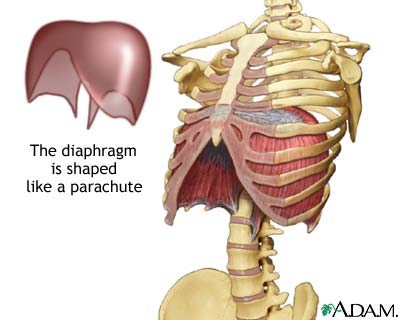
c)
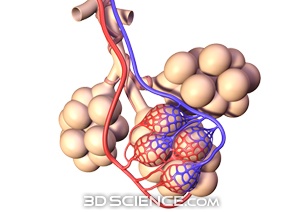
115/180
d)
120/180
28.
Blood enters the right atrium through 
a)
pulmonary veins
b)
vena cavaes
c)
pulmonary arteries
d)
aorta
29.
Which part of the heart pumps deoxygenated (oxygen-poor) blood?
a)
Left side
b)
Right side
c)
Top side
d)
Bottom side
30.
Which vessels carry blood to the heart?
a)
Veins
b)
Arteries
c)
Capillaries
31.
Which vessels carry blood away from the heart?
a)
Veins
b)
Arteries
c)
Capillaries
32.
_______ circulation takes blood from the heart to the lungs and back.
a)
Systemic
b)
Pulmonary
c)
Body
d)
Blood
33.
The bottom chambers of the heart are called
a)
ventricles
b)
atria
c)
vena cava
d)
valves
34.

Blood cell that protect the body against infection

a)

Platelets

b)

Plasma

c)

Hemoglobin

d)

White Blood Cells

e)

Blood

35.

The fluid in which other parts of the blood are suspended

a)

Platelets

b)

Blood

c)

Plasma

d)

Hemoglobin

e)

White Blood Cells

36.

Types of cells in the blood that causes blood clots to form

a)

Platelets

b)

Blood

c)

Plasma

d)

Hemoglobin

e)

White blood cells

37.

The fluid that delivers oxygen, hormones, and nutrients to the cells and carries away wastes

a)

Platelets

b)

Blood

c)

Plasma

d)

Hemoglobin

e)

White Blood Cells

38.

The oxygen-carrying protein in blood

a)

Platelets

b)

Blood

c)

Plasma

d)

Hemoglobin

e)

White Blood Cells

39.

The top two chambers of the heart

a)

Pulmonary Cirvulation

b)

Valves

c)

Atria

d)

Ventricles

e)

Septum

40.

These are between the atria and ventricles that allow blood to flow through the chambers

a)

Pulmonary Circulation

b)

Valves

c)

Atria

d)

Ventricles

e)

Septum

41.

Small vessels that carry blood from arterioles and to small vessels called venules which then empty into veins

a)

Arterioles

b)

Arteries

c)

Veins

d)

Venules

e)

Capillaries

42.

Blood vessels that return blood to the heart

a)

Arterioles

b)

Arteries

c)

Venules

d)

Veins

e)

Capillaries

43.

Can donate red blood cells to only B & AB

a)

Type O

b)

Type AB

c)

Type B

d)

Type A

44.

A universal donor

a)

Type O

b)

Type AB

c)

Type B

d)

Type A

45.

Can donate red blood cells to only AB but can receive from all others.

a)

Type O

b)

Type AB

c)

Type B

d)

Type A

46.
The system of the body that brings oxygen into the body and releases carbon dioxide.
a)
respiratory​ ​system​
b)
skeletal system
c)
muscular system
d)
circulatory system
47.
Organs of the respiratory system that bring oxygen-rich air into​ ​the body and send oxygen-poor air out of the body.
a)
heart
b)
muscles
c)
lungs
d)
bones
48.
The process of taking in oxygen and releasing carbon dioxide from the body.
a)
transpiration 
b)
respiration 
c)
digestion
d)
relaxation
49.
The tube in the body through which air moves as it travels to and from the lungs;the windpipe.
a)
heart
b)
bone
c)
blood vessel
d)
trachea 
50.
Tiny air sacs in the lungs that are the site of gas exchange between the lungs and blood.
a)
alveoli​
b)
relax
c)
diaphragm​
d)
nose
51.
A wide muscle that separates the chest cavity from the abdominal cavity and aids in the inflation of the lungs.
a)
diaphragm​
b)
heart
c)
nose
d)
trachea
52.
What is the respiratory system ? 
a)
The respiratory system is the system that helps circulate our blood . 
b)
The respiratory system is the system that takes in oxygen and takes the unneeded particles and creates carbon dioxide. 
c)
The respiratory system is  a system that is similar to the circulatory system. 
d)
The respiratory system is a system that holds the heart as an internal organ. 
53.
The cells produced via meiosis are called:
a)
sex cells
b)
somatic cells
c)
body cells
d)
skin cells
54.
Unlike mitosis, meiosis in male mammals results in the formation of
a)
one haploid gamete
b)
three diploid gametes
c)
four diploid gametes
d)
four haploid gametes
55.
If the Diploid number of Carrots is 18, the haploid number is
a)
18
b)
9
c)
27
d)
36
56.
If a body cell in a butterfly contains 24 chromosomes, a butterfly egg would contain
a)
3
b)
6
c)
12
d)
24
57.
The chromosomes that pair up during meiosis, are called __________ chromosomes.  
a)
homozygous 
b)
asexual
c)
homologous
d)
genes
58.
How many daughter cells are produced from meiosis ?
a)
10
b)
6
c)
4
d)
2
59.
Name the growth phase of the cell cycle for both Mitosis and Meiosis.
a)
metaphase
b)
telophase
c)
interphase
d)
anaophase
60.
Why do we need meiosis?
a)
To double the number of chromosomes going into sex cells
b)
To halve the number of chromosomes going into sex cells
c)
To triple the number of chromosomes going into sex cells
d)
To not change the number of chromosomes going into sex cells
61.
A human zygote should have _____ chromosomes inside.
a)
46
b)
23
c)
92
d)
64
62.
When an area of a chromatid is exchanged with the matching area on a chromatid of its homologous chromosome, _________________ occurs
a)
crossing over
b)
mutagenesis
c)
hybridization
d)
fertilization
63.

At the end of mitosis you have _____ cells

a)

identical

b)

different

c)

identical twins

d)

variety

64.
products of meiosis are genetically
a)
different
b)
identical
65.
Human eggs and sperm are _____, and each has ____ chromosomes.
a)
diploid, 23
b)
diploid, 46
c)
haploid, 23
d)
haploid, 46
66.
How are your chromosomes inherited?
a)
most of your chromosomes from your mother
b)
most of your chromosomes from your father
c)
a random number of chromosomes from each parent
d)
half your chromosomes from your mother and half from your father.
67.
What causes genetic variation in meiosis?
a)
chromosomes lining up
b)
crossing over of chromosomes
c)
separation of chromosomes
d)
chromosomes pulling apart
68.
Which structure is responsible for creating eggs?
a)
Ovaries
b)
Uterus
c)
Fallopian Tube
d)
Clitoris
69.
Which of these STI's is there a vaccine for?
a)
HPV
b)
HIV
c)
Herpes
d)
Syphilis
70.
Which of these STI's is curable?
a)
Herpes
b)
HIV
c)
HPV
d)
Syphilis
71.
Which of these carries only sperm?
a)
Penis
b)
Urethra
c)
Vas Deferens
d)
Fallopian Tube
72.
What is the term for when the egg is released from the ovary?
a)
Menstruation
b)
Ovulation
c)
Fertilization
d)
Ejaculation
73.
What is the term for when the endometrium breaks down and exits the vagina?
a)
Ovulation
b)
Fertilization
c)
Menstruation
d)
Ejaculation
74.

What would be correct sequence of transmission of an arc reflex.

a)

sensory neuron - motor neuron - response - interneuron

b)

response - motor neuron - interneuron - sensory neuron

c)

sensory neuron - interneuron - motor neuron - response

d)

interneuron - sensory neuron - motor neuron - response

75.

Which of the following is NOT found in RNA?

a)

phosphate group

b)

uracil

c)

ribose sugar

d)

thymine

76.
Two major branches of the nervous system
a)
central and peripheral
b)
peripheral and motor
c)
motor and sensory
d)
central and motor
77.

The nerves in your fingertips are part of the ___ nervous system

a)

central

b)

peripheral

c)

internal

d)

cardiovascular

78.

Neurons send signals in the brain and body via...

a)

neurotransmitters only

b)

electrical impulses only

c)

wifi

d)

neurotransmitters AND electrical signals

79.

An example of involuntary movement would be:

a)

heart beating

b)

walking

c)

talking

d)

wiggling toes

80.

An example of voluntary movement would be:

a)

smiling

b)

heart beat

c)

digestion

d)

breathing

81.

A type of cell that does not have a nucleus or cell membrane bound organelles. Bacteria are this kind of cell.

a)

Eukaryote

b)

Capsid

c)

Prokaryote

d)

Flagellum

82.

A complex type of cell that has organelles. This is the type of cell that we are made of.

a)

Eukaryote

b)

Tail Fiber

c)

Nucleoid

d)

Prokaryote

83.

DNA and/or RNA are...

a)

Lyse

b)

Tail Fiber

c)

Capsid

d)

Genetic Material

84.

This type of medicine only kills prokaryotic cells

a)

Capsid

b)

Lyse

c)

Antibiotics

d)

Flagellum

85.
the process when cytoplasm of a eukaryotic cell divides to produce two cells 
a)
binary fusion
b)
mitosis
c)
spindle formation
d)
cytokinesis
86.
At the  beginning of prophase in Mitosis or Meiosis, __________, condenses to form ______________
a)
nucleus; cells
b)
DNA; nucleus
c)
chromosomes; chromatin
d)
chromatin; chromosomes
87.
The role of spindle fibers is 
a)
to join homologous chromosomes
b)
store nucleotides 
c)
move chromosomes in the cell 
88.
A cell cycle is 
a)
series of events that cells go through as they grow and divide
b)
prophase to cytokinesis
c)
time between birth an death of a cell
d)
series of events in mitosis
89.

Tetrad is made up of

a)

2 chromosomes

b)

2 homologous chromatids

c)

4 homologous chromatids

d)

4 chromosomes

90.
crossing over results in 
a)
identical  cells 
b)
daughter cells
c)
mutations
d)
genetic variation
91.
organisms that make their own food are
a)
autotrophs 
b)
heterotrophs
c)
pigments
d)
thylakoids
92.
Which produces egg cells and female hormones?
a)
cervix
b)
fallopian tube
c)
vagina
d)
ovaries
93.
What do you call the process in which the ovary releases a mature egg cell?
a)
penile erection
b)
ejaculation
c)
ovulation
d)
nocturnal emission
94.

What is the correct pathway for sperm from spermatogenesis to ejaculation?

a)

testes-vas deferens-epididymis-ejaculatory duct-urethra

b)

epididymis-testes-vas deferens-ejaculatory duct-urethra

c)

testes-epididymis-vas deferens-ejaculatory duct-urethra

d)

testes-epididymis-ejaculatory duct-vas deferens-urethra

95.
What is the basic unit of DNA?
a)
amino acid
b)
protein
c)
nucleotide
d)
sugar
96.
If a portion of Strand I of DNA has the base sequence GATCAC, what is the sequence of bases on the complementary Strand II?
a)
GATCAC
b)
CUAGUG
c)
CTACAC
d)
CTAGTG
97.
How many bases encode one amino acid?
a)
1
b)
2
c)
3
d)
4
98.
Changes in the genetic code of a human can be transmitted to offspring if they occur in
a)
cancer cells
b)
cell membranes
c)
skin cells
d)
gametes
99.
The process of assembling amino acids in the correct order at the ribosomes is known as
a)
energy production
b)
DNA replication
c)
digestion
d)
protein synthesis
100.
What type of gene mutation is represented in the following example?
Original Strand: CATTACTAG
Mutated Strand: CATACTAG
a)
Insertion
b)
Deletion
c)
Substitution
d)
Inversion
101.
When a certain plant is grown in a warm temperature, it produces pink flowers, when it is grown in cooler temperatures, it produces purple flowers.  This difference in color is most likely due to the
a)
type of nutrients in the soil
b)
sterilization of the plant
c)
effect of temperature on the gene for color
d)
effect of plant population size on the synthesis of color pigment
102.
What type of molecule is used to cut the gene from the DNA of an organism?
a)
hormone
b)
ligase
c)
restriction enzyme
d)
glucose
103.
B=brown eyes
b= blue eyes
What is true about two brothers that have brown eyes?
One has genotype BB the other Bb.
a)
they have same phenotype and genotype
b)
they have different genotypes and phenotypes
c)
they have same phenotype but different genotypes
d)
they have same genotype but different phenotypes
104.
What does heterozygous mean?
a)
An organism that has the same genes for a trait (TT or tt)
b)
An organism that has different genes for a trait (Tt)
c)
When neither gene is fully dominant; offspring is a mixture of both
d)
the different forms of a trait (hair color--> brown, blonde, red
105.

Two brown eyed parents (Bb) have a baby. What is the chance the baby is blue eyed?

a)

0 %

b)

25%

c)

50%

d)

75%

106.
Which process and type of resulting cells are represented?
a)
mitosis, gametes
b)
mitosis, body cells
c)
meiosis, gametes
d)
meiosis, body cells
107.
What is one advantage of sexual reproduction?
a)
offspring are identical to parents
b)
offspring are resistant to viruses
c)
offspring are born live, rather thna from eggs
d)
offspring inherit a wider variety of genetic information
108.
The sex of an offspring is determined by ______________________.
a)
the mother
b)
the father
c)
the mother and the father
d)
by the environment
109.
Term for homozygous organisms that display two dominant phenotypes at the same time
a)
codominance
b)
incomplete dominance
c)
multiple alleles
d)
linked genes
110.
What is a phenotype?
a)
The expression of a trait; what you see.
b)
refers to the genetic makeup of an individual
c)
An organism that has the same genes for a trait (ex. TT or tt)
d)
the passing of traits from parent to offspring
111.
A chart or family tree that tracks which members of a family have a particular trait or disease.
a)
Carrier
b)
Karyotype
c)
Pedigree
d)
Genome
112.
The transfer of a gene from the DNA of one organism into another organism in order to produce an organism with desired traits.
a)
Genetic Engineering
b)
Karyotype
c)
Pedigree
d)
Genome
113.
A picture of all the chromosomes in a cell arranged in pairs
a)
Pedigree
b)
Karyotype
c)
Genome
d)
Carrier
114.
An organism that is genetically identical to the organism from which it was produced.
a)
Clone
b)
Carrier
c)
Hybridization
d)
Selective Breeding
115.
A gene that is carried on the X or Y chromosome
a)
Sex-linked Genes
b)
Sex Chromosomes
c)
Genome
d)
Genie
116.
A person who has one dominant and one recessive allele for a trait, but does not have the trait.
a)
Clone
b)
Carrier
c)
Diseased
d)
Karyotype
117.
In a pedigree, what shape represents a male?
a)
circle
b)
square
c)
triangle
d)
diamond
118.
What gender has an X and a Y chromosome?
a)
male
b)
female
c)
transgender 
d)
all of the above
119.
Down Syndrome most often occurs when chromosomes fail to separate properly during meiosis?
a)
True
b)
False
120.
The purpose of selective breeding is to 
a)
Get bigger animals
b)
get smaller animals
c)
create animals with desirable traits
d)
create animals with bad traits
121.
What is the name of the plasmid we used for lab?
a)
GFP
b)
bla
c)
araC
d)
pGLO
122.
What did we use to create temperature differential to sweep plasmid inside
a)
heat shock
b)
ice
c)
arabinose
d)
CaCl2
123.
Which plate had bacterial growth and bacterial GLOWth?
a)
LB
b)
LB/Amp
c)
LB/Amp/Ara
d)
All
124.
What is the circular piece of DNA found in bacteria called?
a)
homologous chromosome
b)
sister chromatid
c)
plasmid
d)
arabinose
125.
What does every food chain start with? (Even if it's not drawn or written there!)
a)
producers
b)
sun
c)
consumer
d)
decomposers
126.
What does AAG code for?
a)
Serine
b)
Lysine
127.
What is the anticodon for GAU?
a)
CUA
b)
CUT
128.

How are sexual reproduction and asexual reproduction different?

a)

Sexual reproduction produces offspring identical to the parents, but asexual reproduction produces offspring with traits from both parents.

b)

Asexual reproduction produces offspring identical to the parents, but sexual reproduction produces offspring with traits from both parents.

c)

Sexual reproduction only occurs in multicellular organisms, but asexual reproduction only occurs in unicellular organisms.

d)

Asexual reproduction only occurs in multicellular organisms, but sexual reproduction only occurs in unicellular organisms.

129.
Which best describes the function of enzymes?
a)
to speed up chemical reactions in a cell
b)
to produce cellular energy
c)
to produce proteins
d)
to speed up cell division
130.

Organisms that have two identical alleles for a particular trait are said to be?

a)

Hybrid

b)

Heterozygous

c)

Homozygous

d)

Dominant

131.

Where does translation take place?

a)

Nucleus

b)

Ribosome

c)

Cell membrane

132.

Where does transcription take place?

a)

Nucleus

b)

Ribosome

c)

Cytoplasm

d)

Cell Membrane

133.

What is the purpose of translation?

a)

To make an exact copy of the DNA

b)

To make mRNA

c)

To make a protein

d)

To make tRNA

134.
The correct order of the cell cycle is: 
a)
Interphase, Prophase, Anaphase, Metaphase, Telophase
b)
Prophase, Anaphase, Metaphase, Interphase, Telophase
c)
Interphase, Prophase, Metaphase, Anaphase, Telophase
d)
Interphase, Telophase, Metaphase, Prophase, Anaphase
135.
If T=Tall & t=short, what is the genotypic ratio?
a)
1:3
b)
3:1
c)
1:2:1
d)
2:2
136.
A goat that is heterozygous for long hair (Hh) and curved horns (Cc) mates with a goat that is homozygous for short hair (hh) and straight horns (cc). Which of the following genotypes is impossible for their offspring to have?
a)
HhCc
b)
HHCc
c)
hhCc
d)
hhcc
137.
In fruit flies eye color is carried on the X chromosome. RED is dominant to WHITE. What is the sex and color of the following: XrY
a)
female red
b)
female white
c)
male red
d)
male white
138.
In the second generation-how many people are carriers of the trait?
a)
2
b)
3
c)
5
d)
6
139.
Organisms that have DNA from a different species artificially inserted into their cells are called
a)
bioremediated
b)
transgenic
c)
cultured
d)
a clone
140.
The organ that stores bile.
a)
gall bladder
b)
stomach
c)
liver
d)
appendix
141.

DNA and RNA are two types of

a)

carbohydrates.

b)

lipids.

c)

proteins.

d)

nucleic acids.

142.

Proteins are composed of which molecules?

a)

Amino acids.

b)

Fatty acids.

c)

Monosaccharides.

d)

Nucleic acids.

143.

Glycogen, cellulose, and starch are examples of which macro molecule?

a)

Carbohydrates.

b)

Proteins.

c)

Lipids.

d)

Nucleic Acids.

144.
Organisms must be able to adapt to a changing external and internal environment.  An organism's ability to maintain a stable internal environment is known as homeostasis.  How does a cell's membrane help an organism maintain homeostasis?
a)
Cell membranes directly control the temperature of the cell.
b)
Cell membranes control the substances that enter or leave cells.
c)
Cell membranes use a large portion of the cell's energy supply.
d)
Cell membranes protect the cell organelles from large doses of radiation.
145.
Which of the following types of passive transport involves water molecules moving from a high concentration to a low concentration?
a)
osmosis
b)
simple diffusion
c)
filtration
d)
facilitated diffusion
146.
What type of transport is this?
a)
facilitated diffusion
b)
active transport
c)
diffusion
d)
osmosis
147.
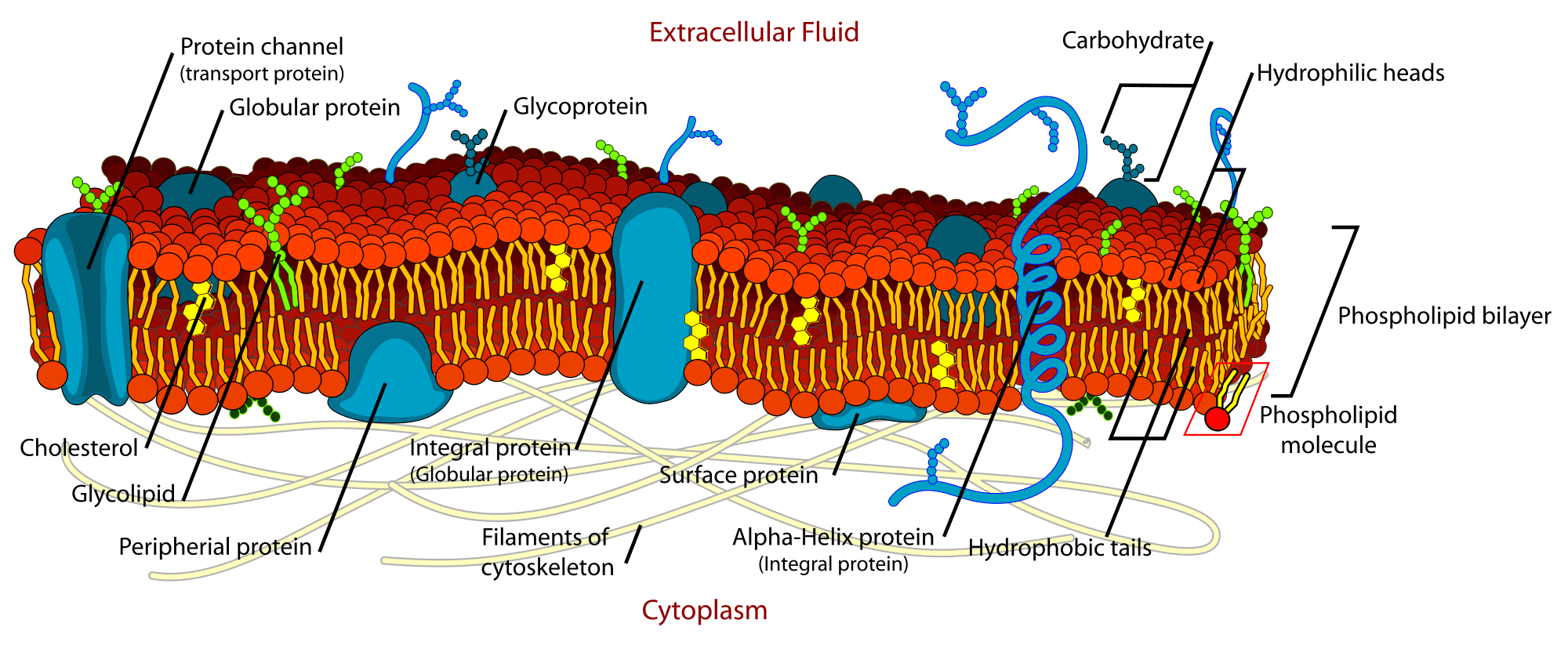
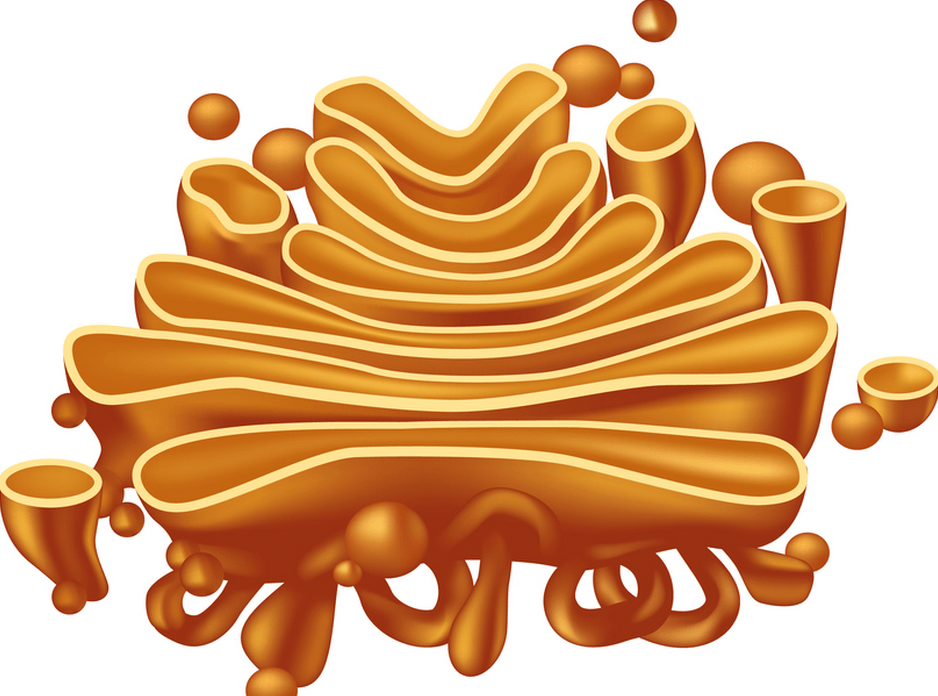
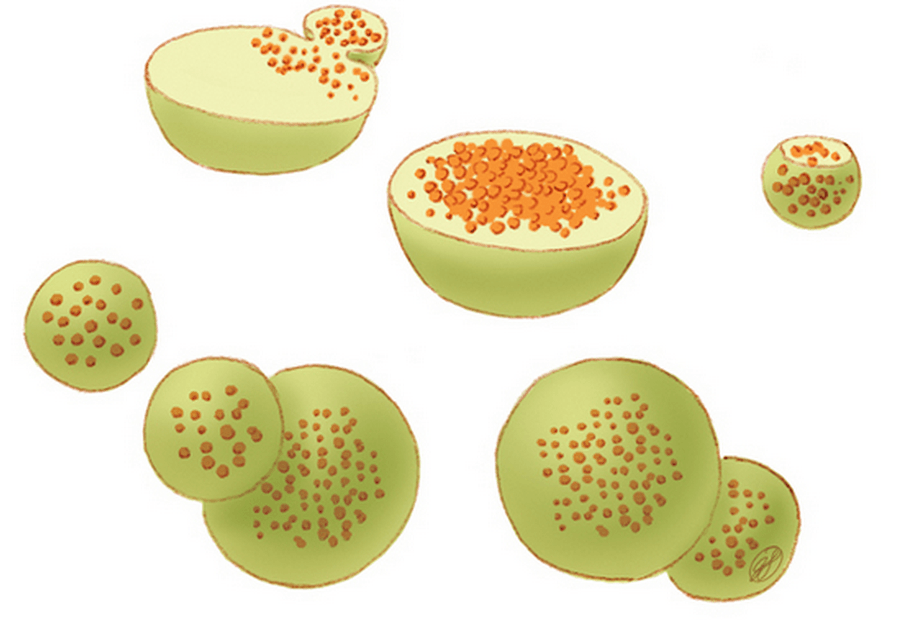
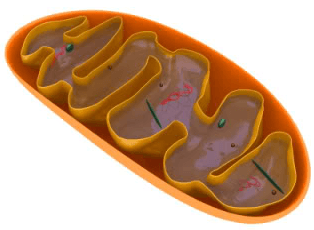
What is this image?
a)
cell membrane
b)
mitochondria
c)
golgi apparatus
d)
endoplasmic reticulum
148.
In which direction will these molecules diffuse?
a)
from right to left
b)
from left to right
c)
they will not move at all
d)
they will move in both directions equally
149.

The cell membrane is selectively permeable, which means...

a)

All materials can enter and leave the cell

b)

Certain things can enter and leave while others cannot

c)

The cell manually sorts through all materials

d)

Only certain cells can interact with the cell.

150.
The difference in the concentration of a substance from one location to another is called 
a)
diffusion
b)
osmosis
c)
concentration gradient
d)
passive transport
151.
The movement of molecules against a concentration gradient
a)
simple diffusion
b)
facilitated diffusion
c)
active transport
d)
osmosis
152.
Most active transport proteins use energy from the breakdown of:
a)
nucleus
b)
cell membrane
c)
ATP
d)
mitochondria
153.
When both inside and outside of a cell have the same amount of water it is said that the cell has reached a state of
a)
Osmosis
b)
Diffusion
c)
Equilibrium
154.

What are the main components of the cell membrane?

a)

DNA, transport proteins, sugar

b)

Carbohydrates, phospholipids, water

c)

Phospholipids, transport proteins, cholesterol

d)

Proteins, water, DNA

155.

What type of solution will cause a cell to lose water and shrivel up?

a)

Hypotonic

b)

Isotonic

c)

Pure solution

d)

Hypertonic

156.

Some factors can change the shape of an enzyme and when an enzyme's shape has changed it no longer works. When this happens we say that the enzyme has been ___.

a)

denatured

b)

altered

c)

modified

d)

renatured

157.

Basic unit of all forms of life

a)

Cell

b)

Nucleus

c)

Prokaryote

d)

Eukaryote

158.

Cell organelle consisting of RNA and protein found throughout the cytoplasm in a cell; the site of protein synthesis

a)

Smooth Endoplasmic reticulum

b)

Ribosome / Rough Endoplasmin reticulum

c)

Nucleus

d)

Nucleolus

159.

Internal membrane system found in eukaryotic cells; place where lipid components of the cell membrane are assembled

a)

Golgi apparatus

b)

Smooth Endoplasmic reticulum

c)

Cytoskeleton

d)

Organelle

160.

Organelle found in cells of plants and some other organisms that captures the energy from sunlight and converts it into chemical energy (photosynthesis).

a)

Chloroplast

b)

Mitochondria

c)

Cell Wall

d)

Lipid Bilayer

161.

What is the major difference between a prokaryote and a eukaryote?

a)

prokaryotes do not have a nucleus

b)

prokaryotes do not have ribosomes.

c)

prokaryotes do not have a cell membrane.

d)

prokaryotes do not contain DNA

162.
Directs all cell activities through the DNA located there.
a)
Lysosomes
b)
Nucleus
c)
ribosomes
d)
Mitochondria
163.
I am a protein packaging and shipping machine! Who am I?
a)
vacuole
b)
ribosome
c)
mitochondrion
d)
golgi apparatus
164.
You might think of me as the trash collector, but recycler is maybe more accurate. What am I?
a)
mitochondria
b)
lysosome
c)
vacuole
d)
ribosome
165.
What are tiny organelles that convert glucose into ATP?
a)
Ribosomes
b)
Vesicles
c)
Cytoskeleton
d)
Mitochondria
166.
A storage area for food, water and waste.
a)
vacuole
b)
chloroplasts
c)
cell wall
d)
cell membrane
167.
"Gatekeeper" It determines what can come in and out of the cell.
a)
cell wall
b)
cell membrane
c)
cytoplasm
d)
vacuole
168.

The purpose of the Petri dish with the p-Glo plasmid added and ampicillin is to...

a)

Fight off invading bacteria

b)

Identify transformed bacteria

c)

Kill all bacteria so the dish is sterile

d)

Destroy extra plasmids

169.

What is pGlo?

a)

A plasmid that dies in the presence of ampicillin

b)

A gene for green fluorescent protein (GFP)

c)

A plasmid with genes for GFP and ampicillin resistance

d)

A chemical that makes jelleyfish glow

170.

On which plate would you find bacteria most like the original non-transformed E. coli?

a)

-pGlo, -AMP

b)

-pGlo, + AMP

c)

+pGlo, +AMP

171.

What is the point of the heat shock and transformation solution?

a)

To kill bacteria we don't want

b)

To make the bacteria's membrane open so the pGlo can go in

c)

To heat the plasmid up so ligase will work

d)

To make the pGlo plasmid

172.

How many of your plates will have the -pGlo bacteria on them?

a)

1

b)

2

c)

3

d)

4

173.

On which plate would you find glowing transformed E. coli?

a)

-pGlo, -AMP

b)

-pGlo, + AMP

c)

+pGlo, +AMP

d)

+pGlo, +AMP + ara

174.

On which plate would you find NOTHING growing?

a)

-pGlo, -AMP

b)

-pGlo, + AMP

c)

+pGlo, +AMP

d)

+pGlo, +AMP + ara

175.

What is LB?

a)

lab

b)

Label B

c)

broth / food

d)

antibiotics

176.

What is Amp?

a)

voltage unit

b)

to be hyper

c)

ampicillin

d)

amplitutde

177.

What is Ara?

a)

arabinose sugar

b)

arachnids

c)

arabic

d)

a clone

178.

What is the name of this type of procedure?

a)

gel electrophoresis

b)

bacterial transformation

c)

cloning

d)

biotech

179.
When something is 'water fearing' it is....
a)
Hydrophobic
b)
Hydrophilic 
c)
Hydroelectric 
d)
Hydrochloric
180.

What is the structure of a phospholipid?

a)

A pair of hydrophobic phosphate tails and a hydrophilic lipid head

b)

A cholesterol head with a pair of lipid tails

c)

A carbohydrate head with cholesterol tails

d)

A pair of hydrophobic lipid tails and a hydrophilic phosphate head

181.

What does a salty solution do to cells?

a)

Puncture holes in their cell membranes

b)

Cause water to flow into the cells

c)

Removes water from the cells

d)

Makes the cells burst

182.

What is homeostasis?

a)

The process of making energy in a cell

b)

The process of maintaining an internal balance while responding to external changes

c)

The process of producing new and healthy cells

d)

The process of converting DNA code into proteins in a cell

183.
A cell in an isotonic solution will
a)
swell
b)
shrink
c)
stay the same size
d)
impossible to tell
184.
ATP is 
a)
the cells usable form of chemical energy
b)
radiant energy
c)
your teachers intials
d)
glucose 
185.

The rough endoplasmic reticulum has which organelles attached to its surface?

a)

lysosomes

b)

cell membrane

c)

ribosomes

d)

vacuoles

186.

What body System is this?

a)

Skeletal

b)

circulatory

c)

respitory

d)

reproductive

187.

What body System is this?

a)

Skeletal

b)

circulatory

c)

Digestive

d)

reproductive

188.

What body System is this?

a)

Muscular

b)

circulatory

c)

Digestive

d)

reproductive

189.

What body System is this?

a)

Muscular

b)

circulatory

c)

Digestive

d)

Nervous

190.

What body System is this?

a)

Muscular

b)

Skeletal

c)

Digestive

d)

Nervous

191.

What body System is this?

a)

Muscular

b)

Skeletal

c)

Digestive

d)

Respitory

192.

What systems provides structure to the body and protects internal organs?

a)

Muscular

b)

Skeletal

c)

Digestive

d)

Respitory

193.

What systems supports the body and allows it to move?

a)

Muscular

b)

Skeletal

c)

Digestive

d)

Reproductive 

194.

What systems breaks down food and absorbs nutrients?

a)

Muscular

b)

Skeletal

c)

Digestive

d)

Reproductive 

195.

What body system transports oxygen, nutrients, and other substances to cells and carries away waste?

a)

Respiratory 

b)

Circulatory 

c)

Nervous

d)

Digestive 

196.

What are the Levels of organization within the body from smallest to biggest living thing?

a)

Atom, Molecule, Biomolecule, Cell

b)

Atom, Molecule, Biomolecule, Cell, Tissue, Organ, Organ System, Organism

c)

Atom, Molecule, Cell, Tissue, Organ, Organ System, Organism

d)

Cell, Tissue, Organ, Organ System, Organism

197.

What is a stem cell?

a)

Cells with no the potential to develop many different types of cells within the body

b)

a cell with a bazillion jobs that it has to stem out

c)

Cells with arms that stem out

d)

Cells with the potential to develop many different types of cells within the body

198.

Once a specialized cell gets a specific job, it can go back to being a basic cell without a job?

a)

True

b)

False

199.
Name the process in the picture.
a)
transcription
b)
mitosis
c)
translation
d)
replication
200.
Name B.
a)
phosophate
b)
glucose
c)
deoxyribose
d)
nitrogen base
201.

Some students used vinegar to dissolve a way the shells of three eggs and used these eggs as models of human red blood cells. The students observed the changes in the eggs when they were placed in different solutions. Which statement best describes the role of the cell membrane in this model?

a)

The cell membrane is an impermeable barrier that prevents water from entering the cell.

b)

The cell membrane allows solutions to enter the cell, which causes the cell to shrink.

c)

The cell membrane allows water to enter and leave the cell.

d)

The cell membrane removes solutes from the environment.

202.

the section of dna has these bases:


TAG CAG TAC


which mRNA sequence is produced from this DNA section

a)

ATC GTC ATG

b)

AUC GUC AUG

c)

AUG CUG AUC

d)

UTC GTC UTG

203.

Viruses are considered nonliving because they need a host to reproduce.

a)

True

b)

False

204.

A cell _______ in a hypertonic solution because water moves _______ the cell.

a)

shrinks; out

b)

shrinks; in

c)

swells; out

d)

swells; in

205.

Which statement is the correct explanation of the function of macromolecules in carrying out a major function in the cell?

a)

Lipids control the rate of cell reactions.

b)

Carbohydrates form waterproof coverings.

c)

Proteins are the main source of energy for the cell.

d)

Nucleic acids store and transmit hereditary information.

206.
Which of the following is the correct equation for PHOTOSYNTHESIS?
a)
CO+ light + H2O --> O+ Sugar
b)
CO+ sugar + H2O --> O+ light
c)
O2 + light + H2O --> CO+ Sugar
d)
CO+ O2 + H2O --> Light+ Sugar
207.
What are the 3 types of muscle tissue?
a)
Thigh, Calf, & Shoulder
b)
Traps, Forearm, & Abs
c)
Hamstring, Biceps, & Triceps
d)
Smooth Muscle, Cardiac Muscle, & Skeletal Muscle
208.

The part of the bone that makes red blood cells.

a)

cartilage

b)

tendon

c)

ligament

d)

bone marrow

209.
This picture shows how _____ connects bone to bone.
a)
tendon
b)
cartilage
c)
ligament
d)
tissue
210.
Your nose is made of a flexible tissue called______.
a)
Cartilage
b)
tendon
c)
squishy tissue
d)
marrow
211.
What is the function of tendons?
a)
they connect muscle to muscle
b)
they connect bones at the joint
c)
they produce blood  cells
d)
they connect skeletal muscle to bone
212.
 Skeletal muscles always work in______.
a)
isolation
b)
pairs
c)
alone
d)
none of the above
213.
 This kind of muscle pumps blood through the body. 
a)
skeletal
b)
smooth
c)
cardiac
d)
tisuue
214.
An example of smooth muscle is_____.
a)
heart
b)
legs
c)
stomach
d)
ears
215.
The knee joint is
a)
Hinge
b)
Gliding
c)
Ball and socket
d)
Pivot
216.

The thigh bone is also known as the

a)

tibia

b)

humerus

c)

fibula

d)

femur

217.

What is the correct order of urine flow through the urinary tract?

a)

Urethra, kidney, bladder, ureter

b)

Urethra, bladder, ureter, kidney

c)

Kidney, ureter, bladder, urethra

d)

Kidney, urethra, bladder, ureter

218.

Food moves down the esophagus by:

a)

Gravity

b)

Peristalsis

c)

Sphincter contraction

d)

Lacteal contration

219.

By the end of the digestive process...

a)

Starch has been changed into simple sugars

b)

Fats have been changed into fatty acids and glycerol

c)

Proteins have been changed into amino acids

d)

All of the above

220.

Which of the following best describes the acidity/basicity of pancreatic juice?

a)

Pancreatic juice needs to be acidic to neutralize the basic solution from the stomach.

b)

Pancreatic juice needs to be basic to neutralize the acidic solution from the stomach.

c)

Pancreatic juice needs to be basic to mix well with the basic solution from the stomach.

d)

Pancreatic juice needs to be acidic to mix well with the acidic solution from the stomach.

221.

Which of the following organs are involved in excretion? (Choose all that apply)

a)

Skin

b)

Lungs

c)

Liver

d)

Kidneys

222.

The stomach continues the process of __________________ and ________________ digestion using its strong muscles and gastric acid.

a)

chemical and mechanical

b)

measuring and chemical

c)

mixing and mechanical

223.
Which organ in the digestive system absorbs the most water from food?
a)
esophagus
b)
small intestine
c)
large intestine
d)
stomach
224.
Food is changed in the stomach into a thin, watery liquid called _______.
a)
Peristalsis
b)
Villi
c)
Chyme
d)
Enzyme
225.

Very painful accumulation of calcium, uric acid, cystines, etc in your urine can lead to?

a)

Liver failure

b)

Kidney failure

c)

Inflamation of the Liver

d)

Kidney stones

226.
Two major branches of the nervous system
a)
central and peripheral
b)
peripheral and motor
c)
motor and sensory
d)
central and motor
227.
Major function of the nervous system
a)
movement
b)
sensation
c)
thought
d)
all of these
228.
The brain is part of the ____ nervous system.
a)
central
b)
peripheral
c)
motor
d)
internal
229.
The nerves in your fingertips are part of the ___ nervous system
a)
central
b)
peripheral
c)
internal
d)
cardiovascular
230.
Neurons send signals in the brain and body via...
a)
neurotransmitters only
b)
electrical impulses only
c)
wifi
d)
neurotransmitters AND electrical signals
231.
The spinal cord is part of the ____ nervous system.
a)
Central
b)
Peripheral
232.
Sensory neurons are involved with
a)
all 5 senses
b)
sense of touch only
c)
involuntary movement
d)
all movment
233.
Motor neurons are involved with
a)
all 5 senses
b)
all movement
c)
involuntary movement only
d)
voluntary movement only
234.
Which of the following delivers oxygen to cells?
a)
Red Blood cells
b)
White blood cells
c)
Platelets
d)
Plasma
235.

Which of the following are the blood vessels that have the thickest walls and carry blood away from the heart?

a)

Veins

b)

Arteries

c)

Capillaries

236.
What is the name of the circulation between the heart and lungs?
a)
Diastolic
b)
Systemic
c)
Pulmonary
d)
Coronary
237.
What is the name of the circulation between the heart and the body?
a)
Diastolic
b)
Systemic
c)
Pulmonary
d)
Coronary
238.
What is the name of the part labelled 4?
a)
Right Atrium
b)
Left Atrium
c)
Right Ventricle
d)
Left Ventricle
239.
What is the function of a valve?
a)
Helps blood to clot
b)
Keeps blood flowing in all directions
c)
Keeps blood flowing in one direction
d)
Stops blood from flowing
240.

What is function of the dome-shaped diaphragm muscle?

a)

This is where gas exchange happens.

b)

Air passes through the diaphragm on the way to the lungs.

c)

It attaches to the lribs and contracts and relaxes to help in breathing.
241.
The air sacs that are covered with capillaries where gas exchange takes place
a)
bronchi
b)
lungs
c)
oxygen
d)
alveoli
242.

Which of the following TWO statements are true about exercise?

a)

When I exercise my heart rate increases

b)

When I exercise my heart rate decreases

c)

When I exercise my breathing decreases

d)

When I exercise my breathing increases

243.

Select TWO options to describe gas exchange in the alveoli

a)

Oxygen diffuses into the blood.

b)

Carbon dioxide diffuses out of the blood.

c)

Oxygen diffuses out of the blood.

d)

Carbon dioxide diffuses into the blood.

244.

The circulatory system works with the __________ system to obtain energy from nutrients that we eat.

a)

respiratory

b)

digestive

c)

skeletal

d)

nervous

245.

Which system includes the nose, trachea and the lungs?

a)

respiratory

b)

circulatory

c)

immune

d)

digestive

246.
Nerve cells are called ______.
a)
veins
b)
arteries
c)
neurons
d)
stimuli
247.

The finger-like structures that line the small intestine and is where absorption of nutrients (protiens, carbs, fats) occurs?

a)

cilia

b)

villi

c)

hair

d)

amoeba

248.

In males, the urine and sperm travel through the ___________tube to the outside of the body.

a)

Urethra

b)

Ureters

c)

Bladder

d)

Vas Deferens

249.

How many sperm can actually fertilize an egg?

a)

Only 1

b)

2

c)

None, the egg fertilizes the sperm

d)

As many as reach the egg.

250.
What is occuring in the picture?
a)
Ovulation
b)
Menstruation
c)
Ejaculation
d)
Fertilization
251.

Where in the body does a baby grow and develop?

a)

uterus

b)

ovary

c)

fallopian tube

d)

stomach

Similar Resources on Wayground