
Font size
 Worksheets
Economics AI Paper 1 (Theme 3)
Total questions: 143
Worksheet time: 36hrs 45mins
What occurs when the owners of a business do not control the day-to-day decisions being made?
Divorce between Ownership and Control
Corporate Governance
Strategic Drift
Emergent Strategy
What is a difficulty of the Divorce of Ownership and Control?
Managers pursue own interests instead of owners' interests
Managers pursue rising share prices
Managers pursue dividends
Managers solely pursue owners' interests
Which method of growth carries more risk?
Internal/Organic
External/Inorganic
Which of the following is NOT Internal/organic growth?
Opening a new location
Expanding through internet selling
Merging with a similar company
Offering franchises
HORIZONTAL integration occurs when...
firms in the same industry and at the same stage of the production process combine to form a larger business.
when a firm expands by combining with an existing business in the same industry but at a different stage of the production process.
Involves take over or merger with another firm in an unrelated industry.
Vertical integration occurs when...
firms in the same industry and at the same stage of the production process combine to form a larger business.
when a firm expands by combining with an existing business in the same industry but at a different stage of the production process.
Involves take over or merger with another firm in an unrelated industry.
Conglomerate merger occurs when -
firms in the same industry and at the same stage of the production process combine to form a larger business.
when a firm expands by combining with an existing business in the same industry but at a different stage of the production process.
take over or merger with another firm in an unrelated industry.
Apple buying a company that creates microchips for phones and computers is an example of...
Backward Vertical integration
Horizontal Integration
Conglomerate Integration
Forward Vertical Integration
If Samsung purchased a fruit farm this would be an example of....
Vertical integration
Horizontal integration
Conglomerate Integration
Mcdonalds buying a cattle farm would be an example of...
Backward Vertical integration
Horizontal integration
Diversification
Forward Vertical integration
One motive for a demerger would be:
To increase costs
To allow the company to specialise in its core business
To benefit from economies of scale
To increase the motivation of the workforce
A vertical backwards takeover
Allows the company to control its customers
Increases competition in the market
Provides the company with more security of supply
A horizontal merger is likely to reduce
diseconomies of scale
economies of scale
competition
company revenue
What is the first and most important objective of almost all business organisations?
Profit Maximisation
Growth
Survival
Social Responsibility
An Individual or group which has interest in business because they are affected by its activities and decisions.
Shareholders
Travellers
Stakeholders
Students
What is the condition for profit maximisation
The minimum reward that is just sufficient to keep the entrepreneur in business.
When total revenue exceeds total cost
When marginal cost = marginal revenue
When price is below average variable cost
When price is below average total cost
If the marginal revenue is less than the marginal cost then to profit maximize a firm should:
Reduce output
Increase output
Leave output where it is
Increase costs
If the price is less than the average costs but higher than the average variable costs:
The firm is making a loss and will shutdown in the short term
The firm is making a profit
The firm is making a loss but will continue to produce in the short term
The firm is making a loss and is making a negative contribution to fixed costs
The shut-down point of a perfectly competitive firm is at the minimum point on its short-run average variable cost curve.
True
False
Every profit-maximizing firm should produce a level of output where marginal revenue is equal to marginal cost.
True
False
Choose the options that determine the relationship between MR and TR.
When MR is 0, TR at the highest point.
When MR is positive, TR increases.
MR is zero when TR is decreasing.
TR is zero when MR is at the highest point.
TR is decreasing when MR is negative.
At which point is profit maximisation
MC=MR
MR=0
AC=AR
MC=AC
MC=AR
At which point is revenue maximisation
MC=MR
MR=0
AC=AR
MC=AC
MC=AR
At which point is sales maximisation
MC=MR
MR=0
AC=AR or TC=TR
MC=AC
MC=AR
What is cost plus pricing
Pricing in the long-run based on the average total cost and adding a profit mark up.
Pricing in the short-run based on the average total cost and adding a profit mark up.
Setting P=MC
Setting P=AC

A profit maximising firm will produce output equal to
0A
0B
0C
Will produce no output
A revenue maximising firm will produce output equal to
0A
0B
0C
Will produce no output
A sales maximising firm will produce output equal to
0A
0B
0C
Will produce no output
A sales maximising firm will sell at a price of
0E
0F
0G
0H
A revenue maximising firm will sell at a price of
0E
0F
0G
0H
A profit maximising firm will sell at a price of
0E
0F
0G
0H
Define profit satisficing
When managers aim to maximise satisfaction of all stakeholders
When managers aim to maximise satisfaction of all shareholders
When managers aim to make enough money to keep shareholders happy and then maximise their own rewards
When managers aim to maximise their own rewards irrespective of the impact on the company.
Select the correct equation:
TR= Σ AR
MR= ΔQΔTR
TR=Total OutputAR
AR = TR x Total Output
The formula for marginal revenue is...
TR − TC
TR÷Q
ΔTR÷ΔQ
Average cost ÷ quantity

If the price of Vans goes up, and the total revenue goes down, what can we say about the elasticity?
The demand for Vans is elastic
The demand for Vans is inelastic

If the price of gas goes up and total revenue goes up, what does that say about the elasticity of gas?
The demand for gas is elastic
The demand for gas is inelastic
When total output is at its maximum, marginal output must be:
greater than one
equal to one
equal to zero
less than one

If AVC is $25 and AFC is $10 at five units, what is TC?
$35
$175
$250
$50
$10
If a firm produces no output, which of the following will occur?
It will have fixed costs, but not variable costs.
It will have fixed costs and variable costs.
It will have variable costs, but not fixed costs
It will not have fixed costs or variable costs.
None of the answers
Internal economies of scale are those that
Result from changes in production techniques
Increase due to the growth of the industry as a whole
Generate lower per unit production costs
Reduce production costs in the short run


Define purchasing and marketing economies of scale
Large firms get a discount when buying in bulk
Larger plants are more efficient, many firms also need a certain piece of machinery but do not make full use of it, as a business expands it makes better use of that machine and average costs fall (called indivisibility).
As the firm grows it can hire more specialist managers for things such as finance, marketing, PR and HR
Large firms have an advantage when raising finance, banks will be more willing to lend them money as they have larger assets to offer as security
As a firm grows it can move into other areas, diversifying.
Define technical economies of scale
Large firms get a discount when buying in bulk
Larger plants are more efficient, many firms also need a certain piece of machinery but do not make full use of it, as a business expands it makes better use of that machine and average costs fall (called indivisibility).
As the firm grows it can hire more specialist managers for things such as finance, marketing, PR and HR
Large firms have an advantage when raising finance, banks will be more willing to lend them money as they have larger assets to offer as security
As a firm grows it can move into other areas, diversifying.
Define specialisation and managerial economies of scale
Large firms get a discount when buying in bulk
Larger plants are more efficient, many firms also need a certain piece of machinery but do not make full use of it, as a business expands it makes better use of that machine and average costs fall (called indivisibility).
As the firm grows it can hire more specialist managers for things such as finance, marketing, PR and HR
Large firms have an advantage when raising finance, banks will be more willing to lend them money as they have larger assets to offer as security
As a firm grows it can move into other areas, diversifying.
Define financial economies of scale
Large firms get a discount when buying in bulk
Larger plants are more efficient, many firms also need a certain piece of machinery but do not make full use of it, as a business expands it makes better use of that machine and average costs fall (called indivisibility).
As the firm grows it can hire more specialist managers for things such as finance, marketing, PR and HR
Large firms have an advantage when raising finance, banks will be more willing to lend them money as they have larger assets to offer as security
As a firm grows it can move into other areas, diversifying.
Define risk-bearing economies of scale
Large firms get a discount when buying in bulk
Larger plants are more efficient, many firms also need a certain piece of machinery but do not make full use of it, as a business expands it makes better use of that machine and average costs fall (called indivisibility).
As the firm grows it can hire more specialist managers for things such as finance, marketing, PR and HR
Large firms have an advantage when raising finance, banks will be more willing to lend them money as they have larger assets to offer as security
As a firm grows it can move into other areas, diversifying.
There are many examples of external economies of scale. Define labour economies of scale -
Bigger industry means build-up of workers equipped with the skills needed
Improved specialist services for that industry e.g. banking, insurance, marketing, waste disposal etc.
Firms in the same industry are working together when concentrated in the same region
When an industry is concentrated in one area, firms might specialise in the production of one component and then transport it to a main car assembly plant.
Introduction of new research will make an industry more efficient, reducing average costs and pushing the LRAC curve downward.
There are many examples of external economies of scale. Define ancillary and commercial services economies of scale -
Bigger industry means build-up of workers equipped with the skills needed
Improved specialist services for that industry e.g. banking, insurance, marketing, waste disposal etc.
Firms in the same industry are working together when concentrated in the same region
When an industry is concentrated in one area, firms might specialise in the production of one component and then transport it to a main car assembly plant.
Introduction of new research will make an industry more efficient, reducing average costs and pushing the LRAC curve downward.
There are many examples of external economies of scale. Define co-operation economies of scale -
Bigger industry means build-up of workers equipped with the skills needed
Improved specialist services for that industry e.g. banking, insurance, marketing, waste disposal etc.
Firms in the same industry are working together when concentrated in the same region
When an industry is concentrated in one area, firms might specialise in the production of one component and then transport it to a main car assembly plant.
Introduction of new research will make an industry more efficient, reducing average costs and pushing the LRAC curve downward.
There are many examples of external economies of scale. Define disintegration economies of scale -
Bigger industry means build-up of workers equipped with the skills needed
Improved specialist services for that industry e.g. banking, insurance, marketing, waste disposal etc.
Firms in the same industry are working together when concentrated in the same region
When an industry is concentrated in one area, firms might specialise in the production of one component and then transport it to a main car assembly plant.
Introduction of new research will make an industry more efficient, reducing average costs and pushing the LRAC curve downward.
There are many examples of external economies of scale. Define technology economies of scale -
Bigger industry means build-up of workers equipped with the skills needed
Improved specialist services for that industry e.g. banking, insurance, marketing, waste disposal etc.
Firms in the same industry are working together when concentrated in the same region
When an industry is concentrated in one area, firms might specialise in the production of one component and then transport it to a main car assembly plant.
Introduction of new research will make an industry more efficient, reducing average costs and pushing the LRAC curve downward.
Suppose a certain firm is able to produce 165 units of output per day when 15 workers are hired. The firm is able to produce 176 units of output per day when 16 workers are hired, holding other inputs fixed. The marginal product of the 16th worker is
10 units of output.
11 units of output.
16 units of output.
176 units of output.
Gloria has decided to start her own snow removal business. To purchase the necessary equipment, Gloria withdrew $2,000 from her savings account, which was earning 3% interest, and borrowed an additional $4,000 from the bank at an interest rate of 7%. What is Gloria's annual opportunity cost of the financial capital that has been invested in the business?
$60
$280
$340
$660
Economists use the term ________ _______ __ _____ to refer to the additional products a business produces as a result of hiring one more worker.
Average Product of Labor
Average Total Cost
Marginal Revenue
Marginal Product of Labor
The Law of Diminishing Marginal Returns suggests that...
As firms hire more workers, the additional value provided by those workers drops.
Average Total Cost is always greater than Marginal Cost
Monopolies are more efficient than businesses in perfectly competitive markets.
Most people give up on seeking profits after they've made a reasonable amount of money

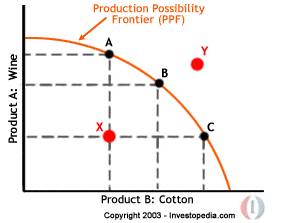

The firms is productively efficient at what level of output
V
X
Q
S
T

Allocative efficiency occurs at which price
P
M
N
K
L

The diagram relates to the generation of electricity by a firm X, a profit maximiser. If a regulator insists that the firm sets a price to achieve allocative efficiency, it would force it to:
Make a profit of KZBY
Maximise its profits
Make a loss of area CXAL
Make a loss of LANR
Dynamic efficiency relates to:
The efficiency associated with perfect competition
The use of new technology and innovation
When extensive economies of scale exist in an industry
Low prices as a result of low barriers to entry
The main problem for a regulator in setting an excessively low price cap on essential public utilities such as water is?
It may encourage x-inefficiency
It may encourage super-normal profits
It may encourage diseconomies of scale
It may act as a disincentive to adopting new technology
When does allocative efficiency occur
When P=MC and MB=MC
When a firms output is at the lowest average cost
How resources are distributed in the long run and is evidenced by the PPF shifting right
When a firm produces on its lowest average cost curve
When does x-efficiency occur
When P=MC and MB=MC
When a firms output is at the lowest average cost
How resources are distributed in the long run and is evidenced by the PPF shifting right
When a firm produces on its lowest average cost curve

Which point in the diagram is allocatively efficient
A
B
C
D
Insufficient information to answer
Collusion most frequently occurs in industries that are
oligopolistic
monopolistically competitive
monopolistic
perfectly competitive
If oligopolists engagein collusion and successfully form a cartel, the market outcome is
the same as if it were served by a monopoly
The same as if it were served by competitive firms
The same as if it were served by competitive firms
Known as Nash equilibrium
As the number of sellers in an oligopoly increases
Collusion is more likely to occur because of larger number of firms can place pressure on any firm that defects
Output in the market tends to fall because each firm must cut back on production
The price in the market moves further from marginal cost
The price in the market moves closer to marginal cost
Collusion is difficult for an oligopoly to maintain
Because antitrust laws make collusion illegal
Because, in the case of oligopoly, self-interest is in conflict with cooperation
If additional firms enter of the oligopoly
For all the above reasons
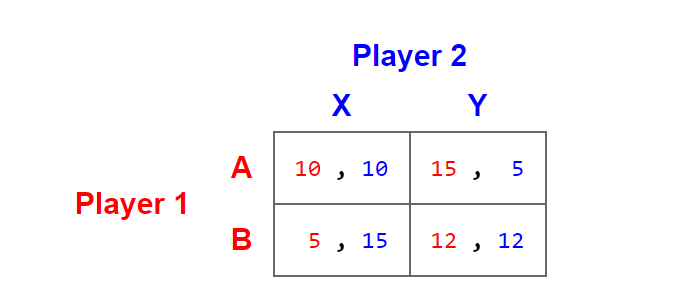
Which of these is not a feature of an oligopolistic market?
Firms acting as price makers
Extensive price competition
The number of firms is usually small
Firms are interdependent
One difference between oligopolies and monopolistically competitive markets is that
there is no deadweight loss in monopolistically competitive markets, but there is in oligopolies
the products sold in monopolistically competitive markets are identical
oligopolies have fewer barriers to entry
firms maximize profits in monopolistically competitive markets but not in oligopolies
there are fewer firms in oligopolistic markets than in monopolistically competitive ones
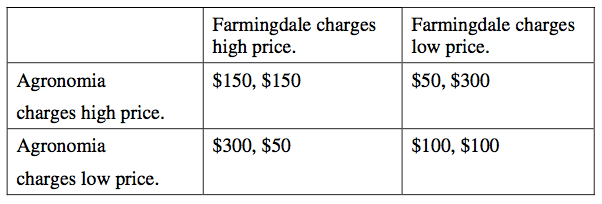
A four-firm concentration ratio of 75%
Implies a high degree of competition within the market.
Means that the four largest firms in the industry earn 75% of the industry’s profits.
Indicates that the four largest firms produce a total of 75 different brands.
Shows that it is easy to enter into this market.
None of the above.
An industry is comprised of 20 firms, each with an equal market share. What is the four-firm concentration ratio of this industry?
20%
40%
60%
80%
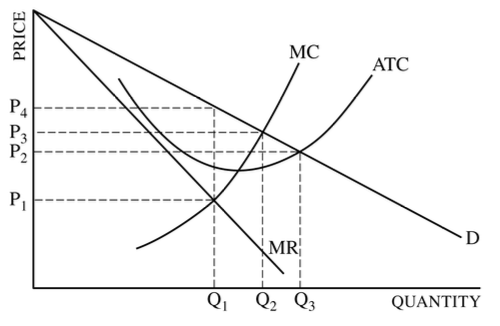
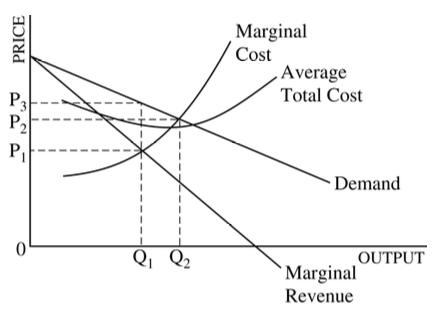
A single-price monopoly is characterized by a marginal revenue curve that is
upward sloping.
downward sloping.
horizontal.
vertical.
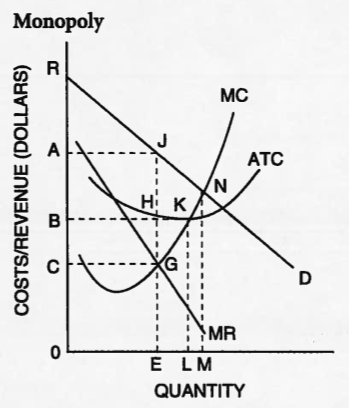
Suppose the diamond industry is a monopoly and suppose that there is an increase in the productivity of diamond miners. Which of the following would you predict will happen in the market for diamonds in the short run?
An increase in the price of diamonds and no change in the number of diamonds sold
An increase in the price of diamonds and a decrease in the number of diamonds sold
No change in the price of diamonds and no change in the number of diamonds sold
A decrease in the price of diamonds and an increase in the number of diamonds sold
If a monopolist increases total output from 14 to 15 by lowering its price from £32 to £30, its marginal revenue would be
-£2
+£30
+£2
-£30
A managing director of a monopoly firm with constant marginal costs has the following data:
Average revenue = £14
Marginal revenue = £10
Marginal cost = £8
Average variable cost = £8
Average total cost = £12
To maximise profits/minimise losses in the short run the firm should:
Increase price and increase output.
Reduce price and reduce output.
Close down.
Reduce price and increase output.
For price discrimination to work, which of the following are required?
(i) The firm must face a downward sloping demand curve.
(ii) The firm must have at least two identifiable groups of customers with different price elasticities of demand.
(iii) The customers must be able to re-sell the product amongst themselves.
i only
i and ii only
ii and iii only
All of the above
If a price discriminating monopoly charges a higher price to students, it is likely that the firm
Wants to shift students’ demand curve.
Is primarily concerned about the wellbeing of students.
Believes that the student demand curve is price elastic.
Believes that the student demand curve is price inelastic.
A price-discriminating monopolist, faced with two demand curves of differing elasticity, will equate the marginal cost of production with
The difference between the average revenues in both markets.
Marginal revenue in each market.
The difference between the marginal revenues in both markets.
Average revenue in each market.
In a contestable market
there must be lots of firms
there must be a few firms or more
there can be any number of firms

Choose the correct answers (there are three)
The free market equilibrium exceeds the social optimum quantity.
The free market equilibrium is below the social optimum quantity.
There is a welfare loss equal to MTZ.
There is a welfare loss equal to TZG.
An increase in quantity from the free market equilibrium will lead to a net welfare gain.
There is a condition for hit-and-run competition to be able to take place choose the answer you think makes the most sense:
Supernormal profits earned must be greater than entry and exit costs.
Supernormal profits must equal entry and exit costs.
Supernormal profits earned must be smaller than entry and exit costs.
Profits should not exceed the normal profit making level.
In a contestable market:
supernormal profits can be earned in the long run but not the short run.
supernormal profits can be earned in the short run but not the long run.
only supernormal profits can be earned in the short run and the long run.
only normal profits can be earned in the short run and the long run.
Barriers of entry will make market ________ efficient and ______ productive.
less; less
less; more;
more; less
more; more
Which of the following is an assumption of contestable markets
There are lots of firms in the industry
There are few firms in the industry
There is 1 firm in the industry
Number of firms in the industry may vary from one to many
Which of the following is an assumption of contestable markets (pick 2)
There is freedom of entry and exit
Firms do not compete with each other because there is high collusion
Firms are short run profit maximisers and produce where MC=MR
Firms produce homogenous goods
Imperfect industry knowledge
Which of the following is an assumption of contestable markets (pick 2)
There are high barriers to entry and sunk costs
Firms compete with each other and there is no collusion
Firms are short run revenue maximisers and produce where MR=0
Firms produce homogenous goods
Perfect industry knowledge
Which of the following is an assumption of contestable markets (pick 1 answer only)
There are high barriers to entry and sunk costs
Firms do not compete with each other and there is high collusion
Firms are short run revenue maximisers and produce where MR=0
Firms can produce homogenous goods or branded goods
Imperfect industry knowledge
In a contestable market
Abnormal profits can be earned in the short run and only normal profits can be earned in the long run.
Normal profits can only be earned in the short run
Abnormal profits can be earned in the short run and long run
Neither abnormal nor normal profits can be earned in the short or long run
Which of the following barriers to entry are natural (select more than 1)
Economies of scale – lower cost benefits to a number of smaller firms
Network effects – Greater number of people who use one service the greater the individual benefits.
Low set-up costs - Low costs of starting and sunk costs
Predatory acquisition – Purchasing a rival to gain a controlling interest.
Strong brand – Locks in existing customers and deters entry.
Which of the following barriers to entry are artificial/strategic (select more than 1)
Economies of scale – lower cost benefits to a number of smaller firms
Network effects – Greater number of people who use one service the greater the individual benefits.
Low set-up costs - Low costs of starting and sunk costs
Predatory acquisition – Purchasing a rival to gain a controlling interest.
Strong brand – Locks in existing customers and deters entry.
Which of the following barriers to entry are natural (select more than 1)
Control of a key scarce resource e.g. Airline controlling access to an airport
High set-up costs – These can be costs of starting (e.g. car industry) or sunk costs leaving the industry
Low R&D costs - Low R&D costs means existing firms can set price lower making it harder for new firms to compete
Predatory pricing – Deliberately lowering prices to force rivals out of the market
Switching costs – Make it difficult for consumers to switch
Which of the following barriers to entry are artifical (select more than 1)
Control of a key scarce resource e.g. Airline controlling access to an airport
High set-up costs – These can be costs of starting (e.g. car industry) or sunk costs leaving the industry
Low R&D costs - Low R&D costs means existing firms can set price lower making it harder for new firms to compete
Predatory pricing – Deliberately lowering prices to force rivals out of the market
Switching costs – Make it difficult for consumers to switch
Which of the following barriers to entry are natural (select 1)
High R&D costs – Pharmaceuticals and chemical industry are typical examples
High diseconomies of scale – Making it more difficult for new firms to enter as existing companies are already large.
No advertising - Allows incumbent firms to cut costs and decrease price
Advertising – Sunk cost, the more spent by incumbent, the greater the deterrent
Limit pricing – Incumbent firm sets a low price so entrants cannot make a profit by selling at a price just below average cost.
Which of the following barriers to entry are artificial/strategic (select more than 1)
High R&D costs – Pharmaceuticals and chemical industry are typical examples
High diseconomies of scale – Making it more difficult for new firms to enter as existing companies are already large.
No advertising - Allows incumbent firms to cut costs and decrease price
Limit pricing – Incumbent firm sets a low price so entrants cannot make a profit by selling at a price just below average cost.
Advertising – Sunk cost, the more spent by incumbent, the greater the deterrent
Which of the following barriers to entry are artificial/strategic (select more than 1)
High R&D costs – Pharmaceuticals and chemical industry are typical examples
High economies of scale – Making it more difficult for new firms to enter as existing companies are already large.
Loyalty scheme’s – Tesco’s Clubcard helps retain customers loyalty
Exclusive contacts, patents and licenses – Prevent other firms entering the industry
Vertical integration – Makes life more difficult for new entrants as manufacturers have their own retail outlets etc.
What does the degree of contestability mainly depend on
Extent of barriers to entry
Number of firms in the industry
Degree of homogeneity of products
Level of competition between firms
Sunk costs are best described as
The costs of laying underground cables.
Costs that have to be paid in the short run.
Costs that cannot be recovered if a business decides to close down production and leave the market.
Costs that are involved in starting a new business.
Wage elasticity of supply measures
Change in wages divided by change in quantity of labour supplied
Change in quantity of labour supplied divided by change in wages
Percentage change in wages divided by percentage change in quantity of labour supplied
Percentage change in quantity of labour supplied divided by percentage change in wages
If labour is a small percentage of the total costs of an industry, this will tend to make the wage elasticity of labour demand
High
Low
Positive
Zero
The value of the wage elasticity of labour supply tends to
Increase as the skill level rises.
Decrease as the skill level rises.
Be unrelated to skill level.
Remain unchanged with skill level.
In the short run, the supply of low-skilled labour tends to be
Perfectly wage inelastic.
Perfectly wage elastic.
More wage elastic than in the long run.
Less wage elastic than in the long run.
In the long run, the supply of low-skilled labour is
Wage elastic but is less wage elastic than in the short run.
Wage elastic and is more wage elastic than in the short run.
Wage inelastic but is more wage elastic than in the short run.
Wage inelastic and is less wage elastic than in the short run.
Which of the following is most likely to be a sunk cost?
Costs of advertising a new product.
Costs of leasing an airplane.
Costs of buying electricity.
Costs of paying wages to staff.
The defining characteristic of a perfectly contestable market is
The absence of sunk costs.
That each firm in the market has price setting power.
That each firm can achieve economies of scale.
The absence of any regulatory controls on prices.
In relatively low-skilled jobs, we are likely to see a labour supply curve such as which of the following:


The main reason why the supply curve for labour is upward sloping is because ...
... as the wage rate falls, an increasing number of people are prepared to work
... as the wage rate rises, an increasing number of people are prepared to work
... as the wage rate falls, an increasing number of people believe they can do the job
... as the wage rate rises, fewer people feel they can do the job
All of the following are likely to increase the supply of labour EXCEPT:
an increase in migration
an increase in the retirement age
an increase in the school leaving age
an increase in the female working population

Back-bending Labor Supply Curve
Back-breaking Labor Supply Curve
Unspeakable Greed of the Wealthy
Disgusting Sloth of the Welfare Class
In a nationalised industry, the government may employ too many people, because they might be concerned with employment figures rather than profit maximisation.
True
False
Theoretically, the profit motive causes privatised firms to be more productively efficient and this should lead to lower prices for consumers.
True
False
Selling off nationalised firms may only generate a one-off increase in revenue for the government, and prevent the government from gaining future streams of tax revenue from profitable nationalised companies.
True
False
Nationalised companies tend to be more responsive to the needs of consumers, so quality of service will, theoretically, be higher than in a privatised industry.
True
False
Privatisation does not always lead to greater competition, particularly if the companies are natural monopolies e.g. telecoms infrastructure, gas pipes, rail network.
True
False
In a nationalised industry, governments may be too focused on short-term goals or winning elections rather than making decisions that are economically optimal for the long term.
True
False
The divorce between ownership and control tends to occur more frequently in
International organisations such as the IMF.
Small limited companies.
Larger public limited companies.
State-owned industries.
The traditional profit-maximising theory of the firm has been criticised by some economists because
Not all firms have full information on their costs.
Not all firms have full information on their revenues.
Shareholders can have little control over managers.
Not all firms are run on purely commercial lines.
All of the above.
The introduction of a national minimum wage will lead a business to reduce its number of employees most when
The demand for its final product is price inelastic.
Wage costs are a small proportion of total costs.
There is a high degree of substitutability between capital and labour.
The supply of substitute factors of production is price inelastic.
If employees cannot accept a job because of the costs of moving area this is known as
Occupational mobility.
Cyclical unemployment.
Structural immobility.
Geographical immobility.
If the minimum wage is set above the equilibrium wage, then other things being equal
There will be equilibrium in the labour market.
There will be excess demand in the labour market.
There will be excess supply in the labour market.
More people will be employed.
Suppose that it is relatively easy for new firms to enter into an industry. We would expect
It to be relatively easy for the firms to form a cartel.
The firms to charge the monopoly price and produce the monopoly output.
The industry to exhibit strong economies of scale.
The likelihood of the firms making supernormal profits to be reduced.
In an oligopoly, for firms to engage in price collusion it is necessary for firms in the cartel to
Be able to undercut each other on price.
Charge different prices to different customers depending on cost.
Be able to produce more than the output quotas they have agreed.
Control a large percentage of market supply.
Mary used to work as a marketing manager, but she has set up her own business. Out to dinner one night with her friends Alice the accountant and Elaine the economist, she proudly announced her annual figures. Alice was delighted for Mary – revenue was £150,000 for the year and her running costs £80,000. Elaine was less impressed – she knew that Mary used to earn £80,000, and advised her to go back to her previous job. If Mary is completely rational, what should she do?
Listen to Alice’s advice.
Take Elaine’s advice.
Change the topic of conversation and, later, phone her friend Jemima (who is a management consultant)
Give Elaine a hard stare, tell her to mind her own business and then walk out of the restaurant.

