
NEW
Font size
 Worksheets
Biology MCAS Review #2
Total questions: 30
Worksheet time: 30mins

Which of the following can be concluded about the internal cellular contents of this prokaryote?
Two populations of fish live in separate water drainage systems. Which of the following questions would be most useful to ask to help determine whether these two populations are the same species?
Are the food sources the same for the two populations?
Do the two populations' habitats have the same water pH?
Can individuals from the two populations successfully interbreed?
Which of the following conclusions is the best support for why certain types of monkeys have similar looking external appearances and bone structure?
They all eat the same types of food
They all descend (come) from a common ancestor
They all were the first mammals to evolve from reptiles
A scientist observes two butterflies with similar wing patterns. Which of the following observations would best show that the two butterflies belong to the same species?
The butterflies share a habitat
The butterflies pollinate the same flowers
The butterflies mate with each other and produce fertile offspring
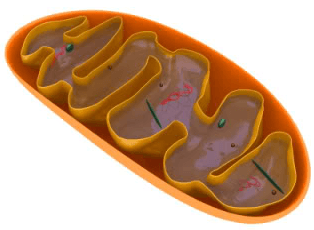
What are tiny organelles that break down glucose and use the energy to make ATP?

When 2 plants were crossed, the seeds produced did NOT sprout or grow. Which of the following conclusions best describes this information?
The two groups are the same species because the plants have similar shapes
The two groups are different species because they have differently sized stems
The two groups are different species because the seeds produced cannot sprout or grow
A scientist hypothesizes that a bird species on an island is related to a species on nearby land. Which of the following types of information is most useful for determining how closely related the two bird species are?
The diets of the species
The DNA sequences of the species
The physical appearances of the species
Which of the following describes how a large mouse population with high genetic diversity will most likely be affected by a sudden, significant environmental change?
All of the individuals within the population will reproduce at a higher rate, leading to a decrease in genetic diversity
New traits will arise as a result of new selective pressures in the environment, leading to an increase in genetic diversity.
Only those individuals best adapted to the new environment will survive and reproduce, leading to a decrease in genetic diversity.
In Florida, mice that live on the white sands of the barrier islands tend to be lighter in color than mice that live in the vegetation on the mainland. Which of the following statements describes how mice on the barrier islands most likely evolved their light coat color through natural selection?
The light-colored mice were easier prey for birds than the dark-colored mice.
The light-colored mice learned to shed more of their fur than the dark-colored mice.
The light-colored mice had a greater reproductive advantage on the barrier islands than the dark-colored mice.
Scientists have observed that different species of bats hunt insects at different times of night. Some of these bat species hunt insects high above lakes, and others hunt insects among the trees. How does hunting at different times of night and at different locations most likely benefit the different bat species?
. It prevents the bat species from breeding with each other.
It reduces competition among the bat species for food sources.
It protects the bat species from different types of flying predators.
Which of the following observations most strongly supports evolutionary links between fossil organisms and modern organisms?
The fossil organisms and modern organisms have identical body sizes.
The fossil organisms and modern organisms have homologous body structures.
The fossil organisms are hundreds of thousands of years old, and modern organisms have been around for hundreds of years.

Type of structure?
Homologous
Vestigial
Analogous

The image shows
Vestigial structures
Homologous structures
Fossils

Which layer is the most recent?
1
2
3
4

What type of evidence is shown in the image above?
Fossils
Vestigial structures
DNA
The "best" form of evidence for evolutionary relationships is
similarities in DNA or proteins
Fossils
Homologous Structures
Mutations are a change in what?
DNA
attitude
behavior
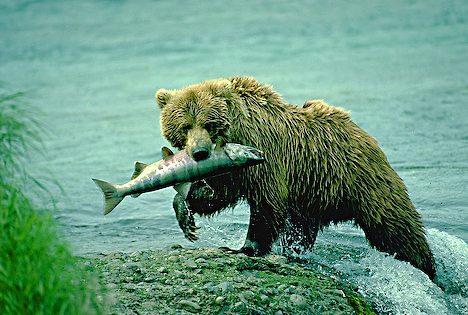
A grizzly bear survives because he is well-adapted to his environment. When he reproduces he passes on those traits to his offspring. This process is called
Natural Selection
Selective Breeding
Random mutations
Variations in a species
The differences among individuals of the same species, like different bird beaks, are called
genes.
variations.
traits.

Which of the following can be determined by observing the embryos shown in the diagram

Darwin observed several different types of finches. Why are there so many different types?
Finches live in different places, but eat the same food.
Finches live in the same place, but eat different types of food.
Finches live in different habitats and eat different types of food.
Cell organelle that stores materials such as water, salts, proteins, and carbohydrates
Centriole
Vacuole
Ribosome
Lysosome
Contains enzymes that break down lipids, carbohydrates, and proteins into small molecules that can be used by the rest of the cell
Vacuole
Chloroplast
Lysosome
Golgi apparatus
Organelle found in cells of plants and some other organisms that captures the energy from sunlight and converts it into chemical energy
Chloroplast
Mitochondria
Cell Wall
Lipid Bilayer

What kind of cell is Euglena an example of?
Virus
Bacteria
Prokaryotic
Eukaryotic
Oldest type of cell
Prokaryotic
Eukaryotic
both

