
 Worksheets
4th Quarter Physical Science Test--JCB
Total questions: 90
Worksheet time: 3hrs 28mins
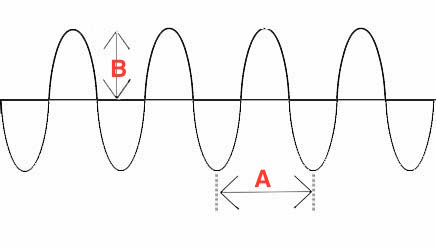
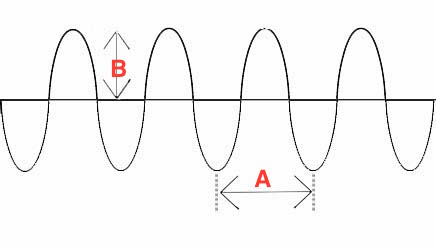

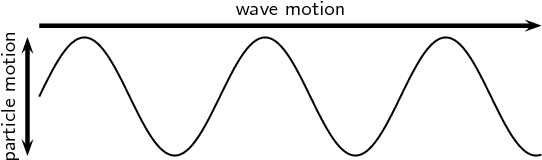
Which type of waves have vibrations that run perpendicular to the direction the wave travels?
transverse
longitudinal
Which type of waves have vibrations that run parallel to the direction the wave travels?
transverse
longitudinal
Examples of this type of waves include water waves, waves on a string/jump rope, and light waves.
transverse
longitudinal
An example of this type of wave is a sound wave.
transverse
longitudinal
_______ is the length of a full cycle of a wave, from one crest to the next crest.
Wavelength
Frequency
Amplitude
The _______ is the size or height of a wave, measured from the equilibrium to the crest or trough.
Amplitude
Wavelength
Frequency

The _______ of a wave is how many waves pass a given point every second.
Frequency
Wavelength
Amplitude
In a longitudinal wave, a ________ is an area where the particles are spread apart.
rarefaction
compression
crest
trough
Which of the following is true for sound waves?
They require a medium.
They are unrelated to vibrations.
They cannot travel through liquids
They can travel in a vacuum
A student asks a series of questions about a wave. The answer to which question will allow the student to determine whether the wave is electromagnetic or mechanical?
Does it require a medium in order to travel?
Can it pass through air and water?
Does it have a measurable speed?
Does it have a measurable frequency?
How do electromagnetic and mechanical waves compare?
Mechanical waves can only travel through a vacuum, but electromagnetic waves can travel through a solid, liquid, or gas.
Mechanical waves can travel through a solid, liquid, or gas, but electromagnetic waves can only travel through a gas.
Mechanical waves can only travel through a solid, liquid, or gas, but electromagnetic waves can travel through a vacuum.
Mechanical waves can travel through a solid, liquid, or gas, but electromagnetic waves can only travel through a solid.
A student is measuring the distance between the crest and the rest position of both a mechanical wave and an electromagnetic wave. Which question is the student trying to answer?
What is the speed of the waves?
What is the amplitude of the waves?
What is the wavelength of the waves?
What is the frequency of the waves?
What do radio waves, microwaves, X-rays, and gamma rays all have in common?
They all have the same wavelength.
They are electromagnetic waves.
They are detected in the same way.
They store the same amount of energy.

How many wavelengths separate point A and point B?
1.5
2.0
2.5
3.0
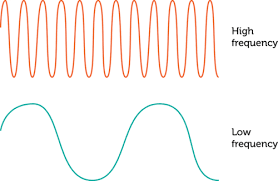
If a wave has a greater frequency, what happens to the wavelength?
increases
decreases
stays the same
This sound has high pitch, which means it has a higher frequency. This means when you hear the sound...
More waves hit your ears per second
Bigger waves hit your ears
Less waves hit your ears per second
Longer waves hit your ears
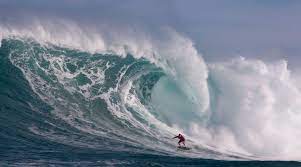
A disturbance that transfers energy from place to place through matter or space
wave
position
time
protein
How are Electromagnetic waves different from Mechanical waves?
EM waves have very short wavelengths
EM waves transmit energy instead of matter
EM waves can travel through the vacuum of space (without particles)
EM waves can change direction by reflection
Select the correct order of waves on the EMS from low to high energy
Radio, Micro, Infra, Visible, Ultra, X-ray, Gamma
Gamma, X-ray, Ultra, Vis, Infra, Micro, Radio
Vis, Micro, Infra, Ultra, X-ray, Gamma, Radio
Micro, Radio, Vis, Infra, Ultra, X-ray, Gamma
Which type of EM waves has the shortest wavelength?
radio wave
visible light
gamma ray
ultraviolet
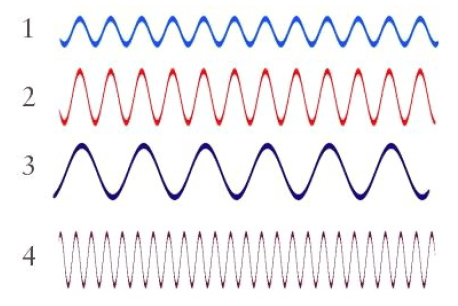
Electromagnetic waves vary in
the speed they travel in a vacuum.
wavelength and frequency.
the way they reflect.
the orientation of their electric and magnetic fields.
The full range of frequencies of electromagnetic radiation is called
visible light.
radio waves.
the electromagnetic spectrum.
invisible radiation.
The _______________ determines the color of visible light.
wavelength (and frequency)
speed
amplitude
particles of the medium
Light
How are we able to see the color white?
All colors except red are absorbed
All colors are absorbed
All colors are reflected
All colors except red are reflected
What does reflection mean?
Bending Light
Bouncing Light
Absorption of light
What type of wave does a light wave resemble?
Transverse wave
Compressional wave
P-waves
What happens when light transitions into a new medium?
Reflection
Absorbing
Refraction
Mirror
A blue dish appears blue because it
absorbs blue light
absorbs white light
reflects white light
reflects blue light

What is this a picture of?
Reflection
Refraction
Is Visible Light Dangerous?
No, Visible light cannot harm you
Yes, visible light is highly radioactive and should be handled carefully. Visible light when in contact with human skin can cause aerial skin cancer.
No, this is because visible light isn't real
Yes, Visible light at high concentrations can cause burns, blindness, and indirect DNA damage but at low levels is harmless
Which of the following IS NOT a behavior that light waves can undergo when they reach a boundary between two media?
stopping at the edge of the boundary
reflection off of the boundary
transmission into the boundary
refraction through the boundary
Reflection is to bouncing as refraction is to:
bending.
breaking.
dissipating.
halting.

A concave mirror is shaped like the inner surface of a sphere. How do you think light rays will reflect off a concave mirror?
Reflected rays converge toward the center line of a concave mirror.
Reflected rays diverge away from the center line of a concave mirror.
Reflected rays reflect straight back at the angle that they came in.
Reflected rays are absorbed by a concave mirror.
The way that a surface reflects light depends on its texture. Rough surfaces such as cloth and wood tend to scatter light, reflecting it in many different directions. This type of reflection is called:
diffuse reflection.
specular reflection.
incident reflection.
distorted reflection.


If someone is standing to the left of this wave, they would hear a ______ pitch than someone standing to the right of it.
uglier
prettier
higher
lower
Sound Waves Move faster in what temperature
Hot
Cold
Doesn't Matter
Both
The speed of sound depends on these two things:
The type of medium and the temperature of the medium
Speed of the medium and temperature of the medium
Temperature of the medium and sound of the medium
None of the above


A person gets out in the sunlight from a dark room. How does his pupil regulates and controls the light entering in the eye?
The size of pupil will decrease and less light will enter the eye
The size of pupil will decrease and more light will enter the eye
The size of pupil will increase and less light will enter the eye
The size of pupil will increase and more light will enter the eye

What must the ear drum do in order to hear a noise?
vibrate
trap air
create a vacuum
bond chemicals together
make wax
Which part of the ear takes sound waves and turns them into vibrations?
Ear canal
Inner ear
Eardrum
Middle ear
What would you solve for if given time and work?
power
force
distance
work

What is effort (input) force?
the force one exerts on a machine
the force which an effort force must overcome in order to do work on an object via a simple machine.
the force the machine exerts on a object
the output work times the input distance
What is resistance (output) force?
the force required by a machine in order to accomplish work (the force you put on the machine)
The force that is exerted by a machine
the force the machine exerts on a object
the output work times the input distance

