
 Worksheets
7th Grade US History Semester 2 Review
Total questions: 175
Worksheet time: 2hrs 34mins
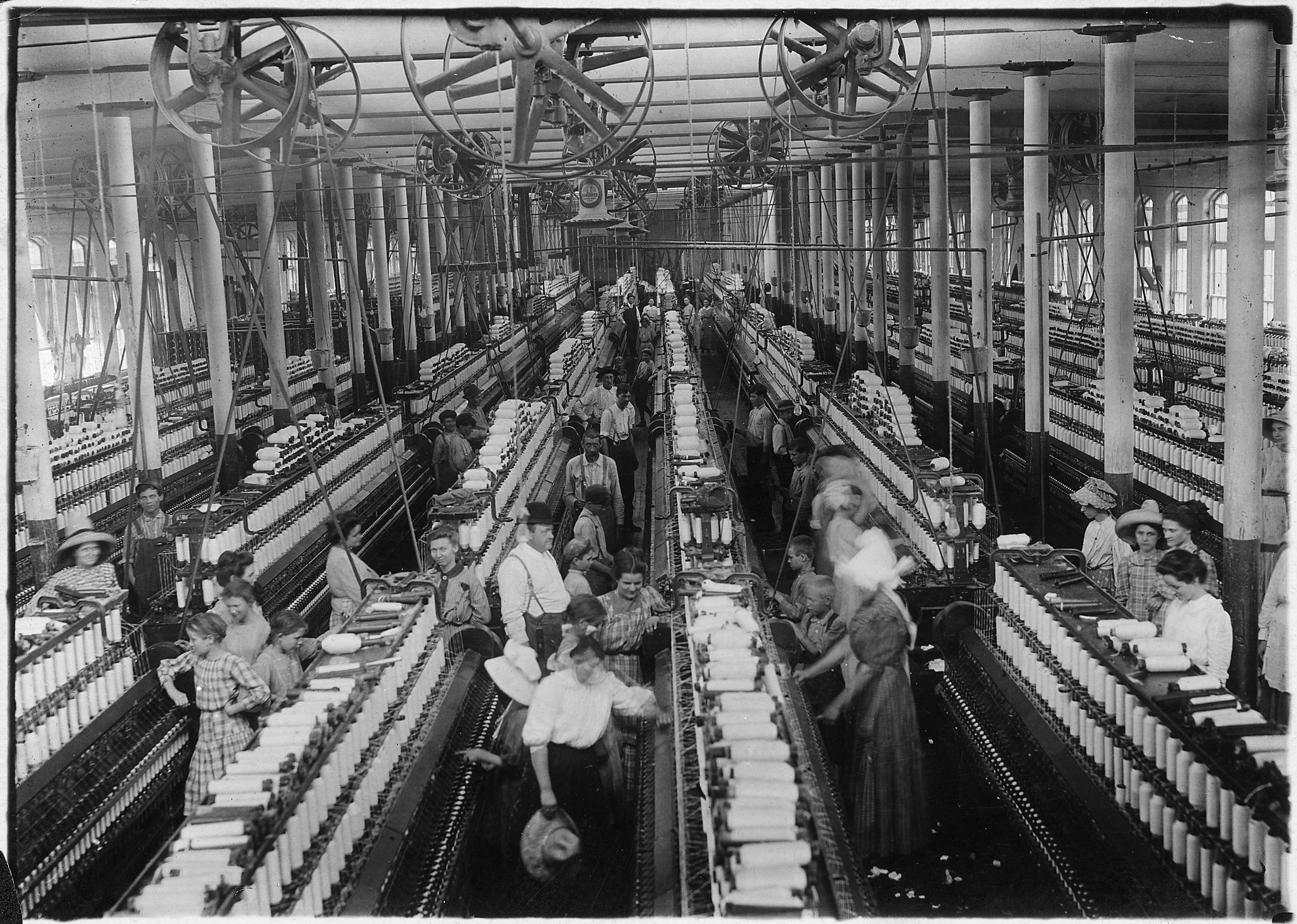
Most immigrants were skilled and well educated workers.
TRUE
FALSE
Where did most immigrants during the late 19th and early 20th century (Gilded Age) come from?
East Asia
Southern and Central Europe
Mexico
Middle East
Many immigrants flocked to the nation's cities because of:
Shopping
Entertainment
Education
Employment
Rockefeller's Standard Oil used what to combine his company with his competitors?
corporate scheme
bargaining strategies
trust
Andrew Carnegie was considered a "titan" or "giant" of the ___________ industry.
oil
steel
railroads
Factories were typically located in
rural areas
urban areas
suburban areas
True or False:
Carnegie owned many levels of steel production in order to sell his steel cheaper than his competitors.
True
False
Tensions between workers and the business owners would ultimately lead to what?
strikes
quitting their jobs
staying quiet and working
bribing their boss to pay them more
The main goal of the Chinese Exclusion Act was to:
decrease Chinese immigration
create segregated classrooms (Chinese/American)
settle a disagreement of trade between China and America
stop Chinese Americans from attending college in the United States
An example of a patronage would be:
bribing a government official
assassinating a public official
saying one thing and doing another
appointing a friend to a political position
Which of the following had some of the same goals as the Americanization movement?
settlement houses
Gentlemen's Agreement
Chinese Exclusion Act
Patronage
Nativism is:
Embracing diversity
Disliking immigration
Moving out of the U.S.
Liking Native Americans
What was the name of the island where most immigrants coming from Europe had to go through a medical inspection before they were let into the U.S.?
Ellis Island
Liberty Island
New York Island
Which best describes the working conditions of most immigrants?
Most immigrants worked long hours in low-paying industrial jobs
Most immigrants worked as farmers in rural areas
Most immigrants worked as bookkeepers or other professional jobs
Most immigrants worked as tailors or other skilled jobs

What is Imperialism?
The policy in which stronger nations extend their powers to weaker nations
To control weaker nations
The policy in which nations control weaker nations with their powers
To control stronger nations
Why did America start to utilize imperialism?
America wanted to expand their borders to where they would be able to control the world.
America became annoyed that other, smaller nations were trying to acquire nations themselves, so America countered.
America became convinced by the other imperialist powers to also use their strength as a nation.
Yellow Journalism is...
the exaggerating of news and journals to make them more exciting and enticing for readers
the art of painting journals yellow
yellow journals that had exaggerated details
the exaggerating of news in order to engage readers
What three factors fueled the American's desire for imperialism?
Increase in Food
Thirst for new markets
Need in more land
Desire for military Strength
Belief in cultural superiority
William Seward...
Bought Alaska
Bought Hawaii
Bought Cuba
Bought Canada
Bought the Moon
José Martí was...
A Cuban Journalist who wanted to start a revolution in New York.
A New Yorker that wanted to start a revolution in Alaska.
An Alaskan man who started a revolution in New York.
A Cuban poet who started a revolution in Alaska.
A Cuban poet and journalist in exile in New York, where he started a revolution.
What was the affect of the Spanish-American war on US expansion?
the war allowed the US to acquire Texas territory
the war ended US expansion because of the extraordinary cost of the war
the war led to increased US expansion into southern South America
the war gave the US territories in the Pacific

the headlines in this paper are a good example of?
yellow journalism
muckraking literature
investigative reporting
government censorship
Progressivism was popularized because of (select all that apply)
many social problems
many foreign policy centered issues
many economic issues
Some issues that progressivism set out to solve included
rights for men
environmental issues
political turmoil abroad
preventing unionization of work forces
The 4 goals of progressive reformers included which of the following? Select all that apply.
protecting social welfare
encouraging divorce and separation of spouses
destroying economic reform
fostering efficiency
Because employers felt little responsibility towards their workers,
labor strikes would occur more often with blessings of owners
settlement homes and churches would help to serve the community
workers were less likely to go to work
employers would provide more benefits to their workers
Prohibition was
discounted price of alcohol and tobacco due to economic reforms
the ban of tobacco
the ban of alcohol
none of the above
Muckrakers were
journalists that exposed corruption in politics
journalists that embraced corruption in business
journalists that exposed corruption in business
journalists that embraced corruption in politics
Who exposed Standard Oil Company's cut-throat methods of eliminating competition?
Ida Tarbell
Eugene Debs
Bernie Sanders
Elizabeth Warren
True or False: Progressive leaders put their faith in religion over science in making society better.
True
False
Which of the following groups worked to enact or strengthen laws to reduce women's hours of work? (Select all that apply)
the Supreme Court
the states
Congress
The President
Theodore Roosevelt is known for (select all that apply)
advocating for war with Spain in 1898
his volunteer calvary brigade, the Rough Riders
governor of New Jersey
all of the above
The Pure Food and Drug Act
stopped the sale of contaminated foods
stopped the sale of contaminated medicines
called for truth in product labeling
all of the above
In the 1912 Election, Republicans split between which candidates?
William H. Taft and Theodore Roosevelt
William McKinley and William H. Taft
Theodore Roosevelt and Wilbur Wright
Theodore Roosevelt and Woodrow Wilson
Wilson was victorious in the 1912 election due to
Republicans splitting the vote
Democrats splitting the vote
Wilson being enormously popular and extremely well known
Wilson's desire to promote deprogressivism
The FTC protects consumers from
regulations
business fraud
starvation
The 16th Amendment
legalized the right to vote for women
legalized a graduated income tax
allowed for the election of senators
promoted general welfare
While the Progressive era was responsible for many important reforms,
it failed to make strides for women's rights
it failed to make gains for African Americans
it failed to make regulations of businesses a priority
none of the above
Women gained the right to vote in 1920 with the passage of the
Women's Suffrage Act of 1920
the 19th Amendment
All Equal Act of 1920

When Susan B. Anthony refused to pay a fine for her actions in the election of 1872, she stated: "Not a penny shall go to this unjust claim." Her statement was made in support of -
the Sixteenth Amendment
settlement houses
judicial review
women's suffrage


The Great Migration was
A way to get people to mobilize and move heavy equipment to the ocean ports
Moving supplies to the docks and loading ships to Europe
A technique to avoid German U-Boats in the Atlantic Ocean
African Americans left the south to settle in the North to fill the job voids
Which of the following is true about U-Boats?
used by the Germans
also called submarines
used by the Germans to prevent shipments to the North Atlantic
All of the above
What percentage of the population was affected by the flu population in the United States in 1918?
15%
25%
60%
85%


1. President Wilson declares war on Germany.
2. Fourteen Points Plan
3. Sinking of the Lusitania
4. Zimmerman Telegram
What is the correct chronological order of these events?
1, 2, 3, 4
3, 4, 1, 2
2, 1, 4, 3
4, 3, 2, 1
Which of these does NOT represent the 1920s?
a time of war & chaos
a decade of cultural change
increased freedom and dancing
increased wealth
How did Prohibition contribute to the growth of organized crime?
by making it easier for bootleggers to branch into other types of illegal activity
by forcing police to enforce anti liquor laws
by forcing farmers to grow grain for the production of alcohol
by strengthening respect for the law
Presidents Harding and Coolidge favored policies that
supported the growth of business
encouraged activism
brought about social reform
discouraged laissez faire
At its heart, the Scopes Trial was a clash between
religion and science
biology and science
evolution and science
education and science
The literature of the Harlem Renaissance
explored the pains and joys of being black in America
explored the origins of jazz
was written by Marcus Garvey
argued for the separation of races
Which of these best describes the "New Woman" of the 1920s?
They wore shorter skirts, bobbed their hair, and went to speakeasies
They stayed home and cooked and cleaned
They rejected the idea of suffrage
They preferred the same fashions as their parents
Involved transferring oil reserves from the Interior Department to private companies for profit
Teapot Dome Scandal
Scopes Trial
Great Migration
Jazz Age
Which 1920s president is best known for scandals and corruption?
Harding
Coolidge
Hoover
Trump
What type of economy did the US have in the 1920s?
laissez faire capitalism
socialsim
communism
command economy


Buying stocks on the chance of a quick profit without considering risks is known as
buying on margin.
speculation.
profit-taking.
living on credit.

During the Depression, charitable organizations tried to help the urban poor by opening SOUP KITCHENS.
True
False
Both True and False
Neither True nor False

President Herbert Hoover supported DIRECT RELIEF.
True
False
Both True and False
Neither True nor False

Which of the following describes a government system for giving payments or food to the poor?
rugged individualism
direct relief
Bonus Army
price support

Herbert Hoover's approach to the Depression economy was based on a belief in
voluntary cooperation.
separation of church and state.
the golden rule.
direct government relief.

During the Great Depression, the overall unemployment rate was about
100 percent.
75 percent.
25 percent.
10 percent.

Causes of the farming crisis of the 1920s included the fact that
demand for crops fell after World War I.
most people did not own electric refrigerators.
the Dust Bowl took much land out of production.
federal price-supports of corn and wheat were not effective.

This Democrat lost the presidential election of 1928.
Alfred E. Smith
Herbert Hoover
Franklin D. Roosevelt
Calvin Coolidge

This Republican won the presidential election of 1928.
Herbert Hoover
Alfred E. Smith
Ronald Reagan
Groucho Marx
In an effort to curb the financial loss farmers were suffering, Congress tried to pass the McNary-Haugen bill, which would have mandated this on key crops.
price support
speculation
credit
buying on margin

This term specifically refers to the stock market crash of October 29, 1929.
Black Tuesday
Black Wednesday
Black Thursday
Black Friday

This term refers to paying a small percentage of a stock's price as a down payment and borrowing the rest.
buying on margin
price support
speculation
credit

This is the period from 1924 to 1940 in which the economy plummeted and unemployment skyrocketed.
Great Depression
The Era of Good Feeling
The Roaring 1920's
The Fabulous 50's

This reduced the flow of goods into the United States and prevented other countries from earning American currency to buy American exports.
Hawley-Smoot Tariff Act
McKinley Tariff Act
Trump Tariffs Act
Payne–Aldrich Tariff Act

During the Depression, many children suffered from DIET-RELATED diseases
True
False
Both True and False
Neither True nor False

The stock market crash of 1929 was fueled by PRICE SUPPORTS, unwise investments that people hoped would make them rich overnight.
True
False
Both True and False
Neither True nor False
How did FDR connect to the American people on a personal level using mass media?
He tweeted hashtags daily.
He sent return letters to all who wrote to him.
He gave nightly TV updates on the events of the world.
He gave "fireside chats" via the radio, which gave people a sense of hope.
What time period represented a period of intense New Deal legislation?
Hundred Days
500 Miles Gone By
The Millenium
Woodstock Days

What does this cartoon imply about FDR's approach to the New Deal?
FDR is willing to employ various remedies.
The FDA has not approved the use of some of these medicines.
FDR is cautious about using federal involvement in the economy.
FDR doesn't think any of the remedies will really work.

What is Hoover handing over to FDR in the cartoon?
A large federal budget
Nation's economic problems
A free pass to the Presidency
His infant son


Which of the following leaders transformed the Soviet Union from a rural nation into an industrial power?
Stalin
Hitler
Lenin
Mussolini

When did Britain and France adopt a policy of appeasement toward Germany?
before the war began
when they declared war
when the United States declared war
after France was invaded and divided

On what did the German military strategy of blitzkrieg depend?
a system of fortifications
"out-waiting" the opponent
surprise and overwhelming force
the ability to make a long, steady advance

Which of the following did Winston Churchill oppose?
the Munich Pact
the Atlantic Charter
the Lend-Lease Act
the Treaty of Versailles

Which nation(s) signed a nonaggression pact with Germany that led to the invasion and division of Poland?
Italy
Spain
Italy and Japan
the Soviet Union

Which group of people suffered 6 million deaths during the Holocaust?
Nationalists
Aryans
Facists
Jews

The actions of which country finally forced the United States to enter the war?
Italy
Japan
Germany
The Soviet Union

Policy carried out by Germany using a strategy called blitzkrieg
militaristic expansion
political diplomacy
isolationism
alliance system

Country that began the war in an alliance with Germany but ended the war fighting against Germany
Italy
Soviet Union
Ottoman Empire
France

At the end of World War I, many new democracies were established in Europe. In the years between the two world wars, what happened to most of these democracies?
They thrived.
They became Communist.
They were torn apart by civil wars.
They were replaced by dictatorships.

Leader whose totalitarian regime was based on a communist philosophy
Joseph Stalin
Franklin D Roosevelt
Winston Churchill
Hubert Pierlot

Which of the following statements most accurately reflects Roosevelt's feelings toward joining the war?
He agreed with the isolationists and promoted an isolationist policy.
He wanted to help the Allies but had to appease U.S. citizens who opposed entering the war.
He wanted to avoid the war because he did not see it as a threat to the United States.
He did not understand the position of isolationists and was eager to join the war.

What was the Lend-Lease Act?
a statement of war aims compiled by Roosevelt and Churchill
a nonaggression pact between Germany and the Soviet Union
a policy allowing the president to provide arms to certain foreign countries
an order to shoot German U-boats on sight

After promising his emperor that he would try to maintain peace, Japanese Prime Minister ___ ordered the Japanese navy to prepare for attack on the United States.
Hideki Tojo
Admiral Yamamoto
Emperor Hirohito
Akira Mutō

The purpose of the Office of Price Administration was to make sure that war industries received needed resources.
True
False
IDK
Both True and False

V-E Day, or May 8, 1945, was the day when ___.
the United States entered the war
Allied forces invaded France
Germany surrendered
the Soviets stopped the Germans at the Volga

Truman's aim in deciding to drop the atomic bomb was to ___.
find out how destructive the bomb really was
teach Japanese military leaders a lesson
end the war and save American lives
show how powerful the United States was

With respect to finding better jobs, the war years marked a period of ___ for African Americans.
decline
advance
stagnation
uncertainty

To combat wartime inflation, the U.S. government did all of the following except
raise and extend the income tax.
impose wage and price controls.
encourage the purchase of war bonds
increase production of consumer goods.

During the war, women in the WAACs served as
fighter pilots and foot soldiers.
shipbuilders and waitresses.
scientists and factory workers.
nurses and radio operators.

Germany's goal in the Battle of the Atlantic was to
invade the coast of Great Britain and then take over the entire country.
keep food and war supplies from reaching Great Britain and the Soviet Union.
prevent Allied forces from landing in Normandy and liberating France.
prevent the invasion of North Africa.

The Supreme Commander of U.S. forces in Europe was
George Patton.
George Marshall
Douglas MacArthur.
Dwight D. Eisenhower.

Why was there a baby boom after World War II?
Many babies were born after soldiers returned home
Less babies were born after soldiers returned home
Many babies were adopted from overseas
Children were forced to work in factories
What is Brown vs. Board of Education of Topeka, Kansas (1954)?
Requires the police to read you your Constitutional rights when arrested
Requires school boards to provide for girls sports
NAACP challenged the segregation law in Topeka, Kansas schools-NAACP and won
Requires school boards to provide for art education
In the struggle for African-American civil rights, Rosa Parks is most closely associated with the
Montgomery Bus Boycott
Selma March
Leading the African-American women working for NASA
Writing The Color Purple

Companies started offering these easy and convienient transaction devices in the 1950s.
Checks
Credit cards
Cashier Checks
None of the above
Who won the election of 1948?
Truman
FDR
Eisenhower
Nixon

Suburbia as the "American Dream" represented
conformity.
stability.
happiness.
All of the above

Kennedy appointed his brother, Robert, to serve as
secretary of state.
attorney general.
secretary of defense.
a justice of the Supreme Court.

John F. Kennedy, the Democratic nominee for President in 1960, was a senator from
New York.
California.
Texas.
Massachusetts

The hot line established in 1963 did all of the following except
link the White House and the Kremlin.
make communication in a crisis easier.
ease Cold War tensions.
barred nuclear testing.

After investigating the assassination of JFK, the Warren Commission concluded that
Lee Harvey Oswald acted alone.
Jack Ruby acted alone.
there was evidence of a conspiracy.
the CIA was involved.

The Economic Opportunity Act did all of the following EXCEPT
offer foreign aid to Latin American countries.
give underprivileged preschoolers a head start.
encourage poor people to join in public-works programs.
create a training program for youth.

Lyndon Baines Johnson, who became president when Kennedy was assassinated, was
never elected president by the people.
an experienced politician.
mistrusted because he was a Catholic.
opposed to the Great Society.

Medicare, a federal program established for Americans age 65 and over, was intended to provide
housing.
transportation.
education.
health insurance

A decisive factor in the election of 1960 was television coverage of the Eisenhower endorsement.
True
False
Both True and False
IDK

Concerned that reliance on nuclear weapons limited U.S. military options, the Kennedy administration developed the flexible response policy.
True
False
Both True and False
IDK

What contributed to the end of the Cuban missile crisis?
America's secret promise to remove missiles from Turkey
the discovery that the missiles had been removed
Castro's promise to restore democracy
Castro's promise to break with the Soviet Union

This separated East Germany from West Germany.
The Berlin Wall
Sputnik
Great Wall of China
Hadrian's Wall

This involved an invasion of Cuba.
Bay of Pigs
Berlin Wall
Cuban missile crisis
Soviet Blockade

This legislative program summed up President Johnson's vision for America.
Great Society
New Deal
Fair Deal
reaganomics
An unsuccessful invasion of Cuba in 1961, which was sponsored by the United States. Its purpose was to overthrow Cuban dictator Fidel Castro.
bay of pigs
cuban missile crisis
berlin crisis
Who signed the civil rights act of 1964 into law?
Lyndon B. Johnson
Richard Nixon
Eisenhower
John F. Kennedy

___ was the United States' main goal in Vietnam.
Reunifying Vietnam
Containing the spread of communism
Upholding the Geneva Accords
Negotiating a cease-fire agreement with North Vietnam

___ enabled North Vietnam to send troops to South Vietnam.
The Ho Chi Minh Trail
The fall of Dien Bien Phu
The strategic hamlet program
Operation Rolling Thunder

President who used the Tonkin Gulf incident as an excuse to deepen U.S. involvement in the Vietnam War
Robert McNamara
Lyndon Johnson
Richard Nixon
John F. Kennedy

Vietnamese forces that were supported by American troops
Army of the Republic of Vietnam (ARVN)
Vietcong
North Vietnamese Army (NVA)
The Red Army

Americans who supported strong U.S. military efforts in Vietnam
Doves
Hawks
Owls
Cobras

Communist leader of the Vietnamese struggle against the French, the Japanese, and the Americans
Ho Chi Minh
Khmer Rouge
Ngo Dinh Diem
Vo Nguyen Giap

U.S. president responsible for the Vietnamization of the war
Robert McNamara
Richard Nixon
Lyndon Johnson
Gerald Ford
Who of the following were members of Nixon's "Inner Circle"
H. R. Haldeman
John Dean
John Ehrlichman
John Mitchell
All of the above
Who won the presidential election of 1972?
Johnson and it was a runway
McGovern and it was close
McGovern and it was a runaway
Nixon and it was close
Nixon and it was a runaway
Nixon visited the Peoples Republic of China to establish __________ relations.
foreign
domestic
diplomatic
allies
This French word means "an easing of tensions"
guerre
detente
amour
deja vu
What do many find Nixon's greatest accomplishment to be?
opening of relations with Cuba
opening of relations with Communist China
Watergate
ending the Vietnam War
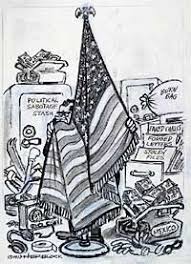
The cartoon above was published in May 1973. With which event was this cartoon associated?
Teapot Dome Scandal
Iran Hostage Crisis
Watergate Scandal
Iran-Contra Affair
Under Ford's Presidency in 1975, South Vietnam fell to what country
China
North Vietnam
Korea
Cambodia
Which president pardoned Richard Nixon?
Jimmy Carter
Ronald Reagan
Gerald Ford
Lyndon B. Johnson
Former CIA agents broke into Democratic headquarters. Nixon tried to cover up the burglary. He was forced by the Supreme Court to hand over his tapes of White House conversations. These showed that Nixon had lied about the cover-up. This was known as?
Lewinsky scandal
Watergate scandal
Iran-Contra Affair
Teapot Dome

