Wayground logo

Free Printable Worksheets

Font size

S
M
L
XL
Worksheets

Chemistry Review (Biology)

Total questions: 34

Worksheet time: 26mins

Name
Class
Date
1.

Protons have a ________ charge.

a)

positive +

b)

negative -

c)

no

2.

Neutrons have ___________ charge.

a)

positive +

b)

negative -

c)

no

3.
A compound consists of two or more elements bound together.
a)
True
b)
False
4.
A chemical change always results in the formation of a:
a)
explosion
b)
big mess
c)
new substance
d)
new state of matter
5.

How many Hydrogen atoms are in 4H2O?

a)

6

b)

8

c)

2

d)

4

6.

How many Magnesium atoms are in 10MgCl2?

a)

10

b)

5

c)

20

7.
How many elements are in C6H12O6?
a)
1
b)
2
c)
3
d)
4
8.

How many atoms are there TOTAL in H2SO4 ?

a)

6

b)

5

c)

7

d)

3

9.

How many Nitrogen atoms are in (NH₄)₂CrO₄?

a)

1

b)

2

c)

8

d)

16

10.

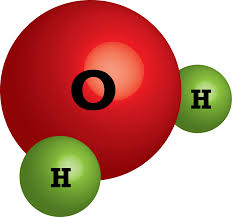
How many atoms of Hydrogen are in this compound?

a)

1

b)

2

c)

3

d)

4

11.

How many Hydrogen atoms in 3(NH₄)₂CrO₄?

a)

4

b)

2

c)

8

d)

24

12.

A subscript is the small number below the element symbol that tells the number of _______ of that element.

a)

atoms

b)

valence electrons

c)

protons

d)

elements

13.

How many elements are present in this compound? (Careful!)

Mg2As3COHNi2

a)

2

b)

4

c)

6

d)

10

14.

Valence Electrons of Magnesium

a)

1

b)

2

c)

3

d)

4

15.

Valence electrons of Sodium

a)

1

b)

2

c)

3

d)

4

16.

Valence Electrons of Argon

a)

5

b)

6

c)

7

d)

8

17.

Valence Electrons of Calcium

a)

1

b)

2

c)

3

d)

4

18.

Valence Electrons of Aluminum

a)

1

b)

2

c)

3

d)

4

19.

Electrons occupying the outermost shell of an atom

a)

Ions

b)

Cation

c)

Valence Electrons

d)

Anion

20.
In this image, the information in red is called the_______.
a)
Products
b)
Reactants
c)
Chemical Subscript
d)
Ingredients
21.
In this image, the information to the right of the arrow (in black) is called the_______.
a)
Product
b)
Reactant
c)
Chemical Subscript
d)
Final chemical
22.
What is the arrow in a chemical equation say to us as chemists...
H2 + O --> H2O
a)
Reactants
b)
Products 
c)
"Makes" or "Yields" 
d)
Chemical Equation 
23.
What does the Law of Conservation of Mass state?
a)
Matter cannot be gained or lost in a chemical reaction.
b)
Matter can only be lost in a chemical reaction.
c)
Matter can only be gained in a chemical reaction.
d)
Matter can be gained and lost in a chemical reaction. 
24.
Is the following equation balanced or unbalanced ? 
Al + O2 --> Al2O3
a)
Balanced
b)
Unbalanced
25.
Is the following equation balanced or unbalanced ? 
N2 +3 H2 --> 2NH3
a)
Balanced
b)
Unbalanced
26.
Balance this equation,            Al2O3 ---> Al + O2 
a)
Cannot be balanced
b)
2Al2O3 ---> 2Al + 3O2 
c)
2Al2O3 ---> 4Al + 3O2 
d)
3Al2O3 ---> 2Al + O2 
27.
How many atoms of lead (Pb) are in Pb(NO₃)₂?
a)
1
b)
2
c)
3
d)
6
28.
How many valence electrons are found in atoms of group 14?
a)
4
b)
3
c)
14
d)
16
29.
Which group has the greatest number of valence electrons?
a)
1
b)
14
c)
18
d)
16
30.
How many valence electrons are found in atoms of group 15?
a)
4
b)
5
c)
2
d)
3
31.
How many valence electrons are found in atoms of group 1?
a)
7
b)
6
c)
4
d)
1
32.

All atoms are most stable with (or would "prefer") how many electrons in their valence shell?

a)

1

b)

2

c)

8

d)

18

33.
Valence electrons are: 
a)
Electrons farthest away from the nucleus
b)
Electrons closest to the nucleus
c)
Electrons that just come and go - they don't stay with the atom
d)
Electrons in the second shell
34.
Describe this element.
a)
Highly reactive metal
b)
Highly reactive nonmetal
c)
Stable
d)
Less stable non metal