
NEW
Font size
 Worksheets
Evolution
Total questions: 11
Worksheet time: 8mins

A giraffe has a long neck in order to better reach leaves to eat. This is an example of _____.
an adaptation
environment
response
stimulus

When a farmer breeds only his or her best livestock, the process involved is.......
natural selection
artificial variation
artificial selection
survival of the fittest

What could cause a species to go extinct?
Food becomes more plentiful.
The environment changes drastically and no-one can adapt.
There is less competition for resources.
Members of a species have adaptations to enhance survival.
The primary difference natural and artificial selection is
In nature selection the “pressure” comes from the environment; In artificial selection the “pressure” comes from humans (or another species).
In artificial selection the “pressure” comes from the environment; In natural selection the “pressure” comes from humans (or another species).
Natural selections is when humans breed the animal; Artificial selection is when humans direct genes directly.
They are different terms for the same concept.
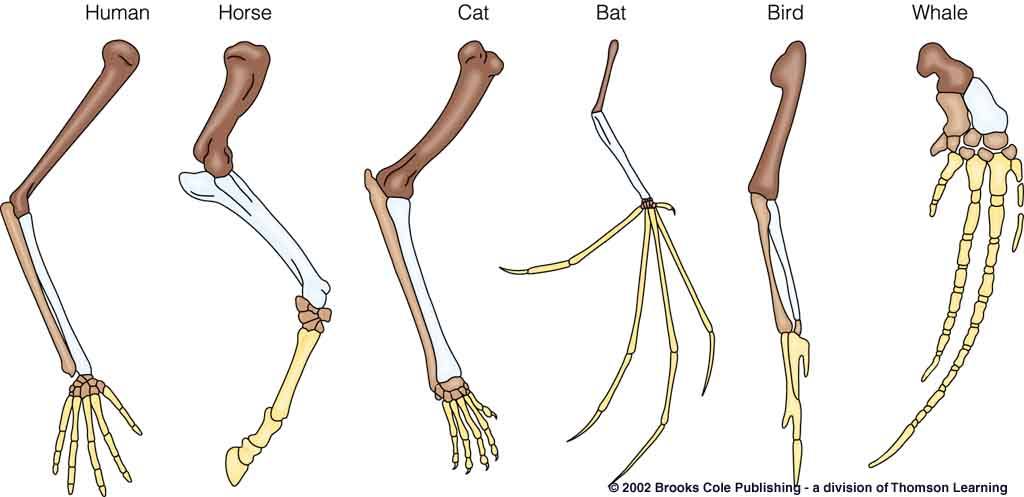

Whales have pelvic bones. What type of structure does this best represent?
Homologous structure
Analogous structure
Vestigial structure
None of the above
An anatomical feature that no longer seams to have a purpose in the current form of an organism
Homologous structure
Analogous structure
Vestigial structure
None of the above

