wayground logo

Free Printable Worksheets

Font size

S
M
L
XL
Worksheets

Classification & Animal Kingdom

Total questions: 25

Worksheet time: 13mins

Name
Class
Date
1.

Which group of animals are warm blooded?

a)

Birds and Mammals

b)

Reptiles and Amphibians

c)

Mammals and Fish

2.

Check all the animal groups that are cold blooded

a)

Reptile

b)

Mammal

c)

Amphibian

d)

Fish

e)

Bird

3.

Which animal group lives part of its life on land and part in water?

a)

Reptiles

b)

Fish

c)

Amphibians

4.

Which animal group has smooth, moist skin?

a)

Reptiles

b)

Birds

c)

Amphibians

5.

Which of the following characteristics is used when determining whether to place an animal in the vertebrate group or the invertebrate group?

a)

Ability to walk on two legs

b)

Presence of a spinal cord

c)

Method of respiration (lungs or gills)

d)

Flow of blood through the body

6.

Any of various warm-blooded vertebrate animals, including humans, characterized by a covering of hair on the skin and, in the female, milk-producing mammary glands for nourishing the young.

a)

Amphibian

b)

Vertebrate

c)

Mammal

d)

Fish

7.
Which of the following is a characteristic of echinoderms?
a)
They have two pairs of antennae.
b)
They have "spiny skin."
c)
They have hair.
d)
They have gills.
8.
What kind of invertebrate is a crab?
a)
mollusk
b)
arthropod
c)
sponge
d)
echinoderm
9.
Which of the following is in the same group as a crab?
a)
squid
b)
leech
c)
spider
d)
sponge
10.
Which of the following do not belong to the same group?
a)
snails
b)
oysters
c)
octopuses
d)
sea stars
11.
Which of the following animals have fins, scales, and gills?
a)
amphibians
b)
crocodiles
c)
reptiles
d)
fish
12.
All have wings but not all can fly.
a)
Mammal 
b)
Bird
c)
Fish
d)
Reptile
13.
Have a soft body and sometimes hard shell.
a)
Mollusk
b)
Echinoderm
c)
Arthropod
d)
Annelid
14.
Between 90-95% of all animals on earth can be classified as _____.
a)
invertebrates
b)
vertebrates
c)
reptiles
d)
mammals
15.
Why are sponges classified as animals
a)
they digest food
b)
they breathe through gills
c)
they use legs to move
d)
they have skeleton
16.
The molluscs are divided into...
a)
Arachnids, bivalves and sponges
b)
Worms, echinoderms and gastropods
c)
gastropods, bivalves and cephalopods 
d)
insects, arachnids and crustaceans 
17.

How do cnidarians get their food?

a)

Food and water flow through their small openings.

b)

Stinging cells on the tentacles capture prey

c)

They have hooks and suckers on their head.

d)

They live inside the bodies of other cnidarians.

18.

Which of the following is the simplest of the invertebrate groups?

a)

sponges

b)

cnidarians

c)

flatworms

d)

roundworms

19.

Always has bilateral symmetry

a)

invertebrate

b)

vertebrate

20.
Which of the following is/are true of animals?
a)
They are multicellular.
b)
They are eukaryotic.
c)
They are heterotrophs.
d)
All choices are correct.
21.
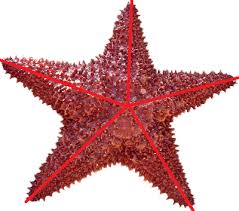
What type of symmetry is displayed in the picture?
a)
asymmetry
b)
bilateral symmetry
c)
radial symmetry
d)
photosynthesis
22.
What type of symmetry is pictured?
a)
bilateral symmetry
b)
radial symmetry
c)
asymmetry
d)
cellular respiration
23.

What is binomial nomenclature?

a)

system of 3 names

b)

system of 2 names

c)

the names of the kingdoms

d)

the levels of classification

24.
What are the 8 levels of classification of living things from most general to most specific?
a)
domain, kingdom, phylum, class, order, family, genus, species
b)
domain, kingdom, phylum, class, order, family, genius, species
c)
domain, kingdom, phamily, class, order, family, genus, species
d)
domain, king, phillip, class, order, family, genus, species
25.
What is the science of organizing, classifying and naming living things.
a)
taxonomy
b)
taxadermy
c)
taxicab
d)
toxicology