
Font size
 Worksheets
Waves
Total questions: 65
Worksheet time: 2hrs 33mins

What do all waves transfer?
Matter
Heat
Electricity
Energy

Which of the following can waves transfer energy through?
solid
liquid
gas
empty space
all of the above

What are the two types of waves?
longitudinal and transverse
sound and light

What is the number of complete waves passing a fixed point in a given amount of time?
Amplitude
Intensity
Wavelength
Frequency

What is the frequency of this wave? You must count the number of complete waves.
1 Hz
5 Hz
10 Hz

What is frequency measured in?
Milliseconds
Miles
Hertz
Kilograms
What medium do light waves pass through?
Solids
Fluids
Vacuum
All the above
A wave is traveling in one medium. Then it begins traveling through another medium and changes direction. What happened?
The wave was absorbed
The wave was transmitted
The wave was refracted
The wave was reflected

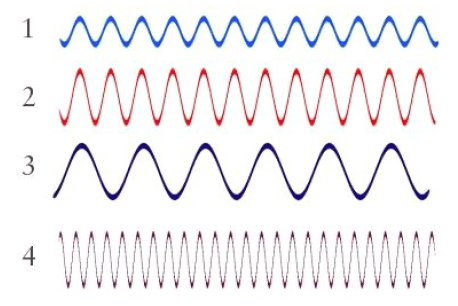
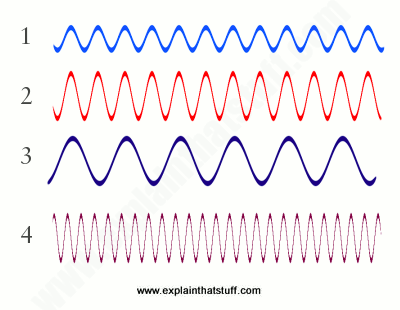
Which wave has the most energy?
Wave 1
Wave 2
Wave 3
Wave 4

Which image shows transmission?
A
B
C
D

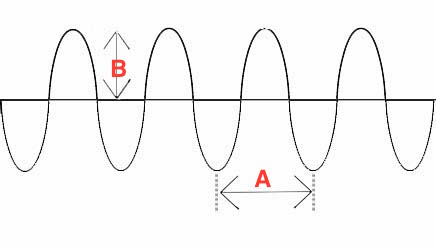
Identify B
Wavelength
Crest
Amplitude
Trough
If you increase the energy put into a wave how will the change the wave?
Change the crest
Change the trough
Change the type of wave
Change the frequency
What wave has particles that move perpendicularly to the direction of the wave?
Transverse waves
Longitudinal waves
Sound waves
Light waves
When waves bend due to a change in their speed as they pass from one medium to another we are referring to ...
reflection
absorption
transmission
refraction
What type of wave behavior exists when a dirty car is cleaned so well you can see yourself?
reflection
absorption
transmission
refraction
The student looks out the window and clearly sees other students outside. What is happening to MOST of the light that hits the window from the outside?
The light is being absorbed.
The light is being reflected.
The light is being transmitted.
The light is being scattered.
What happens when light moves from air to water?
The light continues at the same speed.
The light slows down.
The light speeds up.
The light forms a mirage.
A curved piece of glass that bends light toward a central focal point is called a(n)______.
mirror
concave lens
convex lens
filter
A _____ is sound waves that reflect off of a hard surface.
echo
amplitude
opaque
frequency
8. There are different types of objects that allow light waves to pass through them. Which of the following allows only some light to be transmitted (looks blurry)?
transparent object
translucent object
opaque object
invisible object
What type of wave behavior occurs when the energy is not transferred through, or reflected by, the medium, but instead goes into the medium?
transmission
transparent
refraction
absorption
When a person walks into the water at the beach, it appears that their feet are separated from their legs. This occurs because the light waves bend as they pass between air and the water. This is an example of
reflection of light
absorption of light
transmission of light
refraction of light
Darker colors absorb more light waves than lighter colors. Which color picnic container would be BEST as keeping food cool on a sunny day?
blue
black
white
red
The student looks out the window and clearly sees other students outside. What is happening to MOST of the light that hits the window from the outside?
The light is being absorbed.
The light is being reflected.
The light is being transmitted.
The light is being scattered.
What happens when light moves from air to water?
The light continues at the same speed.
The light slows down.
The light speeds up.
The light forms a mirage.
What type of wave behavior occurs when the energy is not transferred through, or reflected by, the medium, but instead goes into the medium?
transmission
transparent
refraction
absorption
When a person walks into the water at the beach, it appears that their feet are separated from their legs. This occurs because the light waves bend as they pass between air and the water. This is an example of
reflection of light
absorption of light
transmission of light
refraction of light
Darker colors absorb more light waves than lighter colors. Which color picnic container would be BEST as keeping food cool on a sunny day?
blue
black
white
red

This illustration best depicts which of the following behaviors?
Reflection
Refraction
Diffraction
Resonance

This image best depicts which of the following wave behaviors?
Reflection
Refraction
Diffraction
Resonance

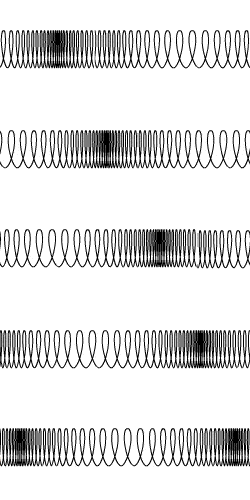


The type of wave in which the medium moves parallel to the wave motion is
transverse
longitudinal
light
electromagnetic

This image depicts which of the following wave behaviors?
Reflection
Refraction
Diffraction
Resonance
The two categories of waves are
Mechanical
Physical
Electromagnetic
Love

Which of the pictured is responsible for black pavement being hot?
Transmission
Reflection
Refraction
Scattering
Absorption


What is this called?
wavelength
amplitude
a curvy line
Longitudinal waves more up and down.
true
false

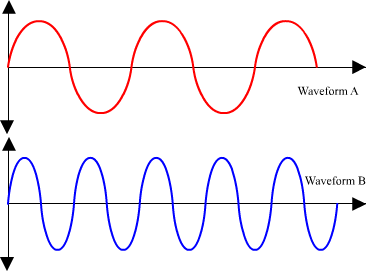
Material some waves travel through, such as the type of solid, liquid, or gas.
Trough
Peak
Wavelength
Medium
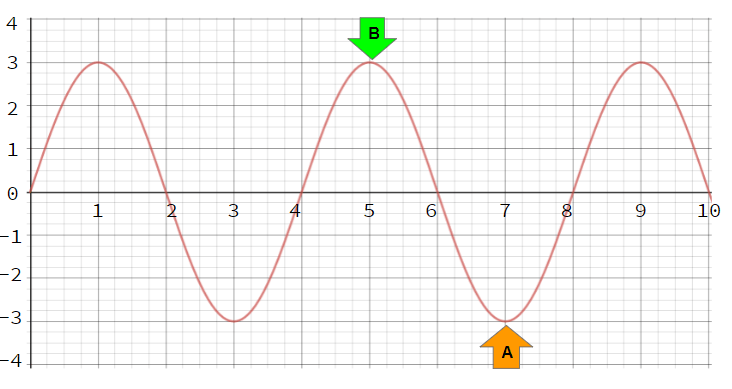
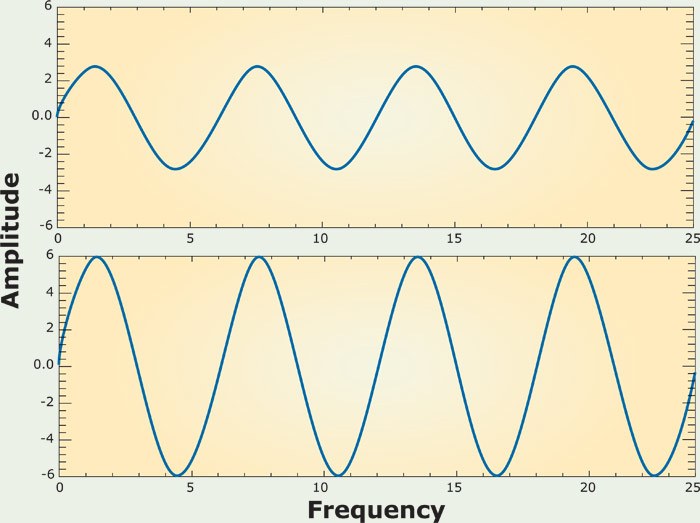
What is the amplitude of this wave?
2
3
6
10
What is the wavelength of this wave?
1
2
3
4
What property does the orange arrow (A) represent?
Crest
Trough
Wavelength
What property does the green arrow (B) represent?
Crest
Trough
Wavelength

