
 Worksheets
Finale Fun
Total questions: 131
Worksheet time: 33hrs 45mins

The law of conservation of mass says substances can neither be _______ nor ___________.
Built; torn down
Blended together; separated
Created; destroyed
Condensed; extracted

Sodium and chlorine combine to form sodium chloride, or table salt. Sodium and chlorine are:
Producers
Products
Reactionaries
Reactants
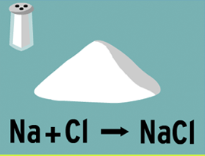
When sodium and chlorine combine to form sodium chloride, sodium chloride is the:
Originator
Reactant
Product
Produce
What is the molar mass of fluorine gas, F2?
18.998 g/mol
38 g/mol
9 g/mol
18 g/mol
_Zn+_HCl-->_ZnCl2 +_H2
How many moles of carbon dioxide are produced from the combustion of 110 g of CH4?
12.00 moles of NaClO3 will produce how many grams of O2?
What mass of O2 will be needed to burn 36.1 g of B2H6?
PbCl2 + AgNO3 → Pb(NO3)2 + AgCl
NH3 + HCl → NH4Cl
Al(OH)3 → Al2O3 + H2O

Identify the type of chemical reaction
Synthesis
Decomposition
Single replacement
Double replacement
Combustion

Identify the type of chemical reaction
Synthesis
Decomposition
Single replacement
Double replacement
Combustion
What is the molarity of a 0.5L sample of a solution that contains 60.0 g of sodium hydroxide (NaOH)
0.8 M
1.5M
3.0M
6.0M
Which of the following is the correct formula for calculating molarity?
moles/liters of solution
moles/kg of solvent
# particles/Avogadro's #
theoretical yield/actual yield
Molar mass of NaOH is ______________________
40 grams/mol
50 grams/mol
45 grams/mol
38 grams/nol


Convert 175 K to °C.
-98 °C
79 K
230.9 °C
-48.2 °C
Convert 100 °C to Kelvin.
173 K
373K
273 K
0 K
Which temperature is equal to 20 K?
-253°C
-293°C
253°C
293°C
Absolute Zero is which value:
0 K
0 °F
0 °C
If I have 5.6 liters of gas in a piston at a pressure of 1.5 atm and compress the gas until its volume is 4.8 L, what will the new pressure inside the piston be?
1.8 atm
3.27 atm
1.8 L
3.27 atm
How do you convert Kelvin to Celsius?
Add 273
Subtract 273
You can't convert those
They are the same thing
All of the following are temperature units except ______
atm
Kelvin
Celsius
Farenheit
What pH is the strongest base?
1
7
4
14

What colour does a base turn red litmus paper?
Red
Blue
A bronsted lowry base
produces hydroxide ions in a solution
is a proton donor
produces hydrogen ions in a solution
is a proton acceptor
A bronsted lowry acid
produces hydroxide ions in a solution
is a proton donor
produces hydrogen ions in a solution
is a proton acceptor
Identify the true statement about the following reaction:
F- + H2O --> HF +OH-
H2O is a bronsted lowry base
H2O is not an acid or base according to either model
H2O is a bronsted lowry acid
H2O is an arrhenius acid

What is the conjugate base in the following reaction?
HCO3-
HCl
H2CO3
Cl-

If the pH of a solution is 4.0, what is the pOH?
4.0
10.0
1.0 x 10 -4
cannot be determined from the information
For a solution, pH + pOH =
7
14
1.0 x 10⁻¹⁴
-log (1.0 x 10 -14)
If the [H3O+] of a solution is 1 x 10⁻³ M, the pH is
11
-3
3
1
What is the [H+] if the pH is 4.0?
1.0 x 10⁻¹⁰ M
1.0 x 10⁻¹⁴ M
1.0 x 10⁻⁴ M
1.0 x 10⁻⁷ M
Water has a neutral because
it has more H+ ions than OH-
it has more OH- ions than H+
it does not produce any ions
it has an equal amount of H+ and OH- in solution
If the [H3O+] of a solution is 1 x 10⁻⁸ M the [OH-] is
1.0 x 10⁻⁶ M
1.0 x 10⁶ M
1.0 x 10⁻⁸ M
1.0 x 10⁸ M
In what three ways does thermal energy transfer?
radiation, fire, earth
conduction, snow, radiation
convection, conduction, radiation
science, energy, motion
The molecules in cold objects move
slowly
faster
not at all
out of this world
The molecules in warm objects move
slowly
faster
not at all
out of this world
Thermal energy transfer through touching is
radiation
conduction
convection
solar
Warm air currents move upward from the earth. This is an example of
convection
conduction
radiation
Someone sits near a fire in a fireplace and becomes warmer. This is an example of:
convection
conduction
radiation


Liquid matter takes the shape of _______.
a gas
water
a pet
Its container
Measures how fast or how slow molecules are moving
Density
Temperature
Heat
All of them
Phase changes always involve changes in
matter.
space.
color.
energy.
What is the phase change of a solid to a liquid?
freezing
melting
boiling
condensation
Change from Liquid to Solid is called ...
fusion
Freezing
sublimation
evaporation
Change from liquid to gas is called....
expansion
evaporation
condensation
sublimation
What happens to particles when energy is added (heated)?
They speed up and spread out
They slow down and compress
They stop moving
They move closer together and speed up
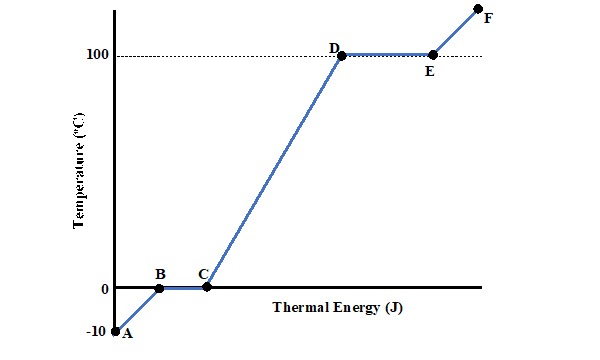
Between which two points is the gas condensing?
A <---- B
B <---- C
C <---- D
D <---- E
E <---- F
Indefinite shape and indefinite volume:
solid
liquid
gas
plasma
no such state
Indefinite shape and definite volume:
solid
liquid
gas
plasma
no such state
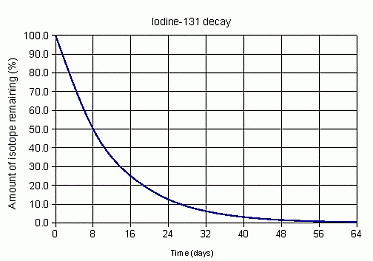
The % of the parent isotope remaining after 1 Half Life.
50%
25%
12.5%
6.25%
The % of the parent isotope remaining after 2 Half Lives.
50%
25%
12.5%
6.25%
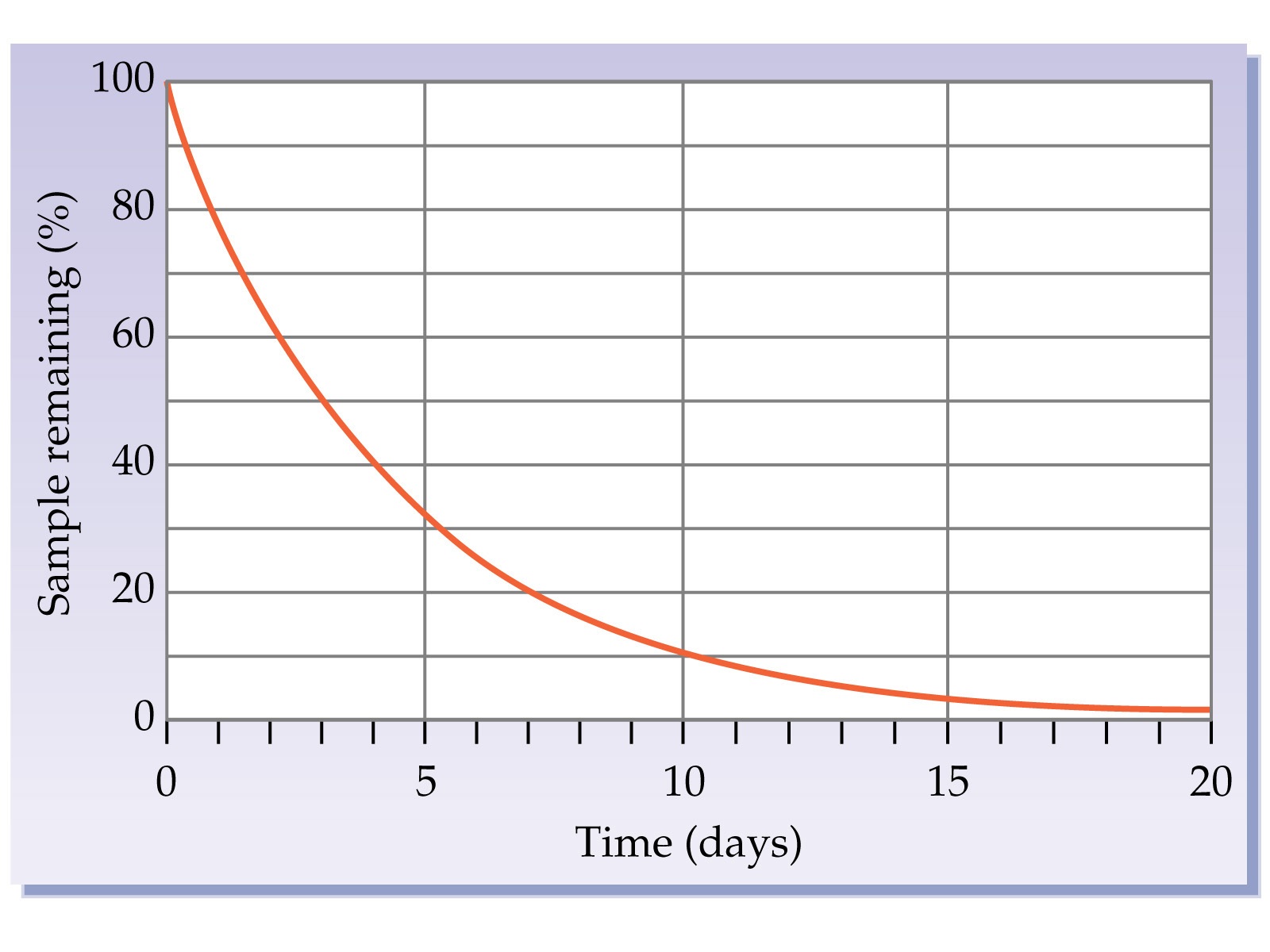
What is the Half Life of this isotope?
3 days
5 days
8 days
10 days
Through relative dating, a geologist finds a fossil that is approximately 10,000 years old. Which radioactive element would geologist use to accurately calculate the fossils age?
Gallium 67 with a half life of 78 hours
Carbon-14 with a half-life of 5,700 years
Plutonium-238 with a half-life of 88 years
Iodine-129 with a half-life of 16 million years
