
 Worksheets
Unit 4 Review
Total questions: 65
Worksheet time: 36mins
What social class were the gladiators normally from?
Wealthy
Merchants
Slaves
Emperors
The Roman Empire fell in 410 CE because this group defeated Rome:
The Mongolians
The Huns
The Greeks
The Germanics (Goths)
Which of the following is NOT a reason that led to the fall of the Roman Empire?
Empire was hard to defend because of size.
The economy was failing.
Invasions from barbarian tribes.
Science convinced people the earth was flat and they fell off the edge.
Rome was successful in terms of trade because:
Caesar's calendar
Hannibal's Invasion
Nero's Leadership
They used a common system of money


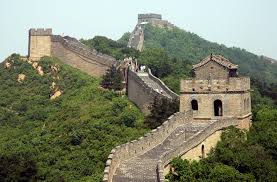
What Dynasty was the first in China?
Qin
Zhou
Shang
Kowloon
A Plateau is....
similar to the Central valley
Flat land, BUT with high elevations where the air is thin.....
The Chinese wanted to keep out the Mongolians so they built large mounds of dirt and rock as barriers. These were the very beginnings of the what?
The Pyramids
The Temple in Jerusalem
The Great Wall of China
Buddhist Stupas
Where is China located?
Asia
Africa
India
North America
South America
During the Qin Dynasty, the ruler Shi Huang-di began construction of the..
Great Wall
Pyramid of Giza
Ziggurat Temple
Fleet of Zheng he
During the han dynasty, they traded with the roman empire becoming very wealthy and powerful because of what main export?
Cotton
Wheat
Silk
Gold
The rulers of ancient china believed that they were destined to rule by the ___________.
Masters of kung fu
Eightfold Path
Mandate of Heaven
Mandate of Pharaohs
Pick the two main philosophies that developed in ancient china?
Judaism and merit
Sikhism and Koellerism
Confucianism and Taoism
Hinduism and Buddhism
Confucianism focused on
Following the vedas of hinduism
The yin and yang
worshipping more than one god
Respecting rulers and elders


Which ancient Chinese philosophy believed strict laws and harsh punishments would lead to proper behavior?
Daoism
Confucianism
Shintoism
Legalism
What barrier separates China from India?
The Gobi Desert
The Taklamakan Desert
The Himalaya Mountains
The Great Wall


What Chinese philosophy says people should live in harmony with nature?
Legalism
Buddhism
Daoism
Christianity
What famous teacher was the founder of Confucianism?
Lu Bang
Hanfeizi
Confucius
This should be easy. It is named after the guy who started it!
What was the route called that connected China to Europe for trading?
The Great Wall
Grand Canal
Silk Road
Silk Trail
What was the Silk Road?
A road made of silk
A road where you could find silk
A network of trade routes
A road in Ancient China
How did the silk road benefit China?
They discovered other civilizations
They received new resources
They gained wealth
All of the above
1. The existence of the Xia dynasty is disputed because
There is not enough archaeological evidence
There was no real emperor
It did exist ... what are you talking about
None of the above
5. What are the warring periods?
Periods of worrying
Period of warning for natural disasters
Periods of civil wars, instability, suffering, and violence
none of the above
6. Emperor Shi Huangdi, sent out an order to burn all books that did not have to do with the new philosophy of the empire. This is an example of
Buddhism
Confucianism
Legalism
The fire nation attacking
7. Which of the following is related to Confucianism?
The Art of War
Ying Yang
Meritocracy
The Analects
8. What is Daoism?
You must be one with the ((force)) and let things flow…be like water. Live in harmony.
You must be the force and join the dark side
It is a philosophy that pushes people to doubt everything around them
It is a philosophy that makes people think about the unknown
Which statement supports the CULTURAL impact of the Silk Road?
Spread of ideas, food, and innovations between Asia and Europe
Encouraged isolation between the ancient civilizations
Sparked further was with in the Chinese kingdoms
Furthered the separation of social classes in China
How did Confucianism try to prevent corruption in the government?
By giving land to noble families
By not allowing anybody related to Qin in the government
By giving jobs to family members only
Giving government positions to those who earned it
the belief that people should give up worldly desires in favor of nature and the Dao; people should be concerned with obtaining a long life and living in harmony with nature
aristocrat
bureaucracy
Daoism
Confucianism
Group of non-elected (appointed) officials who are responsible for different areas of government.
bureaucracy
Chang Jiang
ideograph
Daoism
the belief that people should put the needs of their family and community first; based on the teachings of Confucius
bureaucracy
Confucianism
filial piety
legalism
Who was allowed to attend the chariot races?
Rich
Poor
Everyone-Rich and Poor
Senators
What events took place at the Circus Maximus?
Boat Races
Fighting
Chariot Racing
Discus
Why didn't every gladiator game end in death?
It was too expensive to keep training new gladiators
People had favorite gladiators
People didn't feel like clean up the stains

What does this quote mean?
Distract the people and they will not protest
Truthfully give the people what they want
Everyone deserves a good circus and some bread
The bread and circuses are revolting.
_____________ helped Rome because they made it easier to travel. The Roman soldiers could now easily get from place to place.
Aqueducts
Colosseum
Roads
Baths
Complete the following sentence:
In ancient Rome, ______ was given to the poor and unemployed at a very low cost or even free;
→ Bread
→ Clothes
→ Shoes
→ Housing
True Or False
The Roman emperor was wary of unemployed and hungry individuals whom he thought might turn dangerous.
True
False
True Or False
Circuses were meant to take people’s minds off their problems.
True
False
True Or False
The latin term panem et circenses means ‘bread and circuses’.
True
False

