
 Worksheets
Models of the Atom
Total questions: 25
Worksheet time: 16mins

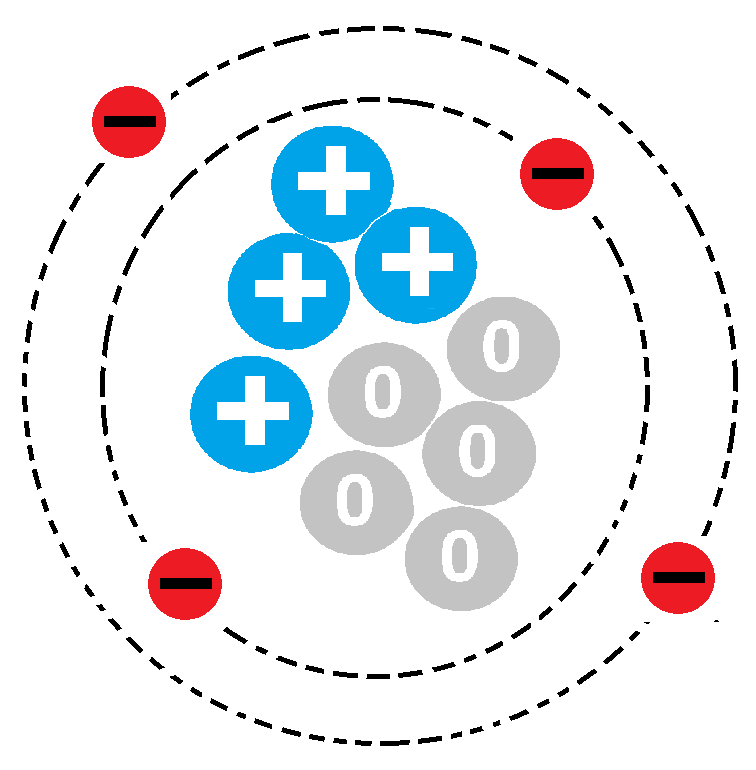
What is the number of protons in this carbon atom?
12
6
18
24
What happens when an electron absorbs energy?
The electron moves from a lower energy orbital to a higher energy orbital.
The electron falls into the nucleus.
The electron moves from a higher energy orbital to a lower energy orbital.
The electron loses its charge.
Who was the first to state the concept of an atom?
Bohr
Dalton
Rutherford
Democritus
In the modern quantum–based atomic theory, what is the name given to a particular space around the nucleus in which an electron moves?
orbital
nucleus
orbit
energy level
Which statement correctly describes protons?
They have no charge and are present in the nucleus of an atom.
They have a negative charge and travel around the nucleus of an atom.
They have a positive charge and travel around the nucleus of an atom.
They have a positive charge and are present in the nucleus of an atom along with the neutrons.
What did Rutherford's gold-foil experiment help him conclude?
The mass of the atom is equivalent to the number of protons alone.
The mass of the atom is negligible.
The mass of the atom is mostly located in a small nucleus.
The mass of the atom is equivalent to the number of neutrons alone.
What are the subatomic particles of an atom?
protons, neutrons, and nucleus
protons, neutrons, and electrons
electrons, orbitals, and neutrons
electrons, neutrons, and nucleus
Which subatomic particle has negligible mass and travels around outside the nucleus?
proton
neutron
electron
orbital
What defines the mass number of an isotope?
the sum of the neutrons and protons
the sum of the neutrons and electrons
the number of neutrons
the number of protons


Used the word "atomos" to decsribe the uncuttable (indivisible) atom.
Democritus
Thomson
Bohr
Dalton
Which statement is true with respect to an atom?
The electrons remain enclosed in the nucleus of an atom.
The atomic mass of an atom depends solely on the number of protons in the nucleus.
The atomic number of an atom is equal to the number of protons.
The protons and neutrons in the nucleus of an atom constitute the atomic number.

Proposed that electrons move around the nucleus in specific layers, or shells.
Bohr
Rutherford
Chadwick
Thomson

This picture best represents ___________________ atomic model.
Thomson's
Dalton's
Bohr's
Chadwick's
Which of the following is/are conclusions based on Rutherford’s gold foil experiment?
Atom is mostly empty space
The nucleus is positively charged
The atom has a small dense nucleus
All answers are correct


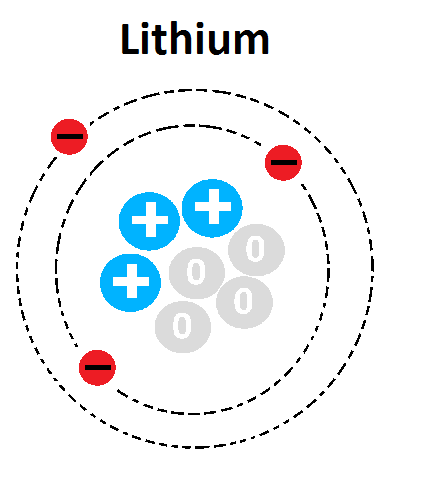
What is the mass number of this atom?
1
3
4
7

An atom has 12 protons and 13 neutrons in its nucleus. Which is the correct symbol?



