wayground logo

Free Printable Worksheets

Font size

S
M
L
XL
Worksheets

G-4 10-06-22

Total questions: 85

Worksheet time: 1hrs 29mins

Name
Class
Date
1.
a)
rectangle
b)
square
c)
rhombus
d)
trapezoid
2.
a)
rectangle
b)
parallelogram
c)
rhombus
d)
trapezoid
3.
a)
rectangle
b)
trapezoid
c)
parallelogram
d)
square
4.
a)
rectangle
b)
square
c)
rhombus
d)
trapezoid
5.

This quadrilateral is a

a)

Parallelogram

b)

Rectangle

c)

Square

d)

Trapezoid

6.

Choose all names that correctly describe this quadrilateral.

a)

Parallelogram

b)

Rectangle

c)

Square

d)

Rhombus

7.

All rectangles are parallelograms.

a)

True

b)

False

8.
A trapezoid is a quadrilateral
a)
Sometimes
b)
Always
c)
Never
9.
a)

acute

b)

obtuse

c)

right

10.
a)

acute

b)

obtuse

c)

right

11.
a)

acute

b)

obtuse

c)

right

12.
a)

equilateral

b)

isosceles

c)

scalene

13.
a)

equilateral

b)

isosceles

c)

scalene

14.
a)

equilateral

b)

isosceles

c)

scalene

15.
a)

equilateral

b)

isosceles

c)

scalene

16.
What type of line does this picture show?
a)
parallel
b)
perpendicular
c)
intersecting
d)
line segment
17.
What type of line does this picture show?
a)
perpendicular
b)
parallel
c)
intersecting
d)
line
18.
What type of line does this picture show?
a)
intersecting
b)
perpendicular
c)
line segment
d)
parallel
19.
What type of line does this picture show?
a)
parallel
b)
perpendicular
c)
ray
d)
intersecting
20.
What type of line is PF?
a)
line
b)
line segment
c)
perpendicular
d)
parallel
21.
What type of line is created by the pencils?
a)
perpendiclar
b)
parallel
c)
intersecting
d)
line
22.
What type of line is shown by the hands on the clock?
a)
parallel
b)
line segment
c)
intersecting
d)
perpendicular
23.
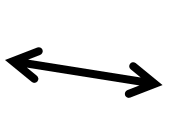
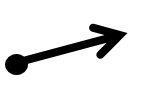
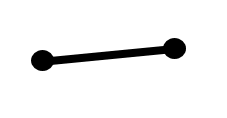
What type of line can you see in this picture?
a)
parallel
b)
ray
c)
point
d)
segment
24.

What type of line is it?

a)

ray

b)

line

c)

line segment

d)

point

25.
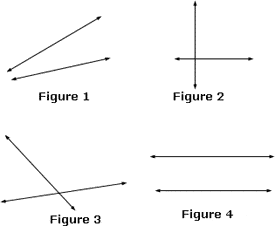
Which figure shows a set of parallel lines?
a)
Figure 1
b)
Figure 2
c)
Figure 3
d)
Figure 4
26.

What is the measure of the unknown angle?

a)

80 degrees

b)

90 degrees

c)

100 degrees

d)

110 degrees

27.

What is the measure of the unknown angle?

a)

51 degrees

b)

52 degrees

c)

53 degrees

d)

54 degrees

28.

What is the measure of the unknown angle?

a)

106 degrees

b)

107 degrees

c)

108 degrees

d)

109 degrees

29.

If your clock says 3:00 what angle does that represent?

a)

acute

b)

obtuse

c)

right

d)

straight

30.

What is the measure of the angle?

a)

90°90\degree

b)

180°180\degree

c)

45°45\degree

d)

120°120\degree

31.

What is the approximate measure of the angle?

a)

90°90\degree

b)

10°10\degree

c)

60°60\degree

d)

30°30\degree

32.

Without using a protractor, find the measure of X.

a)

45 degrees

b)

28 degrees

c)

32 degrees

d)

118 degrees

33.

What is the measure of  BOC\angle BOC  

a)

122

b)

142

c)

132

d)

128

34.

What is the measure of an angle that cuts off 

25\frac{2}{5}  of the circle?

a)

180°180\degree  

b)

72°72\degree  

c)

135°135\degree  

d)

144°144\degree  

35.

What is the measure of an angle that cuts off 

38\frac{3}{8}  of the circle?

a)

120°120\degree  

b)

90°90\degree  

c)

135°135\degree  

d)

45°45\degree  

36.
Name the figure.
a)
point
b)
line
c)
ray
d)
line segment
37.
Name the figure.
a)
ray
b)
line
c)
line segment
d)
point
38.
This is what kind of angle?
a)
acute
b)
obtuse
c)
right
d)
straight
39.
This is what kind of angle?
a)
right
b)
acute
c)
obtuse
d)
straight
40.
Name the figure.
a)
line segment
b)
line
c)
point
d)
ray
41.
This is what kind of angle?
a)
obtuse
b)
right
c)
straight
d)
acute
42.
What type of angle is shown?
a)
acute
b)
obtuse
c)
right
d)
straight
43.
Name this angle.
a)
acute
b)
right
c)
obtuse
d)
none of the above
44.
Name this angle.
a)
acute
b)
right
c)
obtuse
d)
none of the above
45.
Name this angle.
a)
acute
b)
right
c)
obtuse
d)
none of the above
46.
Acute angle - an angle that is ______ a 90 degree angle.
a)
more than
b)
less than
c)
equal to
d)
none of the above
47.
Name this angle.
a)
acute
b)
right
c)
obtuse
d)
none of the above
48.
Name this angle.
a)
acute
b)
right 
c)
obtuse
d)
none of the above
49.
Name this angle.
a)
acute
b)
right
c)
obtuse
d)
none of the above
50.
Identify this picture. 
a)
ray AB
b)
line AB
c)
line segment AB
d)
point AB
51.
What is a line segment?
a)
Part of a line with 2 endpoints
b)
Part of a line that has 1 endpoint
c)
Part of a line with 0 endpoints
d)
Part of a line with 5 endpoints
52.
What is a ray?
a)
Part of a line with 2 endpoints
b)
Part of a line with 1 end point and goes on forever 
c)
Part of a line with 0 endpoints
d)
Part of a line with 5 endpoints
53.

Each number in Set A goes with one number in Set B. What is the pattern?

a)

Subtract 4

b)

Add 2

c)

Add 4

d)

Subtract 2

54.

Each number in Set A goes with one number in Set B. What is the missing value?

a)

5

b)

13

c)

12

d)

4

55.

Each number in Set M goes with one number in Set N. What is the pattern?

a)

Add 8

b)

Add 2

c)

Subtract 2

d)

Subtract 8

56.

Each number in Set M goes with one number in Set N. What is the missing value?

a)

6

b)

7

c)

8

d)

9

57.

A sequence has 2, 4, 6, 8, 10, 12, 14. The rule for the sequence is;

a)

Add 1

b)

Add 2

58.

What is the next number in this sequence 4, 8, 12, ......, 20?

a)

10

b)

16

c)

18

59.

The rule for this sequence 18, 15, 12, 9, 6, 3, 0 is;

a)

Add 3

b)

Plus 3

c)

Minus 3

60.

12, ..........., 32, 42, 52. The missing number is;

a)

22

b)

23

c)

24

61.

103, 107, 111, 115, 119, 123. The rule for this sequence is;

a)

Add 100

b)

Add 104

c)

Add 4

d)

Minus 4

62.

150, 155, 160, 165, .............. . The missing number is;

a)

170

b)

175

c)

180

63.

58, 51, 44, ......., 30. The missing number is;

a)

40

b)

37

c)

35

64.
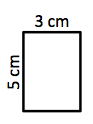
What is the area of the rectangle?
a)
15 sq cm
b)
15 cm
c)
d)
16 cm
65.
What is the area of this rectangle?
a)
40 square centimeters
b)
45 square centimeters
c)
28 centimeters
d)
50 square centimeters
66.
The distance around an object is called the 
a)
area
b)
perimeter
67.
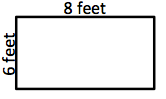
What is the perimeter of the rectangle? (Hint: top matches the bottom, left matches the right!)
a)
28 sq feet
b)
28 feet
c)
48 feet
d)
48 sq feet
68.

4 kilograms = ______________ grams

a)

400 grams

b)

4,000 grams

c)

4 grams

69.

9 L = ________ mL

a)

900 mL

b)

9,000 mL

c)

90 mL

70.
a)
rectangle
b)
square
c)
rhombus
d)
trapezoid
71.

   3litre = _____________mL


a)

100mL

b)

1,000mL

c)

500mL

d)

3,000mL

72.

Which of the following is the special name of the figure?

a)

trapezoid

b)

rectangle

c)

square

d)

triangle

73.

  Classify the following triangle by its Angles

a)

Trapezoid

b)

Right

c)

Obtuse

d)

Acute

74.

   7 kilograms= _____________ gram


a)

7,000g

b)

900g

c)

90

d)

500

75.

  Find n. Perimeter.

a)

20cm

b)

9cm

c)

15cm

d)

8cm

76.

  Find the area

a)

5cm2 

b)

10cm2

c)

15cm2

d)

25cm2

77.

   Find the area

a)

15cm2

b)

16cm2

c)

20cm2

d)

30cm2

78.

  Use the rule to generate the pattern.  The rule:     subtract 6,

                     38, 32, 26, ______, ______

a)

18, 12                      

b)

20, 14

c)

30, 40

d)

25,60

79.

Find the measure of angle.

a)

90°90^{\degree}                           

b)

100°100^{\degree}                          

c)

60°60^{\degree}  

d)

70°70^{\degree}  

80.

1.     Use the rule to generate the pattern.  The rule:  add 5

                   97, 102, ________

a)

100

b)

110

c)

102

d)

107

81.

Which geometric term describe <HJK.

a)

Acute angle

b)

Obtuse angle

c)

Straight angle

82.

  What fraction of the circle does 90°90^{\degree}    angle turn through?

a)

12\frac{1}{2}  

b)

25\frac{2}{5}  

c)

23\frac{2}{3}  

d)

14\frac{1}{4}  

83.

Find the measure of angle.  The angle turns through    15\frac{1}{5}   of the circle.

a)

120°120^{\degree}  

b)

72°72^{\degree}  

c)

95°95^{\degree}  

84.

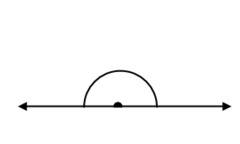
What is the angle measure of a straight line?

a)

120°120^{\degree}  

b)

180°180^{\degree}  

c)

90°90^{\degree}  

d)

100°100^{\degree}  

85.

Which geometric term would you use to describe the power cable shown  at the right?

a)

Perpendicular lines

b)

parallel lines

c)

Intersecting lines