
 Worksheets
7L2 Nervous System : Central vs. Peripheral
Total questions: 10
Worksheet time: 5mins

The Central Nervous System is made up of
the cerebellum and cerebrum
the brain and spinal cord
the brainstem and spinal cord
cerebrum and spinal cord

How does the body prevent damage to the fragile brain and spinal cord?
the brain is kept floating in the skull so it can absorb impacts
the brain and spinal cord are enclosed in bone (skull and spinal column) to protect it
the spinal cord is kept safe by being hidden behind other body organs and muscles
The brain isn't as protected as the spinal cord

PNS stands for
Parallel Nervous System
Peripheral Nervous System
Physical Nervous System
Pressure Nervous System

The Peripheral Nervous System is made up of
the brain and spinal cord
all of the neurons in the body
the neurons outside of the brain and spinal cord
the neurons in your arms and legs

What joins the two hemispheres of the brain together?
corpus callosum
cerebral cortex
frontal lobe
cerebellum

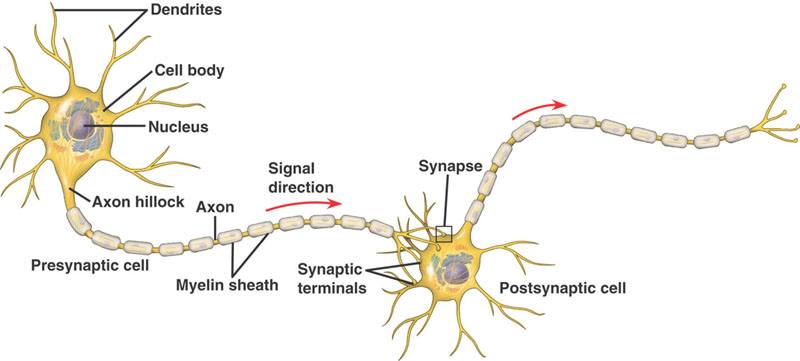
An impulse is travelling along an axon. It reaches a synapse, what happens next?
The impulse jumps the gap to the dendrite of the next neuron and continues on its way
Neurotransmitters are released into the synapse, which bind to the next neuron, generating an impulse in that neuron
Dopamine is released into the synapse, which binds to the next neuron, generating an impulse in that neuron
The impulse waits while the next neuron prepares itself to receive the signal
What type of Neuron send signals to the brain from a receptor?
Motor
Relay
Sensory
Inter neuron
What Neuron is used to send signals from your brain to your muscles?
Relay
Inter
Motor
Sensory
Function of brain
controls all voluntary actions of the body
to transmit impulses from the sensory organ through central nervous system to the effector to respond accordingly
controls the reflex actions

