wayground logo

Free Printable Worksheets

Font size

S
M
L
XL
Worksheets

7th grade Final Exam Review 2023

Total questions: 162

Worksheet time: 13hrs 35mins

Name
Class
Date
1.
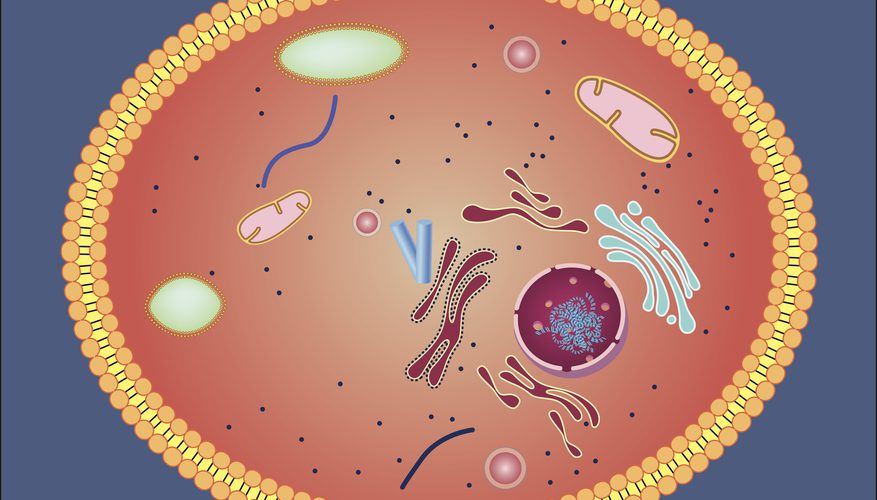
All cells need energy to function.  Which cell organelle is responsible for producing energy in the cell?
a)
chloroplasts
b)
mitochondria
c)
nucleus
d)
vacuoles
2.
What is the function of a cell wall?
a)
to protect and support the cell
b)
to perform different functions in each cell
c)
to prevent water from passing through it
d)
to prevent oxygen from entering the cell
3.
Cells with a nucleus and membrane-bound organelles are called ____________________.
a)
prokaryotes
b)
eukaryotes
c)
bacteria
d)
protists
4.

A group of tissues that perform a similar function is called a(n) ____________ . Examples include the heart, lungs, or stomach.

a)

cell

b)

tissue

c)

organ

d)

organ system

5.

Which includes an order of organization of multicellular organisms from smallest to largest?

a)

tissues, cells, organs, organ systems, organism

b)

cell, tissue, organs, organ systems, organism

c)

organism, cells, tissues, organ systems, organism

d)

tissues, cells, organs, organ sytems, organism
6.
What do viruses need to reproduce?
a)
they need genetic material
b)
They need a host cell
c)
They need  bacteria
d)
They need insulin
7.
Reasons that viruses are considered to be nonliving is because
a)
They are not cellular
b)
They cannot reproduce on their own
c)
They cannot make proteins
d)
all of the above
8.

A jelly-like fluid that lls all the empty space in the cell, giving it shape and keeping everything in place.

a)

chromatin

b)

cytoplasm

c)

nucleus

d)

nucleoplasm

9.

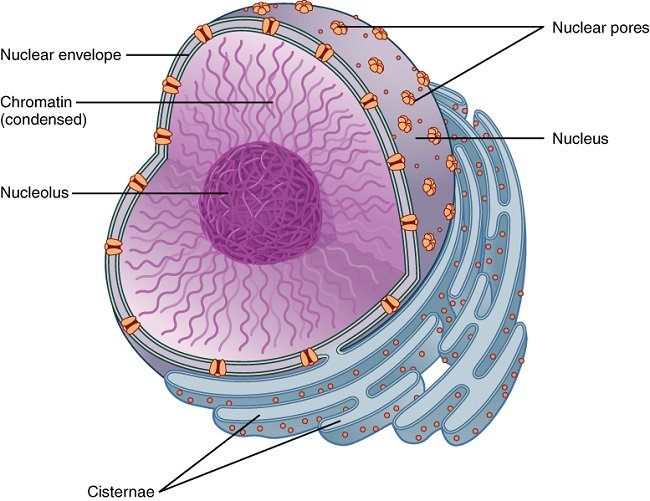
The control center of the cell.

a)

cytoplasm

b)

nucleus

c)

nucleoplasm

d)

chromatin

10.
What is diffusion?
a)
when molecules move 
b)
when molecules move from a high concentration to a low.
c)
no movement 
d)
molecules move everywhere
11.
Osmosis is the movement of _____ across a membrane.
a)
food
b)
energy
c)
oxygen
d)
water
12.
During osmosis
a)
water moves from high to low concentration
b)
large or oddly shaped molecules move across a cell membrane
c)
water moves when energy is used
d)
proteins are built
13.
What is the definition of  Selective Permeability?
a)
The movement of materials across the cell membrane that requires NO ENERGY from the cell.
b)
The movement of materials through (or across) the cell membrane
c)
The ability of the cell membrane to allow some things to pass through while preventing other things from passing through.
d)
The movement of molecules from an area of high concentration to a area of low concentration 
14.

Which means of particle transport requires energy?

a)

diffusion

b)

osmosis

c)

facilitated diffusion

d)

active transport

15.

Moving materials from an are of LOW concentration to HIGH concentration requires active transport. (against the gradient)

a)

true

b)

false

16.

Identify the substance/molecule that will not diffuse.

a)

Starch

b)

Glucose

c)

Iodine

17.
The maintenance of an organism’s internal environment is called:
a)
compensating
b)
homeostasis
c)
balancing
d)
routine
18.
The mouth digests (breaks down) _________ by chewing.
a)
mechanically
b)
chemically
c)
elimination
d)
absorption
19.
The stomach releases hydrochloric acid and enzymes that break down the protein in meats and turn the protein into amino acids. This change is
a)
Physical
b)
Chemical
20.
Tube that carries swallowed food to the stomach
a)
esophagus
b)
liver
c)
pancreas
d)
rectum
21.
The process by which the body breaks down food so that it can be used for energy.
a)
composition
b)
digestion
c)
deposition
d)
absorption
22.
a)
pancreas
b)
esophagus
c)
stomach
d)
liver
23.
What are the main parts of the digestive system 
a)
stomach, small and large intestine
b)
mouth,stomach,esophagus,large and small intestine, and rectum
c)
stomach, lungs, trachea, rectum
d)
large and small intestine, trachea, stomach, mouth
24.

What increases the surface area of the small intestine?

a)

duodenum

b)

villi

c)

ileum

d)

pancreas

25.

Arteries

a)

carry oxygenated blood to the heart

b)

carry oxygenated blood away from the heart

c)

carry deoxygenated blood to the heart

d)

carry deoxygenated blood away from the heart

26.

Veins

a)

carry deoxygenated blood to the heart

b)

carry deoxygenated blood away from the heart

c)

carry oxygenated blood to the heart

d)

carry oxygenated blood away from the heart

27.

White blood cells

a)

are mostly water and transport substances around the body

b)

carry oxygen around the body

c)

protect the body from disease

d)

clot the blood

28.

Blood is made up of

a)

Plasma

b)

Blood cells - red and white

c)

Platelets

d)

All of the above

29.
The circulatory system works with the ___________ system to provide our body with oxygen.
a)
respiratory
b)
digestive
c)
muscular
d)
skeletal
30.
The main function of the circulatory system is 
a)
To give the body structure and support
b)
Excrete waste
c)
transport blood, nutrients, and gases throughout the body
d)
to transport messages from the body to the brain
31.
This part of blood helps it clot, when you get cut.
a)
Red blood cells
b)
Plasma
c)
Platelets
d)
White blood cells
32.
What part of blood is responsible for carrying wastes, nutrients, and minerals?
a)
Red Blood Cells
b)
White Blood Cells
c)
Platelets
d)
Plasma
33.
The movement by diffusion of oxygen and carbon dioxide across a membrane
a)
Ventilation
b)
Breathing
c)
Gas exchange
d)
Respiration
34.
What is the main function of the excretory system?
a)
to collect and remove wastes from the body
b)
to strengthen skeletal muscles
c)
to protect the nervous system
d)
to bring oxygen to body cells
35.
Which excretory organ eliminates water and some chemical wastes in perspiration?
a)
lungs
b)
skin
c)
liver
d)
kidneys
36.
What function do the kidneys perform?
a)
eliminate carbon dioxide
b)
supply oxygen to body cells
c)
remove urea and excess water
d)
play a role in gas exchange
37.
Use the diagram, what is structure D?
a)
urethra
b)
kidney
c)
ureter
d)
urinary bladder
38.
Use the diagram, what is structure B?
a)
urethra
b)
kidney
c)
ureter
d)
urinary bladder
39.
Use the diagram, what is structure C?
a)
urethra
b)
kidney
c)
ureter
d)
urinary bladder
40.

Hormones are

a)

email messages

b)

chemical messages

c)

voicemail messages

d)

chemical markers

41.

What organs in the nervous system pass along messages?

a)

neurons

b)

brain tissue

c)

cords

d)

wires

42.

Which is NOT a function of the nervous system?

a)

responding to information

b)

making blood cells

c)

receiving information on the environment

d)

maintaining homeostasis

43.

Why would it be important to replicate DNA before a cell divides in mitosis or meiosis?

a)

In order for genetic information to be transferred into daughter cells.

b)

In order for the cell to be able to increase in size.

c)

In order for the DNA to be contained in the nucleus.

d)

In order for the cell to re-order the DNA sequencing in the new cells.

44.

Humans have ________ pairs of chromosomes.

a)

21

b)

23

c)

46

d)

None of the above

45.
Which type of reproduction leads to increased genetic variation on a population? 
a)
Parthenogenesis 
b)
Asexual reproduction 
c)
Sexual reproduction 
d)
Vegetative reproduction 
46.
Which of the following best describes cancer?
a)
absence of cyclins in the DNA
b)
Multiple gene mutations on a chromosome of DNA
c)
Uncontrolled cell growth caused by mutations in genes that control the cell cycle.
d)
Presence of genetic defects caused by hereditary disorders. 
47.
Fruit fly body cells have 8 chromosomes. After mitosis, you would expect a resulting fruit fly daughter cell to have -
a)
16 chromosomes.
b)
46 chromosomes.
c)
8 chromosomes.
d)
4 chromosomes.
48.
Meiosis makes sperm and egg cells. In humans, sperm and egg cells each have _____ chromosomes. Therefore a fertilized human egg cell (sperm and egg cell combined) would create a cell with _____ chromosomes.
a)
23, 46
b)
46, 23
c)
2, 4
d)
50, 100
49.
A male shark has 40 chromosomes in each of its sex cells. How many would be present in its body cells?
a)
20
b)
40
c)
80
d)
160
50.
How many parents are required for sexual reproduction? 
a)
one
b)
two
c)
four
d)
six
51.
The part of the flower where the ovules or egg cells are found
     
a)
Ovary
b)
stigma
c)
Seed   
d)
style
52.
The part of stamen where the pollen grains are produced
a)
style
b)
filament
c)
anther
d)
stigma
53.
The transfer of pollen grain from the anther to the stigma of the flower
a)
pollination
b)
pollen grain
c)
fertilization
d)
ovary
54.
A sperm cell unites with an egg cell to form a zygote. Which process is taking place? 
a)
Pollination
b)
Asexual reproduction
c)
Fertilization
d)
Vegetative propagation
55.
What is NOT a characteristic of sexual reproduction? 
a)
Gametes from two parents unite to form a zygote.
b)
Offspring are genetically identical with the parent. 
c)
Offspring are different from their parents and sibling.
d)
Genetic variability of offspring help to ensure survival in changing environmental conditions.
56.
a)
budding
b)
sporulation
c)
vegetative propagation
d)
binary fission
57.
In asexual reproduction, all of the offspring are:
a)
Physically Identical
b)
Genetically Identical
c)
Physically and Genetically Identical
d)
Not Identical
58.
How many parent(s)are needed for asexual?
a)
4
b)
1
c)
9
d)
100
59.
What are some of the facts about asexual reproduction?
a)
Takes only one mate to reproduce and takes a longer time to reproduce
b)
Takes a shorter amount of time to reproduce and it takes two mates to reproduce
c)
Reproduces diverse offspring and takes a longer time to reproduce
d)
Takes only one mate to reproduce and takes a shorter time to reproduce
60.

Which is a type of Asexual Reproduction

a)

Sexual

b)

Binary fission

c)

Cells

d)

organism

61.

This is an example of asexual reproduction by...

a)

budding

b)

binary fission

c)

sporulation

d)

vegetative propagation

62.

Animals having external fertilization usually produce large number of gametes because

a)

Animals are small in size and want to produce more offspring

b)

Food is available in plenty of water

c)

To ensure better chance of fertilization

d)

Water promotes production of large number of gametes

63.

Fertilization that occurs inside the body

a)

Internal Fertilization

b)

External Fertilization

64.

Mammals, reptiles, and birds undergo this type of fertilization.

a)

Internal Fertilization

b)

External Fertilization

65.

Amphibians and fish undergo this type of fertilization.

a)

Internal Fertilization

b)

External Fertilization

66.

Which type of metamorphosis is represented?

a)

complete metamorphosis

b)

incomplete metamorphosis

67.

When an animals transforms it's body during it's life cycle...

a)

Nymph

b)

Metamorphosis

c)

Larva

d)

Heredity

68.

Which of the following examples provides evidence of a PHYSICAL change?

a)

Wood is burned and releases ash and smoke

b)

Iron rusts over time

c)

When mixed, baking soda and vinegar form gas bubbles

d)

Boiling water bubbles when heated

69.

A physical change...

a)

changes the physical properties of an object, but does not create a new substance.

b)

creates a new substance and cannot be undone.

70.

Is this an example of a physical or chemical change?

a)

physical

b)

chemical

71.

Which of the following is NOT an example of a physical change?

a)

crumpling paper

b)

sharpening a pencil

c)

clothes shrinking

d)

sour milk

72.

A mixture is what you get when you combine two substances in such a way that no chemical reaction occurs between the components. A solution (homegeneous) is a mixture that looks exactly the same everywhere. Which of these mixtures is a solution?

a)

Italian salad dressing

b)

cereal and milk

c)

salt and sand

d)

sugar and water

73.

Based on the Law of Conservation of Matter, describe the relationship between the mass of the reactants and the mass of the products.

a)

The mass of the products is always greater than the mass of the reactants.

b)

The mass of the reactants is less than the mass of the products.

c)

The mass of the reactants equals the mass of the products.

d)

The mass of the reactants is greater than the mass of the products.

74.

If the mass of a chemical reaction's product is 15 grams, what would the mass of the reactants be?

a)

20 g

b)

15 g

c)

10 g

d)

3 g

75.

Subatomic particles that have a negative charge

a)

electrons

b)

protons

c)

quarks

d)

neutrons

76.

Subatomic particle that has a positive charge

a)

electron

b)

poitron

c)

neutron

d)

proton

77.

The center of an atom is called the ________________.

a)

electron cloud

b)

nucleus

c)

neutrion

d)

nuetron

78.

In what part of an atom can the protons and neutrons be found?

a)

nucleus

b)

neutrine

c)

electron cloud

d)

proton cloud

79.

Which parts of the atom move around the nucleus?

a)

electrons

b)

protons

c)

electrode particles

d)

neutrons

80.
Is sugar (C12H22O11) an element or a compound?
a)
Element
b)
Compound
81.
Is water an element or a compound?
a)
Element
b)
Compound
82.

Which substance is MOST soluble at 0 ºC?

a)

KI

b)

NaNO3

c)

NaCl

d)

Ce2(SO4)3

83.
Which solute is the most soluble at 10 ⁰C?
a)
KI
b)
KClO3
c)
NH4Cl
d)
NH3
84.
Which of these solutes does not increase in solubility as temperature rises?
a)
NH3
b)
NaNO3
c)
KNO3
d)
NaCl
85.
What type of chemical reaction is this?
Al(OH)3 → Al2O3  + H2O
a)
Decomposition
b)
Combustion
c)

Replacement 

86.
Which of the following is the general formula for a decomposition reaction?
a)
A + B  → AB
b)
AB → A + B
c)
AB + C → AC + B
d)
AB + CD → AC + BD
87.

Identify the type of chemical reaction

a)

Synthesis

b)

Decomposition

c)

Replacement

88.
What types of charges attract?
a)
Positive and Positive
b)
Positive and Neutral
c)
Negative and Neutral
d)
Positive and Negative
89.
If a substance has a higher number of electrons than protons on its surface, what type of charge does it have?
a)
A positive charge.
b)
A negative charge.
c)
A neutral charge
d)
No charge at all
90.
Which of the following an insulator?
a)
copper
b)
wood
c)
silver
d)
salt water
91.
If an object has the same number of positive and negative charges, its electrical charge is...
a)
positive
b)
negative
c)
neutral or no charge
d)
opposite
92.
If two charges repel each other, the two charges must be
a)
Positive and neutra
b)
Positive and negative
c)
positive and neutral
d)
negative and negative
93.

How do you increase the strength of an electromagnet?

a)

add more magnets

b)

larger core

c)

increase the number of coils around the core

d)

salt water

94.

A force is defined as a (Check all that apply)

a)

Push

b)

Pull

c)

Spin

d)

Rotation

95.

A reference point is defined as

a)

the ending point you choose to describe the position of an object

b)

the starting point you choose to describe the position of an object

c)

the spot you point to where position is referenced

96.

Motion is the process of changing position.

a)

True

b)

False

97.

Velocity is the speed and _________ of a moving object.

a)

vector

b)

magnitude

c)

direction

d)

motion

98.

How long did it take the sea turtle to travel 12 km?

a)

4 days

b)

7 days

c)

1 day

d)

3 days

99.

Select the correct unit of measurement for Force.

a)

Joules

b)

Isaacs

c)

Newtons

d)

meters per second

100.

Newton's 2nd law states:

a)

Force= Mass X Inertia

b)

Force= Mass X Acceleration

c)

Acceleration= Mass X Force

101.

Newton's 3rd Law states that for every action there is an unequal and opposite reaction. True or False?

a)

True

b)

False

102.

Which type of force resists motion?

a)

Friction

b)

Gravity

c)

Pull

d)

Push

103.

If two toy trucks are pushed with the same force, Which one will move the longest distance?

a)

The one with more mass

b)

The one with less mass

c)

The mass will make no difference

104.

What makes a good reference point?

a)

Something that is in constant motion

b)

Something that is acceleration

c)

Something that is stationary (not moving)

d)

Something that is decelerating

105.
What is the speed of a car that travels 400 m in 20 minutes?
a)
20 mi/hr
b)
20 m/min
c)
800 m/min
d)
200 mi/hr
106.
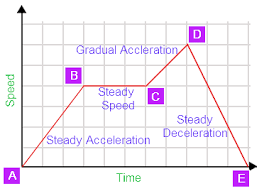
What is the person doing from 5 seconds to 10 seconds?
a)
Walking at a constant speed
b)
Running fast
c)
Not moving
d)
Walking slow
107.
According to the graph how far does the person travel in the first 5 seconds?
a)
2 m
b)
10 m
c)
0 m
d)
5 m
108.

At what point is the speed the greatest?

a)

C-D

b)

B-C

c)

A-B

109.

the tendency of an object to resist a change in its motion

a)

acceleration

b)

inertia

c)

mass

d)

frame of reference

110.

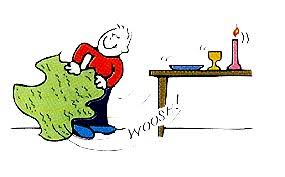
Which explains why the tablecloth trick works?

a)

The dishes are stuck in place due to air resistance.

b)

The tablecloth is an ilusion.

c)

The dishes have inertia, and therefore stay on the table.

d)

magic

111.

Complete the law:


For every action, there is an ____________ reaction.

a)

equal and opposite

b)

equal

c)

opposite

d)

bigger and better

112.
An archer shoots an arrow. The action force is the bowstring against the arrow, the reaction force is...
a)
Air resistance against the bow
b)
the arrow's push against the bowstring
c)
the grip of the archer's hand on the bow
113.

An orbit is...

a)

The spinning of the Earth

b)

The path that Earth follows around the Sun

c)

How long it takes the Earth to revolve around the Sun

d)

The path that the Sun follows around the Earth

114.

How long does Earth's revolution around the Sun take?

a)

24 hours

b)

365 days

c)

10 years

d)

30 minutes

115.

How long does the Moon's revolution take?

a)

365 days

b)

One month

c)

10 years

d)

30 minutes

116.

What keeps planets in orbit around the Sun?

a)

Nothing

b)

Force and motion

c)

Friction

d)

Gravity and inertia

117.

What keeps you on Earth?

a)

Gravity

b)

Inertia

c)

Friction

d)

Magnetism

118.

The graph shows the observed water levels, in feet (ft), for a tide gauge located at Montauk, New

York, on the easternmost end of Long Island, from January 24, 2008 to noon on January 25, 2008.


What causes the water-level variation pattern shown by the graph?

a)

cyclic and not predictable

b)

noncyclic and predictable

c)

cyclic and predictable

d)

noncyclic and not predictable

119.

The graph shows the observed water levels, in feet (ft), for a tide gauge located at Montauk, New

York, on the easternmost end of Long Island, from January 24, 2008 to noon on January 25, 2008.


What causes the water-level variation pattern shown by the graph?

a)

Earth's rotation and the gravitational pull of the Moon

b)

changes in wind velocity produced by coastal storms

c)

changes in magnetic orientation of the North American Plate

d)

Earth's revolution and the distance from the equator

120.

Energy is produced within a star's core by the process of

a)

nuclear fusion

b)

insolation

c)

conduction

d)

radioactive decay

121.

What is at the middle of a Heliocentric system?

a)

Mars

b)

Moon

c)

Sun

d)

Earth

122.

What is at the middle of a Geocentric system?

a)

Sun

b)

Neptune

c)

Earth

d)

The Universe

123.

Nickname for Comets--

a)

Rocks that glow

b)

rock "stars"

c)

dirty snowballs

124.

A meteoroid is found

a)

in Space

b)

entering earths atmosphere

c)

impacting earths surface

125.
Where are Asteroids found in the Solar System?
a)
Between Earth and Mars
b)
In the Oort Cloud beyond Neptune
c)
In the Asteroid Belt between Mars and Jupiter
d)
Close to the Sun
126.
Meteorites...
a)
 hit the ground
b)
burn up completely in the atmosphere
c)
debris from asteroids/comets that float around in space
127.
If the last full moon was on April 4th, when can you expect to see the next full moon? 
a)
April 29th
b)
July 4th
c)
May 4th
d)
September 12th
128.

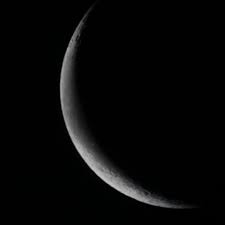
What moon phase comes after this?

a)
b)
c)
d)
129.
What is this a picture of?
a)
New Moon
b)
Waxing Gibbous
130.
The image depicts a 
a)
solar eclipse
b)
lunar eclipse
131.
The darkest, inner part of a shadow
a)
umbra
b)
penumbra
c)
umbrella
d)
antumbra
132.
What moon phase is necessary for a solar eclipse to occur?
a)
new
b)
full
c)
first quarter
d)
last quarter
133.
The lighter, outer part of a shadow?
a)
umbra
b)
penumbra
c)
umbrella
d)
citronella
134.
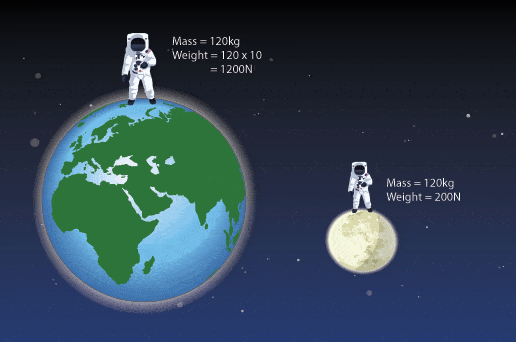
Which of the following will not change in different gravitational fields?
a)
weight
b)
force
c)
mass
d)
pounds
135.

What two things determine the gravity of an object?

a)

mass & weight

b)

mass & distance

c)

density & mass

d)

volume & distance

136.
Why is the Equator warmest?
a)
Because it is closest to the sun.
b)
Because it receives the most direct sunlight
c)
Because no clouds form here.
d)
Because it is far from the sun
137.
Which season is taking place in the Northern Hemisphere in Position 1?
a)
Winter
b)
Spring
c)
Summer
d)
Fall
138.
Which season is taking place in the Northern Hemisphere in Position 3?
a)
Winter
b)
Spring
c)
Summer
d)
Fall
139.
What are the reasons for the season?
a)
Earth's tilt & rotation
b)
Earth's tilt & revolution
c)
Earth's rotation & size
d)
Earth's tilt & resolution
140.

Which of the following correctly places these in order from LARGEST to SMALLEST?

a)

galaxy -- local group/cluster -- planet -- solar system -- universe

b)

universe -- local group/cluster -- galaxy -- solar system -- planet

c)

planet -- solar system -- galaxy -- local group/cluster -- universe

d)

universe -- galaxy -- solar system -- local group/cluster -- planet

141.

A galaxy that does not have a regular shape?

a)

Spiral

b)

Elliptical

c)

Irregular

d)

Quasar

142.

What Galaxy is Earth located?

a)

Andromeda

b)

Milky Way

c)

Sagittarius

d)

Snickers

143.
What is the net force and the direction of movement?
a)
50 Newtons, Left
b)
50 Newtons, Right
c)
500 Newtons, RIght
d)
450 Newtons, LEft
144.

What is the value on the balance?

a)

901.5 g

b)

900 g

c)

190.4 g

145.
Which part is the lighted area you see when looking through the eyepiece?
a)
coarse adjustment knob
b)
diaphragm
c)
field-of-view
d)
revolving nosepiece
146.
What is part 1?
a)
eye piece
b)
body tube
c)
arm
d)
coarse adjust
147.
What part is 5?
a)
coarse adjustment
b)
fine adjustment
c)
diaphragm
d)
stage
148.

Find the mass.

a)

285.3 g

b)

275.5 g

c)

275.3 g

149.

What is the value on the balance?

a)

240.0 g

b)

142.0 g

c)

100.4 g

150.
Name the moon phase
a)
waning crescent
b)
waxing crescent
c)
waning gibbous
d)
waxing gibbous
151.
Name the phase of the moon for letter a
a)
First Quarter
b)
Last Quarter
c)
Waxing Gibbous
d)
Waning Gibbous
152.
Which moon phase is when you can't see the moon at all?
a)
Waning crescent
b)
Full moon
c)
Waxing gibbous
d)
New moon
153.
The cycle of the moon lasts about a _.
a)
day
b)
year
c)
week
d)
month
154.

Wha type of tide would this arrangement of earth-moon-sun create?

a)

full moon tide

b)

new moon tide

c)

neap tide

d)

spring tide

155.
What type of tides would this arrangement of earth-moon-sun create?
a)
neap tide
b)
spring tide
c)
new moon tide
d)
full moon tide
156.
a)

Lunar eclipse

b)

solar eclipse

157.

A lunar eclipse only happens during a ________ moon.

a)

New

b)

Full

c)

Crescent

d)

Gibbous

158.

What is the darkest inner part of the shadow cone called, where a total eclipse can be viewed?

a)

antumbra

b)

umbra

c)

penumbra

d)

gibbous

159.

These two factors influence an object's gravitational influence on another object - mass and ____

a)

personality

b)

size

c)

distance between the 2 objects

d)

weight

160.
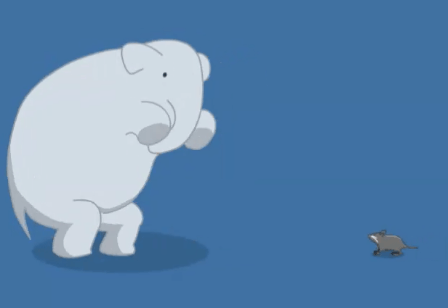
Which objects have a STRONG force of gravity?
a)
Objects with GREATER mass, like elephants
b)
Objects with LESS mass, like mice
161.
As distance between two objects increase the pull of gravity 
a)
Increases
b)
Decreases
c)
Stays the same
162.
A person would weigh less on on the Moon than on the Earth because . . .
a)
Moon has more mass, and therefore more gravity
b)
Moon has less mass, and therefore more gravity
c)
Moon has more mass, and therefore less gravity
d)
Moon has less mass and therefore less gravity