
 Worksheets
Review for Final Exam Global Studies 9 #1
Total questions: 17
Worksheet time: 1hrs 25mins
Which achievements are most closely associated with the Golden Age of Islamic culture?
Gunpowder, silk, and porcelain
Aqueducts, roads, and polytheistic temples
Mosques, medical books, and algebra
Democracy, columns, theater
By 487 B.C.,
Democracy was in place. Here's how it
worked: Power rested in an assembly,
which was made up of all the male citizens of the
city-state. All important decisions, such as going to war or raising taxes were made by the assembly. 40,000 citizens qualified for this honor."
The statement above describes the government of:
Athens
Mesopotamia
Sparta
Rome
The Spartans' constant military drilling and order made them skilled at the ancient Greek style of fighting in a phalanx formation. In the phalanx, the army worked as a unit to make coordinated mass maneuvers. No one soldier was considered superior to another. Going into battle, a Spartan soldier, or hoplite, wore a large bronze helmet, breastplate and ankle guards. He also carried a round shield made of bronze and wood, a long spear and sword. Spartan warriors were known for their long hair and red cloaks.
What are the historical circumstances that led to the creation of an advanced military state in Sparta?
Young boys began training at age 7 and didn't live at home again until age 20
Young boys began training at age 7 and didn't live at home again until age 30
Spartan women trained their sons to be warriors
Sparta allowed men to decide if he wanted to go into military training
"The magnificent temple on the Acropolis of Athens, known as the Parthenon, was built between 447 and 432 BCE in the Age of Pericles, and it was dedicated to the city’s patron deity, Athena. The Acropolis was the center of Athenian life built on top of a hill in the city where the most important civic buildings were located. The acropolis itself measures some 300 by 150 metres and is 70 metres high at its maximum. Marble from the nearby Mt. Pentelicus was used for the building, and never before had so much marble been used in a Greek temple."
The purpose of the document above:
Is to describe the acropolis of Athens
Is to describe the temple in Sparta
Is to describe the Parthenon built on the acropolis in Athens
Is to describe the Parthenon built on the acropolis in Sparta
"The magnificent temple on the Acropolis of Athens, known as the Parthenon, was built between 447 and 432 BCE in the Age of Pericles, and it was dedicated to the city’s patron deity, Athena. The Acropolis was the center of Athenian life built on top of a hill in the city where the most important civic buildings were located. The acropolis itself measures some 300 by 150 metres and is 70 metres high at its maximum. Marble from the nearby Mt. Pentelicus was used for the building, and never before had so much marble been used in a Greek temple."
The point of view of the author above is best described as:
The Parthenon was a magnificent building used for government that featured columns
The acropolis was known as the Parthenon
The Parthenon was a magnificent temple built in the center of Spartan life
The Parthenon was a magnificent temple built in the center of Athenian life

The illustration best illustrates checks and balances by:
Depicting two consuls who have the ability to veto each other
Depicting that ability of the Patricians and Plebeians to participate in an attempt to ensure one social class does not have more power than the other
Depicting how the Citizens Assembly and Senate have the ability to check each other's power
Depicting how the Citizens Assembly were all former soldiers in the Roman army

Based on the illustration, which of the following claims best represents the Roman government?
Even though women are considered non-citizens, they are given the right to vote
The 300 senators are able to vote for the consuls directly
The senate advises the consuls on laws that should be passed as an example of checks and balances
The Plebeians are able to participate in the Roman Republic in various areas of the government
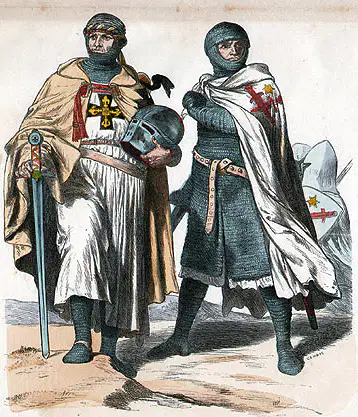
Why did people join in fighting in the Crusades?
They thought it would help them to practice their fighting skills (Knights)
They thought it would help them to get rich/ for adventure (Peasants)
They thought it would help them get to heaven (all social classes)
All of the above
Who fought each other in the Crusades?
The Eastern and Western Roman Empires
The Romans and the Greeks
The Europeans and the Arabs
The Europeans and the Egyptians

The illustration represents a society based on:
Educational achievement
Social Class
Accumulated wealth
Political ability

What turning point in Global History led to the development of the European Feudal System?
Hinduism was adopted by European monarchs
Invasions by the Mongols
The Fall of the Roman Empire
Peasants took control of European Kingdoms
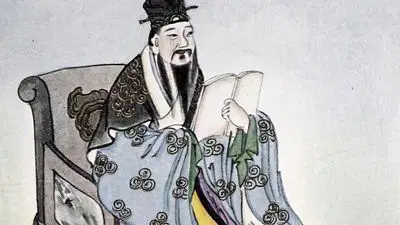
Oracle bones, Daoism, and the Mandate of Heaven are all associated with early civilizations in
China
India
Russia
Egypt
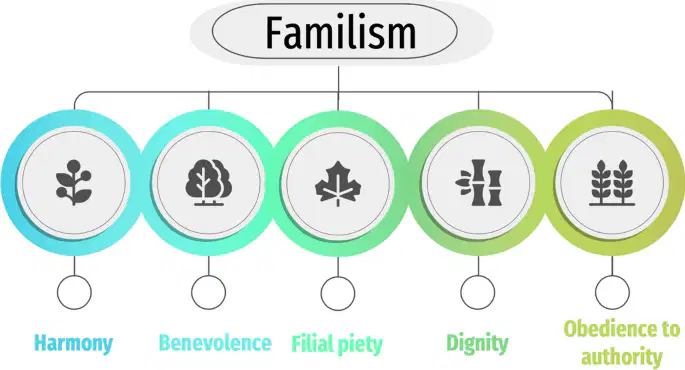
In China, Confucianism emphasized the idea that
Equality should exist between all members of society
Salvation could be attained by prayer, meditation, and good deeds
Individual goals should be placed ahead of the needs of the group
Harmony could be achieved by the proper behavior of each member of a family or society
“If a seignior (noble) has knocked out the tooth of a seignior of his own rank, they shall knock out his tooth. But if he has knocked out a commoner's tooth, he shall pay one-third mina of silver.”
– Code of Hammurabi excerpt from the NYS Global History and Geography Regents Exam
Which claim of Babylonian society in Mesopotamia does this portion of the Hammurabi code of law reflect?
All men were equal under the law
Fines were preferable to corporal punishment
Divisions existed between social classes
Violence was always punished with violence

"If a seignior (noble) has knocked out the tooth of a seignior of his own rank, they shall knock out his tooth. But if he has knocked out a commoner's tooth, he shall pay one-third mina of silver.”
– Code of Hammurabi excerpt from the NYS Global History and Geography Regents Exam
What type of source does this quote come from?
Letter
Legal code or laws
Newspaper article
Oral history

The historical development depicted in this map is an effect of:
Judaism
The Golden Age of Greece
The use of primary sources
The Neolithic Revolution

The main purpose of this map is to illustrate the location of:
The Ottoman Empire (The Islamic empire)
The Roman Empire
Alexander the Great's Empire
Early River valley civilizations

