
 Worksheets
Rome Review
Total questions: 149
Worksheet time: 2hrs 51mins
a piece of land surrounded on 3 sides with water
island
plebeian
peninsula
The supreme governing body of Ancient Rome was called...
The Senate
Tribune
Consul
The House of Representatives

How did the Roman idea of citizenship facilitate political stability throughout Roman territories?
Romans educated citizens about representative government.
Romans allowed conquered peoples to become citizens.
Romans granted citizenship to both men and women.
Romans extended citizenship to powerful landowners.
Rome is located in Europe. What two other continents did the Romans expand their trade to and so, later, led to the Silk Road Trade?
Asia and Africa
Asia and South America
Asia and North America
Africa and Pakistan

Who did Rome trade with to acquire its wine?
Hispania
India and China
North Africa
Egypt
Africa

Who did Rome trade with to acquire its ivory, slaves, gold and animals?
Hispania
India and China
North Africa
Egypt
Africa
Who did Rome trade with to acquire its wheat?
Hispania
India and China
North Africa
Egypt
Africa
Who did Rome trade with to acquire its oil?
Hispania
India and China
North Africa
Egypt
Africa

Who did Rome trade with to acquire its precious stones, silk and perfume?
Hispania
India and China
North Africa
Egypt
Africa
In the beginning, the early Romans shared the Italian peninsula with the:
Spanish, Latini and Portugese
Latini, Greeks and Etruscans
Germans and Asians
Africans and English
Some Latin tribes settled on the banks of the _______ River. They built villages that became Rome
Tiber
Nile
Euphrates
Guadalquivir
Rome is surrounded by ____ hills.
5
6
7
8
Rome began as a
monarchy
democracy

The Cloaca Maxima was the
The first sewer system ever in Rome
The first senate ever in Rome
The first monarchy ever in Rome
The first bridge built in Rome
What are Romulus and Remus most famous for?
Rescuing Helen of Troy
Founding the city of Rome
Being the kings of the Underworld
Starting the Olympics
Who first cared for the boys when they were abandoned?
A wolf
A forest goddess
The goddess Venus
A cow
How did Remus die?
He fell down when trying to climb a high wall
He was attacked by wild vultures
He got sick from eating too many olives
Romulus killed him when Remus made fun of his wall
When was the city of Rome founded?
1200 BC
1012 BC
753 BC
How did Rome get its name?
It was named after the shepherd who raised the boys
From the god of construction
Romulus named the city after himself


These members of the Roman government who voted on laws and chose magistrates

The Roman civilization was founded near what river?
The Huang He
The Indus
The Tiber
The Tigris
This group was part of the lower or middle class.
Patricians
Plebeians
Slaves
Priests
Composed of 300 men that ratified laws approved in assemblies. They were also responsible for foreign policy and finance.

This privileged Roman group owned land and livestock. They also governed the city
Patricians
Plebeians
Slaves
Priests

What does the term 'ratify" mean?
To remove trash through a sewer system
To stop a law from being passed
to sign a law and make it official
What did the name Augustus mean?
Son of the Gods
Chosen by the Gods
Chosen by God
Thinking of God
True or False: Augustus was Caesar's biological son.
True
False
Under Augustus' rule, all civil and military power was concentrated with the
Senate
Magistrates
Assembly
Emperor
What type of power did the Senate have under Augustus?
symbolic
political
international
economic
Under Augustus, Rome believed in Christianity
True
False
After Augustus, emperor's were viewed by Romans as
Gods
Politicians
Regular Citizens
Ceasar's adopted son who became emperor was
(a)
What best defines religion in Rome after the death of Augustus.
Monotheistic
An Imperial Cult
Christian

This map shows that the Roman Empire dominated what body of water?
(a)
At the end of the 1st century, the Roman Republic had a government that was created to rule an extensive empire
True
False
What caused social unrest in the empire?
brutal leaders
population decline
social inequality
corruption
bad harvests
Inequality led to the rise of the (a) brothers who wanted a fairer distribution of wealth.
"more just" also means
corrupt
fairer
provinces
senate
settled
Social inequality in Rome forced the Senate and the _____________ to give power to military commanders
magistrates
emperor
assembly

Who was the military commander who made himself a dictator and gave himself absolute power.
(a)
How did Julius Caesar die?
He was assassinated by supporters of the Republic
He died peacefully in his bed
Fighting Carthage in the Punic Wars
He was killed by Augustus

True or False: There are statues representing Julius Caesar in Seville.
True
False
What was life like after the fall of the Roman Empire?
It was much more insecure and people became more rural
It was more secure and people moved to urban areas
Very little changed, people spoken Latin languages and converted to Islam
All of the Above are correct
A major reason for the decline of the Roman Empire was what?
continued acceptance of traditional religions
the abolition of slavery throughout the Empire
a series of military defeats in Africa
political corruption and the instability of the government
The size of the Roman Empire made it difficult for the Romans to do what?
foster trade relations between the different regions of the empire
ensure effective government and adequate military protection for the entire empire
establish a central capital city upon which everyone could agree
continue to make cultural and technological innovations
What was a cause for the reason why the Roman Empire fell?
Diseases and plagues
Lack of participation in government
Weak leadership
All of the above

Based on the passage, what societal impact did Emperor Constantine have on Europe?
Constantine made Christianity legal in Rome which fostered a changing political and social shift in Europe
Constantine made public welfare programs available to the people of Rome for the first time
Constantine was the first Emperor of Rome to legalize Islam in the Roman Empire
Constantine illegalized Christianity which was a popular decision amongst all people in the Roman Empire
Who attacked Rome's borders as it was falling apart?
Egyptians
Barbarians
Greeks
Persians

Corruption is
dishonest or illegal behavior
a part of the desert that has water and plants
when a volcano explodes

The decline of the Roman Empire was
accelerated (happened faster) because?
Rome waged war against a single
powerful trade rival.
Rome allowed Christianity to spread.
Rome was conquered by the Islamic
Empire.
Rome faced invasions from many
"Barbarian" tribes.
The Fall of the Roman Empire resulted
in...
Europe breaking up into smaller non-
unified regions.
The Christian church being taken over
by Muslims.
People forgetting how to speak latin.
The poor gaining more power and
authority over the rich.

How did Roman leadership from the
200s - 400s CE contribute to the fall of
the Roman Empire?
Roman leaders during this time were
focused on hurting their own people.
Roman leaders during this time worked
together to transition power peacefully.
Roman leaders during this time were
weak and fought over who had power.
Roman Leaders during this time made
peace with other Empires to conquer
Rome.
Which Barbarian tribe was the first to attack Rome in 410 AD?
A) The Visigoths
B) The Ostrogoths
C) The Huns
D) The Vandals

The Visigoths were an important...
Roman tribe
Germanic tribe
Arabic tribe
Viking tribe

When did the Visigoths establish their new kingdom in Spain?
In 711 A.D
In 1492 A.D
In 416 A.D
In 507 A.D

Which language did the Visigoths learn to speak?
Arabic
English
Latin
Spanish
The vandals were a ............ ........... tribe
East Asian
East German
North Germanic
East Germanic
Which of the following would NOT be classified as a Germanic Tribe?
Suebi
Alans
Visigoths
Vandals
Franks

After the fall of Rome, where did the Suebi Tribe settle?
Northwest Iberian Peninsula
Iberian Peninsula and parts of France
Northern coasts of Africa
The Italian Peninsula
After the fall of Rome, where did the Visigoths settle?
Northwest Iberian Peninsula
Iberian Peninsula and parts of France
Northern coasts of Africa
The Italian Peninsula
After the fall of Rome, where did the Vandals settle?
Northwest Iberian Peninsula
Iberian Peninsula and parts of France
Northern coasts of Africa
The Italian Peninsula
What did they want to control?
Mediterranean Sea
Rome
France
Pacific Ocean

Where did the Roman civilisation originate?
Iberian Peninsula
Italian Peninsula

Why were the Romans and Carthaginians rivals?
For control of the Black Sea
For control of the Mediterranean Sea
Between 500 and 250 BCE, Rome conquered _____________.
Italian Peninsula.
western Mediterranean
Greece & eastern Mediterranean
What buildings were included in a Roman camp?
defensive towers
school
Main buildings (offices and temples)
hospital
baths
Between 264 and 146 BCE, Rome conquered _____________.
Italian Peninsula.
western Mediterranean
Greece & eastern Mediterranean
The war between cities Carthage and Rome was called the ______________.
Roman War
Civil War
Punic War
Between 2nd century BCE and 2nd century CE, Rome conquered _____________.
Italian Peninsula.
western Mediterranean
Greece & eastern Mediterranean
What did Roman soldiers carry or wear?
spear
sword
shield
knife
Hispania was conquered by the Romans today it is known as
Spain
France
Great Britain
Gallia was conquered by the Romans today it is known as
Spain
France
Great Britain
Brittania was conquered by the Romans today it is known as
Spain
France
Great Britain
The Roman army was organized into
(a)
Legions were divided into groups of ___ men
100
200
300
500
In the beginning, the early Romans shared the Italian peninsula with the:
Spanish, Latini and Portugese
Latini, Greeks and Etruscans
Germans and Asians
Africans and English
Some Latin tribes settled on the banks of the _______ River. They built villages that became Rome
Tiber
Nile
Euphrates
Guadalquivir
Rome is surrounded by ____ hills.
5
6
7
8
Rome began as a
monarchy
democracy
The Cloaca Maxima was the
The first sewer system ever in Rome
The first senate ever in Rome
The first monarchy ever in Rome
The first bridge built in Rome
What are Romulus and Remus most famous for?
Rescuing Helen of Troy
Founding the city of Rome
Being the kings of the Underworld
Starting the Olympics
Who first cared for the boys when they were abandoned?
A wolf
A forest goddess
The goddess Venus
A cow
How did Remus die?
He fell down when trying to climb a high wall
He was attacked by wild vultures
He got sick from eating too many olives
Romulus killed him when Remus made fun of his wall
When was the city of Rome founded?
1200 BC
1012 BC
753 BC
How did Rome get its name?
It was named after the shepherd who raised the boys
From the god of construction
Romulus named the city after himself
These members of the Roman government who voted on laws and chose magistrates
The Roman civilization was founded near what river?
The Huang He
The Indus
The Tiber
The Tigris
This group was part of the lower or middle class.
Patricians
Plebeians
Slaves
Priests
Composed of 300 men that ratified laws approved in assemblies. They were also responsible for foreign policy and finance.
This privileged Roman group owned land and livestock. They also governed the city
Patricians
Plebeians
Slaves
Priests
What does the term 'ratify" mean?
To remove trash through a sewer system
To stop a law from being passed
to sign a law and make it official

What is this?
Parthenon
Pantheon
Colosseum
Forum

What was the point of the Aqueducts?
carry water from the mountains to the cities
beautiful architecture
help soldiers travel quickly
trade
Languages based on Latin are called: _______________.
Latina Languages
Greek Languages
Romance Languages
Marriage languages
What were the economic (money) impacts of the Pax Romana?
uniform system of money (same)
safe travel and trade on roads
stability
developed a royal road
Why was Augustus considered the leader of an Empire and not the Republic (Democracy)?
He was not elected by the people
There were no real checks on his power
He inherited the position from his father
What is an aqueduct?
A stone channel carrying water to the city
A type of bridge
The name of a famous road
A curved structure over an opening
The Romans spoke?
Latin
Italian
Greek
Roman
What did some Roman soldiers and officials do with the conquered land?
Stayed to govern the new land
Got out as fast as they could
Killed all the people who lived there
Moved on to new land to conquer
What was a gladiator?
Trained slaves who fought people and animals to the death
Trained warriors who played in the Olympic Games
Trained performers who did acrobatic and magic tricks
Trained animals who performed tricks for audiences
What was a reason the Pax Romana ended?
Romans were invaded by the Dutch
Romans moved out of Rome
Rome was too poor to continue
Rome was too large to govern
Multiple Select (2): Farming became one of the major ways people in the Roman Empire made money. This is important because...
There were many people to feed in the huge Roman Empire
Since the empire covered so much land, a variety of crops could be traded throughout the empire.
Farming was brand new to the world
The Eastern Part of the Roman Empire was known as
Britannia
Hispania
Carthage
Byzantine Empire
What group kept attacking the Roman Empire in the 3rd Century?
Germanic peoples
Greeks
Carthage
Vikings
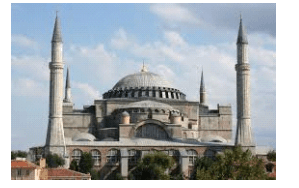
Which of the following issues divided the Western and Eastern Churches?
practices of animal sacrifices
practices such as scalping
authority of the pope
belief in Jesus
What church was found in the Byzantine Empire?
Eastern Orthodox
Roman Catholic
Lutheran
Methodist
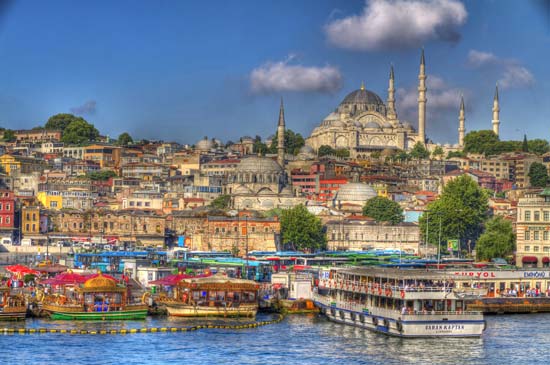

One economic advantage of naming Constantinople as the capital of the Eastern Roman Empire was that it __________
was surrounded by protective walls.
was a center of religious power.
had shrunk in size.
was located near trade routes between Europe and Asia.
Which group conquered Constantinople?
Persians
Huns
Ottoman Turks
Carthage
What did Justinian want to do?
Restore the Roman Empire
Surrender to the Barbarians
Expand the Empire into India and China
End Christianity and Bring back Roman Gods
Which of the following territories did Justinian NOT conquer
Dalmatian Coast
Southern Hispania
Sicily
Sardinia
Turkey
The emperor who controlled the Roman World and Christianity during the time of the Byzantine Empire was the
(a)
The basileus controlled the _______ World and _________ during the time of the Byzantine Empire was the
Jewish, Roman
Roman, Christianity
Roman, Muslim
Turkish, Eastern portion
Attacks by the _______ led to the decline of the Byzantine Empire and the fall of Constantinople in 1453.
Romans
Turks
Visigoths
Chinese
The Byzantine Empire would be viewed as an Empire from what time period in history?
Ancient History
Middle Ages
Modern Era
Age of Colonization

The Haga Sofia was a ____________ for the people of Constantinopole
place of worship
governing assembly
public areas like the Roman Forum for ceremonies and trade
place to help sailors at night
All of the Above
The Senate was a ____________ for the people of Constantinopole
place of worship
governing assembly
public areas like the Roman Forum for ceremonies and trade
place to help sailors at night
All of the Above
What was the separation of Christianity into two separate churches called?
East-West Schism
Byzantine Split
Fall of Constantinople
Fall of Justinian

