

wayground logo

Free Printable Worksheets

Font size

S
M
L
XL
Worksheets

Y7 Rocks, Resources and Scenery Assessment 2022

Total questions: 42

Worksheet time: 3hrs 36mins

Name
Class
Date
1.

Which of the choices below is NOT one of the three types of rocks?

a)
Metamorphic
b)
Indigenous
c)
Sedimentary
d)
Igneous
2.
What material is used to form igneous rocks?
a)
magma
b)
sand
c)
gravel
d)
fossils
3.
What process is used to form sedimentary rocks?
a)
Lava cools and hardens to form a rock.
b)
Bits of sand and gravel form layers that turn into rock from pressure.
c)
Extreme heat and pressure from inside the Earth turn rocks into new rocks.
d)
Magma trapped under the Earth's surface cools and solidifies.
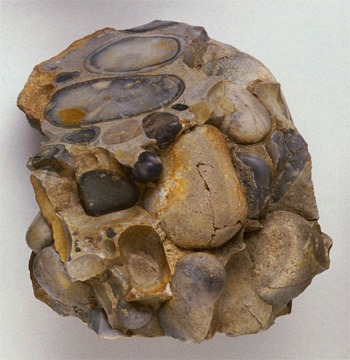
4.
What type of rock can turn into a metamorphic rock?
a)
Igneous only
b)
Sedimentary only
c)
Metamorphic only
d)

Igneous and sedimentary

5.
Which type of rock would you expect to find by a volcano?
a)
Ingenious
b)
Igneous
c)
Indigenous 
d)
Indigo 
6.
The process by which metamorphic rocks are formed...
a)
heat and pressure
b)
compaction and cementation
c)
melting and cooling
7.
The process by which igneous rocks are formed...
a)
heat and pressure
b)
melting and cooling
c)
compaction and cementation
8.

Hot, molten rock inside the earth is called ...

a)

lava

b)

magma

c)

igneous rock

d)

minerals

9.
Once magma reaches the earth's surface, it is called __________.
a)
a vent
b)
minerals
c)
igneous rocks
d)
lava
10.
What will happen if an igneous rock is put under an extreme amount of heat and pressure?
a)
it will melt into lava
b)
it will weather and erode
c)
it will become a metamorphic rock
d)
it will become a sedimentary 
11.
What do paleontologists study?
a)
space
b)
fossils
c)
atmosphere
d)
weather
12.
What can we learn from studying fossils?
a)
how earth's environment has changed
b)
how hurricanes form
c)
what causes earthquakes
d)
how the solar system has changed
13.
A fossil is
a)
any dead organism
b)
a copy of a rock
c)
the preserved remains or traces of an organism
d)
none of these
14.
Most fossils are formed by
a)
being preserved in amber
b)
being frozen
c)
drying out
d)
being buried in sediment
15.
How old is the Earth?
a)
6,400 year old
b)
1 million years old
c)
4.6 billion years old
d)
65 million years old
16.
When an organism no longer exists on Earth, we say it is
a)
preserved
b)
complex
c)
extinct
d)
fossilized
17.
The geologic time scale is a record of
a)
how quickly fossils form
b)
how dinosaurs evolved
c)
the life forms and events of Earth's history
d)
the thickness of rock layers
18.
How can you explain the discovery of a fossil of a tropical plant in Alaska?
a)
The fossil was taken there and buried.
b)
Alaska was once colder than it is now.
c)
Alaska was once warmer than it is now.
d)
There is no explanation.
19.
Of the following organisms, which was around (or has been around) for the shortest amount of time?
a)
Dinosaurs
b)
Mammals
c)
Humans
d)
Reptile
20.

Which of the following is a metamorphic rock?

a)

Marble

b)

Chalk

c)

Limestone

d)

Granite

21.

Which of the following are sedimentary rocks?

(select 2 answers)

a)

Clay

b)

Diamond

c)

Limestone

d)

Marble

22.

What is geology?

a)

is the study of the Earth’s physical structure (e.g. rocks), its history and the processes that act upon it.

b)

is the study of the world, the science and the processes that act upon it.

c)

is the study of the soil and animals and the processes that act upon it.

23.

Which of the following is an igneous rock?

a)

Basalt

b)

Chalk

c)

Limestone

d)

Clay

24.

Where might you see slate? More than one correct answer.

a)

On a roof

b)

As someone's floor

c)

In a swimming pool

d)

In a fridge

25.

What famous landmark in York is made out of limestone?

a)

York Minster

b)

York Dungeons

c)

Fenwicks

d)

National Railway Museum

26.

What famous area in Skipton (also featured on Harry Potter) is made out of limestone?

a)

Malham Cove

b)

Madman Cove

c)

Milkman Cove

d)

Malma Cove

27.
This rock formed when bits of other rocks became pressed into a solid. What type of rock is it?
a)
Sedimentary Rock
b)
Metamorphic Rock
c)
Igneous Rock
28.

What process is used to form sedimentary rocks?

a)

Lava cools and hardens to form a rock.

b)

Sediment from rivers/lakes/oceans and skeletal bodies plus millions of years and pressure.

c)

Extreme heat and pressure from inside the Earth turn rocks into new rocks.

d)

Magma trapped under the Earth's surface cools and solidifies.

29.
This rock was formed by smaller pieces of rock that settled at the bottom of a lake millions of years ago. What type of rock is this?
a)
Sedimentary
b)
Igneous
c)
Metamorphic
30.

The name of a person that studies rocks and the earth.

a)

veterinarian

b)

geologist

c)

podiatrist

d)

teacher

31.
Sedimentary rocks may contain fossils.
a)
True
b)
False
32.
Acid rain causes
a)
physical weathering.
b)
chemical weathering.
c)
both chemical and physical weathering.
d)
neither chemical or physical weathering.
33.
Freezing causes
a)
physical weathering.
b)
chemical weathering.
c)
both chemical and physical weathering.
d)
neither chemical or physical weathering.
34.
Tree roots cause
a)
physical weathering.
b)
chemical weathering.
c)
both chemical and physical weathering.
d)
neither chemical or physical weathering.
35.
What is most likely to make a rock break into pieces?
a)
Animals digging in the rock.
b)
Leaves decaying on the rock.
c)
Snow melting in a crack in the rock.
d)
Water freezing in a crack in the rock.
36.

Weathering is the process of -

a)

Moving sediment from one place to another

b)

Dropping or leaving sediment in a location

c)

Breaking down rocks into sediment

37.
This type of weathering occurs when rock is physically broken down into smaller pieces of rock.
a)

physical weathering

b)
chemical weathering
c)
erosion weathering
d)
deposition
38.
This type of weathering occurs when rocks weaken then break down due to chemical changes in the composition of the rock.
a)

physical weathering

b)
chemical weathering
c)
erosion weathering
d)
deposition
39.

The large cracks in a limestone pavement (where water often builds up) are called...

a)

clints

b)

grykes

40.

The flat bare surface of a limestone pavement is called a...

a)

clint

b)

gryke

41.

Why might an animal become extinct? Select all correct answers.

a)

Asteroids

b)

Invasive species

c)

Lack of food

d)

No pollution

42.

How many major ice ages have there been in Earth's history?

a)

2

b)

1

c)

5

d)

6
