wayground logo

Free Printable Worksheets

Font size

S
M
L
XL
Worksheets

GRADE 6 SCIENCE SUMMARY

Total questions: 227

Worksheet time: 3hrs 36mins

Name
Class
Date
1.
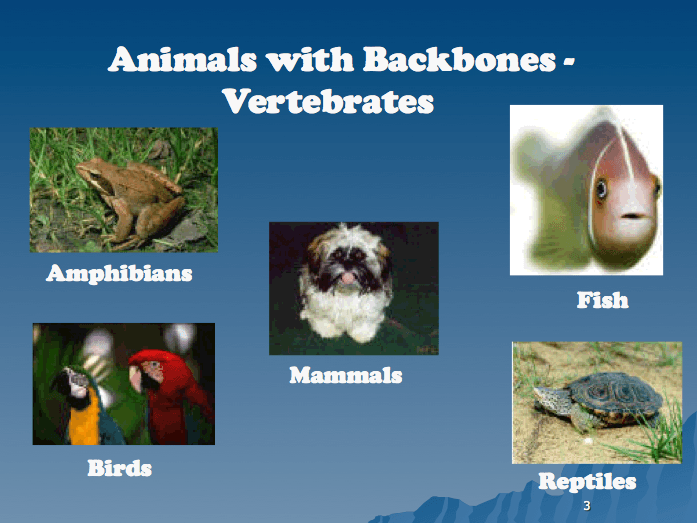
There are five categories of vertebrates.  Which one is not a vertebrate?
a)
Mammals
b)
Birds
c)
Arthropods
d)
Reptiles
2.
What are vertebrates?
a)
Animals with a backbone
b)
Animals without a backbone
3.
What is the scientific word for warm-blooded? 
a)
warmtherm
b)
ectotherm
c)
thermal
d)
endotherm
4.
My body is covered with hair or fur, I have live babies, and I maintain a constant body temperature. What am I?
a)
Bird
b)
Reptile
c)
Mammal
d)
Echinoderm
5.
I live part of my life in water, leave, then return to the water. What am I?
a)
Mammal
b)
Arthropod
c)
Reptile
d)
Amphibian
6.
What kind of animal changes their temperature with the environment?
a)
Mammal
b)
Ectotherm
c)
Endotherm
d)
Bird
7.
Species of the same __________ can cross-breed
a)
Family
b)
Class
c)
Kingdom
d)
Genus
8.
How much does a lion have to eat?
a)
It's weight every seven to ten days
b)
One bird a week
c)
A lot of fruits
d)
Twice its weight every two days
9.
This type of animal usually has flat, broad teeth. What animal is it?
a)
Carnivore
b)
Omnivore
c)
Herbivore
10.
What is one way an endotherm keeps his body warm?
a)
Jogging
b)
Sweating
c)
Shivering
d)
Hiding
11.
Which of these is a reptile?
a)
Eagle
b)
Shark
c)
Chimpanzee
d)
Iguana
12.
What scientist studies animals?
a)
Zoologist
b)
Meteorologist
c)
Biologist
d)
Chemist
13.
How do we determine the scientific name of an animal?
a)
Kingdom and phylum
b)
Genus and species
c)
Class and species
d)
Family and class
14.
What covers a reptile and a fish's body?
a)
Scales
b)
Fur/hair
c)
Feathers
d)
Spines
15.
What is it called when an animal moves to a warmer or colder area for the season?
a)
Hibernation
b)
Dormancy
c)
Migration
d)
Burrowing
16.
Where would you place an independent variable on a graph?
a)
The y-axis
b)
The x-axis
c)
In a chart
d)
On top of the graph
17.
What happens when an ectothermic animal gets cold?
a)
It shivers
b)
It exercises
c)
It slows down
d)
It eats more
18.
Where would you place the dependent variable on a graph
a)
Above the graph
b)
In the graph
c)
The x-axis
d)
the y-axis
19.

Which of the following is an invertebrate?

a)

Cat

b)

Snail

c)

Goldfish

d)

Humans

20.

What does invertebrate mean?

a)

Animals without a backbone

b)

Animals that change their form

c)

Animals with a backbone

d)

Animals that lay eggs

21.

A butterfly is a type of vertebrate.

a)

True

b)

False

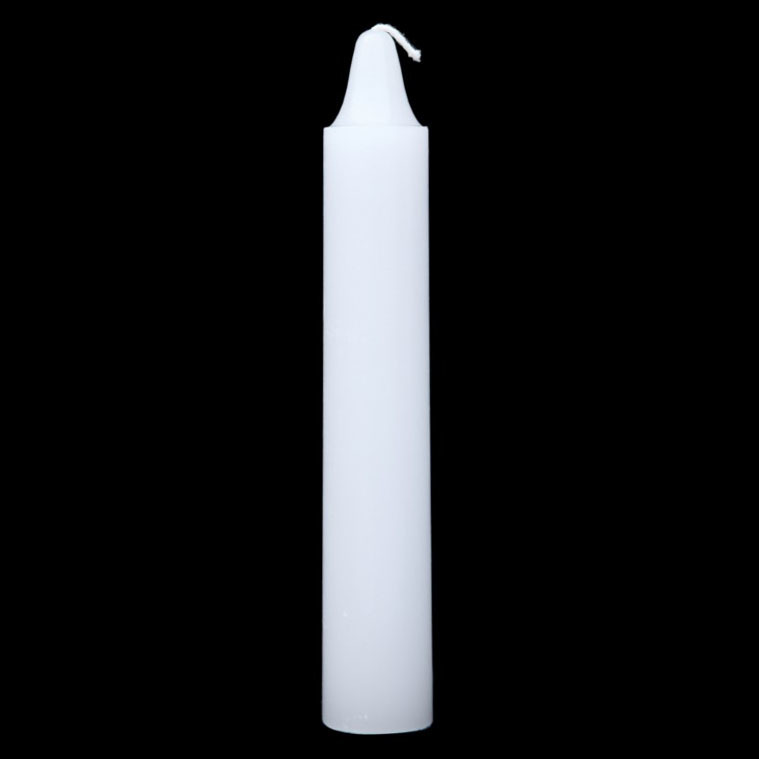
22.
Dragonflies, stink bugs, and lady bugs are __________.
a)
insects
b)
arthropods
c)
animals
d)
all of these
23.
I have a soft-body, a hard shell, and live on land and water.  What am I?
a)
Mollusk
b)
Arthropod
c)
Echinoderm
d)
Cnidarian
24.
Between 90-95% of all animals on earth can be classified as _____.
a)
invertebrates
b)
vertebrates
c)
reptiles
d)
mammals
25.
Why are sponges classified as animals
a)
they digest food
b)
they breathe through gills
c)
they use legs to move
d)
they have skeleton
26.
Which statement applies to ALL invertebrates?
a)
They are made of only one cell.
b)
They have no backbone.
c)
They reproduce asexually.
27.
Which three parts of the body has an insect?
a)
Tencacles, head, legs
b)
head, abdomen, legs
c)
Head, thorax, abdomen 
d)
Hair, bones, foot 
28.

Sponges use pores to absorb nutrients and oxygen.

a)

true

b)

false

29.
a)
Poriferan
b)
Coelenterates
c)
Echinoderms
d)
Mollusks
30.
a)
Poriferan
b)
Arachnid
c)
Echinoderm
d)
Mollusk
31.
a)
Poriferan
b)
Arthropod
c)
Echinoderm
d)
Mollusk
32.
a)
Poriferan
b)
Mollusk
c)
Annelids
d)
Arthropods
33.
a)
Poriferan
b)
Mollusk
c)
Platyhelminthes
d)
Echinoderm
34.
a)
Poriferan
b)
Mollusk
c)
Annelid
d)
Coelenterates
35.
a)
Mollusk
b)
Echinoderm
c)
Annelid
d)
Crustacean
36.
a)
Annelid
b)
Arthropod
c)
Mollusk
d)
Nematode
37.
a)
Mollusk
b)
Poriferan
c)
Arthropod
d)
Platyhelminthes
38.
a)
Mollusk
b)
Poriferan
c)
Insect
d)
Annelid
39.
a)
Mollusk
b)
Arthropods
c)
Nematodes
d)
Coelentrates
40.
a)
Mollusk
b)
Annelids
c)
Arthropods
d)
Echinoderms
41.
a)
Annelids
b)
Mollusk
c)
Poriferans
d)
Coelentrates
42.

A possible explanation for a set of observations or answer to a scientific question is called a

a)

prediction

b)

hypothesis

c)

theory

d)

law

43.

During an experiment, which factors must be controlled so that researchers can draw a logical conclusion from the experiment?

a)

variables

b)

hypothesis

c)

theories

d)

inquiries

44.

During an experiment, if you purposely change the temperature to test a hypothesis, the temperature is called the ...

a)

variable

b)

manipulated variable

c)

responding variable

d)

result

45.

The factor that may change in response to the manipulated variable is called the ...

a)

variable

b)

manipulated variable

c)

responding variable

d)

result

46.

A summary of what you have learned from a scientific experiment is called a(n) ...

a)

hypothesis

b)

answer

c)

conclusion

d)

result

47.

What would a scientist usually do after conducting a controlled experiment?

a)

Interpret the data from the experiment

b)

Communicate the results in an experiment

c)

Draw a conclusion, and if needed, revise the hypothesis

d)

All of the above

48.

________________________ is a way of learning about the natural world and the knowledge gained through that process.

a)

data

b)

controlled experiment

c)

science

d)

variable

49.

In a(n) ____________________________________ a scientist determines how one particular variable affects the outcome of the experiment.

a)

controlled experiment

b)

hypothesis

c)

variable

d)

data

50.

_________________________ are facts, figures and other evidence gathered through observations.

a)

data

b)

results

c)

variables

d)

answers

51.

A scientist wants to see if watering a flower every day will result in better growth. What is the manipulated variable?

a)

amount of water

b)

plant growth

c)

temperature

d)

ruler

52.

scientist wants to see if watering a flower every day will result in better growth. What is the responding variable?

a)

amount of water

b)

plant growth

c)

temperature

d)

ruler

53.

What does scientific inquiry begin with?

a)

a hypothesis

b)

a question

c)

an observation

d)

a fact

54.

What is the first step in the scientific method?

a)

pose a question

b)

form a hypothesis

c)

design an experiment

d)

collect and interpret data

55.

What is the second step in the scientific method?

a)

pose a question

b)

form a hypothesis

c)

design an experiment

d)

collect and interpret data

56.

What is the third step in the scientific method?

a)

pose a question

b)

form a hypothesis

c)

design an experiment

d)

collect and interpret data

57.

What is the fourth step in the scientific method?

a)

pose a question

b)

form a hypothesis

c)

design an experiment

d)

collect and interpret data

58.

What is the fifth step in the scientific method?

a)

draw conclusions

b)

communicate

c)

design an experiment

d)

collect and interpret data

59.

What is the sixth step in the scientific method?

a)

draw conclusions

b)

communicate

c)

design an experiment

d)

collect and interpret data

60.

True or False. A hypothesis is always correct.

a)

true

b)

false

61.

Future testing can prove a ______________ to be incorrect.

a)

scientific law

b)

scientific theory

c)

scientific inquiry

d)

scientific answer

62.

Study the bar graph. Which city has shown the slowest population growth since 1950?

a)

City A

b)

City B

c)

City C

d)

City D

63.

According to the graph, which animal has a life span that is longer than a giraffe's but shorter than a lion's?

a)

Tiger

b)

Chipmunk

c)

Camel

d)

Mouse

64.

Based on the information above, which color of shirt will Tony likely wear most often next week?

a)

Green

b)

Black

c)

Blue

d)

Red

65.

A brown paper bag is filled with color tiles for a science experiment. How many tiles are in the bag?

a)

48

b)

20

c)

25

d)

50

66.

How many more yellow tiles is there than blue?

a)

2

b)

6

c)

3

d)

9

67.

What percent of the tiles are green?

a)

12

b)

24

c)

50

d)

86

68.

1) How many more points did Naomi score than Lillian in game 1?

a)

10

b)

22

c)

12

d)

34

69.

Mary is recording her plant's growth in a journal. How many inches has the plant grown from week 1 to 7?

a)

22

b)

18

c)

14

70.

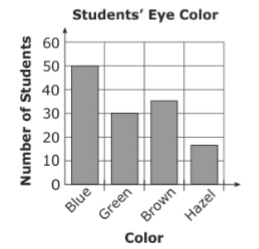
Miss Lee's science class collected data on the color of 3rd grade student's eyes. The students created a bar graph with this information. How many more students had blue eyes than green eyes?

a)

80

b)

50

c)

30

d)

20

71.

Jack made this graph to show the number of movies that were rented from his store during four months. Which whole number shows how many more movies were rented in December than in September?

a)

20

b)

35

c)

45

d)

80

72.

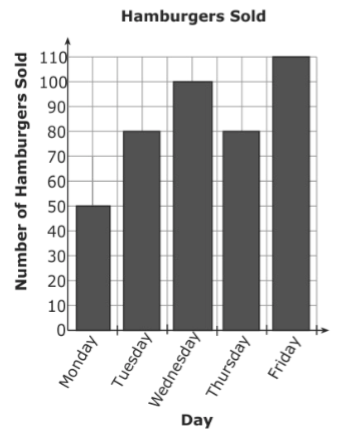
The bar graph shows the number of hamburgers sold at Bob’s Burger Shack. On which days were more than 80 hamburgers sold?

a)

Wednesday and Friday

b)

Tuesday and Thursday

c)

Monday, Tuesday, and Thursday

d)

Tuesday, Wednesday, Thursday, and Friday

73.

The graph shows the number of cars sold from January to April. How many more cars were sold in March than in January?

a)

2,000

b)

5,000

c)

7,000

d)

8,000

74.

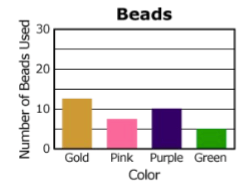
The graph shows the number of colored beads used to make a necklace. How many purple and green beads were used in all?

a)

23

b)

20

c)

18

d)

15

75.
How many students chose either classical or rock?
a)
15 students
b)
16 students
c)
17 students
d)
18 students
76.
How many fewer students chose hip hop than jazz as their favorite music?
a)
1 student
b)
2 students
c)
3 students
d)
4 students
77.
For 1-6 Match the verbal description with the part of the graph it describes.
1. Stays the same.
a)
F
b)
A
c)
D
d)
C
78.
Describe the situation.
a)
The volume of the balloon increases at a constant rate, then stays constant, then increases, then constant, and increases at a constant rate.
b)
The volume of the balloon increase at a constant rate, decreases, then stays constant, then increases, then constant, and increases at a constant rate.  
79.
Describe the situation.
a)
Sales decrease quickly at a constant rate, and then increase slowly at a constant rate.
b)
Sales stay constant, then decrease at a constant rate, and increase slowly.  
80.
Describe the situation.
a)
Horsepower increases at an increasing rate and then increases slowly.
b)
Horsepower increases at a constant rate and then increases slowly.
81.
Describe the situation. 
a)
Grams Decrease at a decreasing rate.
b)
Grams decrease at a constant rate.
82.
How many seals were present in 2011?
a)
25
b)
30
c)
40
d)
50
83.

How long does it take the family to reach the beach?

a)

1 hour

b)

2 hours

c)

3 hours

d)

4 hours

84.

How long does the family spend at the beach?

a)

1 hour

b)

2 hours

c)

3 hours

d)

4 hours

85.

At what time is the rocket the highest according to the graph?

a)

60 seconds

b)

80 seconds

c)

100 seconds

d)

120 seconds

86.

What is the label on the y-axis in this graph?

a)

Rainfall in mm

b)

Day of the month

c)

Rainfall during the first 9 days of a month

87.

What is the label on the x-axis of this graph?

a)

Number of visitors

b)

Year

c)

Visitors to a Park

88.

What is the title of the graph below?

a)

Months

b)

Inches

c)

Average monthly rainfall

89.

What is the label on the x-axis on the graph?

a)

Inches

b)

Months

c)

Average Snowfall

90.

What is the trend in New York snowfall between January and May?

a)

It increased

b)

It decreased

c)

It stayed the same

91.

What is the y-axis in this graph?

a)

Student Membership (in millions)

b)

Year

c)

US Public School Student Membership

92.

What is the title of the above graph?

a)

Instagram Stories vs Snapchat Daily Users

b)

Daily Users

c)

Year

93.

What is the x-axis labeled?

a)

Instagram Stories vs Snapchat Daily Users

b)

Daily Users

c)

Year

94.

What is the y-axis labeled?

a)

Instagram Stories vs Snapchat Daily Users

b)

Daily Users (Millions)

c)

Year

95.

According

to the graph, in the beginning of 2017, approximately how many daily users

did Snapchat have?

a)

50 million users

b)

150 users

c)

150 million users

d)

100 users

96.

When did Instagram stories begin?

a)

Beginning 2015

b)

Middle of 2016

c)

Middle of 2017

97.

During which year did Instagram pass Snapchat’s number of average daily users?

a)

2015

b)

2016

c)

2017

98.

Which grew at a faster rate, Instagram or Snapchat daily average users?

a)

Instagram daily average users

b)

Snapchat daily average users

99.
What kind of heat transfer happens when the sun heats your body?
a)
Conduction
b)
Radiation
c)
Convection
d)
Density
100.
Warm air rises and the cool air sinks demonstrates this type of heat transfer. 
a)
conduction
b)
convection
c)
radiation
d)
Insolation 
101.
When you iron a shirt, the shirt gets warm.  This type of heat transfer is an example of
a)
condensation
b)
conduction
c)
convection
d)
radiation
102.
Warm air is __________ dense than cold air and rises creating convection currents.
a)
more
b)
less
103.
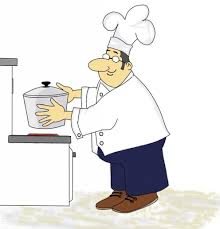
The man takes the hot pot off the stove with his bare hands and his hands get burned.  This is an example of 
a)
conduction
b)
convection
c)
radiation
104.
What is the definition of CONDUCTION?
a)
When heat is transferred from objects like rays of light or electromagnetically.
b)
a  hot liquid or air that  expands, becomes less dense, and rises or becomes more dense, and sinks.
c)
When heat transfers from objects that are touching.
d)
When heat transfers through the heater or AC in your house.
105.
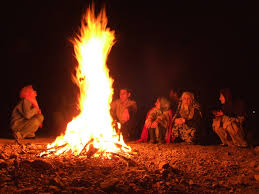
A group of friends gather around a fire to stay warm.  This is an example of
a)
conduction
b)
convection
c)
radiation
106.
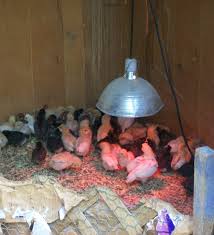
The baby chickens are kept warm from the heat lamps. This demonstrates what kind of heat transfer? 
a)
conduction
b)
convection
c)
radiation
107.
The transfer of heat by currents through liquids of gases is called
a)
Perspiration
b)
Radiation
c)
Conduction
d)
Convection
108.
A metal spoon heated by hot soup.  This is an example of
a)
Conduction
b)
Transpiration
c)
Convection
d)
Radiation
109.
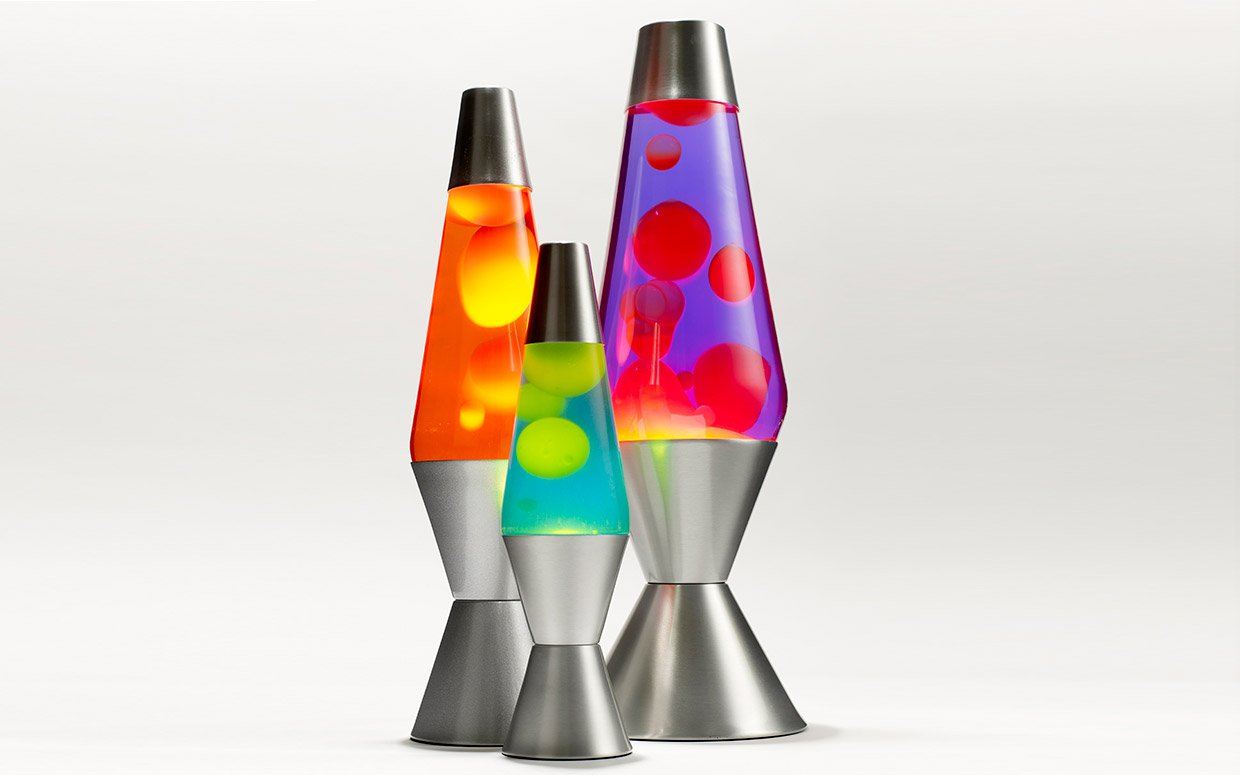
"Lava lamps" contain colored liquids. These liquids form globs that rise to the top due to
a)
conduction
b)
convection
c)
radiation
110.
Near the ceiling of a room the air is warmer; the warm air rises because of
a)
conduction
b)
convection
c)
radiation
111.
A huge rock at the state park gets hot during the day. The rock was warmed from the Sun by
a)
conduction
b)
convection
c)
radiation
112.
You lay on a hot rock and keep warm from the rock by
a)
conduction
b)
convection
c)
radiation
113.
A crayon placed on a dark driveway in bright sunlight melted into a colorful puddle. What caused the crayon to melt?
a)
Solar radiation heated the driveway and then heat transferred to the crayon by conduction.
b)
Solar radiation heated the driveway and then heat transferred to the crayon by radiation.
c)
Solar convection heated the driveway and then heat transferred to the crayon by radiation.
d)
Solar convection heated the driveway and then heat transferred to the crayon by conduction.
114.
Which statement is true?
a)
The quicker a molecule moves, the colder it is.
b)
The slower a molecule moves, the warmer it is.
c)
The quicker a molecule moves, the warmer it is
d)
The movement of a molecule doesn't affect its temperature
115.
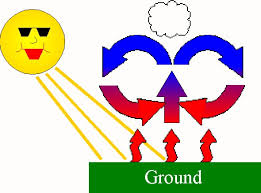
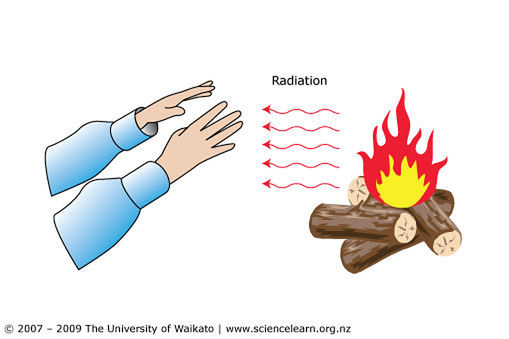
The picture shows heat transfer by
a)
Conduction
b)
Convection
c)
Radiation
116.
Cold air sinks.  True or false? 
a)
true
b)
false
117.
This is a lava lamp. When the light bulb heats the wax, the wax rises. When the wax cools, it falls. This cycle of rising/falling is an example of:
a)
Conduction.
b)
Convection.
c)
Radiation.
118.
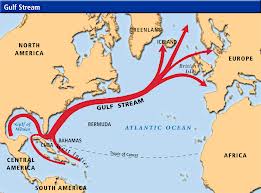
The Gulf Stream is a current that brings warm ocean water from the south to the north. What type of heat transfer is this?
a)
conduction
b)
convection
c)
radiation
d)
Insolation 
119.

How are reptiles and fish alike?

a)

neither has scales

b)

both breathe with gills

c)

neither has a backbone

d)

both have body temperatures that change with their surroundings

120.

A student wants to research invertebrate animals. Which of these animals should she study? Select 3

a)

frog

b)

fish

c)

clam

d)

worm

e)

spider

121.

Which features can a scientist use to identify an amphibian? Select 3

a)

has a backbone

b)

has no backbone

c)

has smooth, moist skin

d)

has scales or plates on skin

e)

breathes first with gills and then with lungs

122.
Which animal is a bird?
Animal 1: backbone/feathers/warm-blooded
Animal 2: backbone/scales/gills/cold-blooded
Animal 3: cold-blooded
Animal 4: backbone/hair
a)
Animal 1
b)
Animal 2
c)
Animal 3
d)
Animal 4
123.
Ben has noticed an animal when he looks out his window at school.  The animal has a backbone, lives on land, bears live young, and has hair.  What is the classification for this animal?
a)
reptile
b)
bird
c)
mammal
d)
amphibian
124.
Lamprey and hagfish are examples of jawless fishes thus they are cold blooded. 
a)
TRUE
b)
FALSE
125.

There are more cold-blooded than warm-blooded animals in the five groups of animals we learned about.

a)

True

b)

False

126.
Animals that have backbones are...
a)
Vertebrates
b)
Invertebrates
c)
Mollusk
d)
Lobster
127.
What type of animal has fur and feeds its young with milk?
a)
birds
b)
reptiles
c)
amphibians
d)
mammals
128.
What classification of animals are  vertebrae (have a backbone)?
a)
birds only
b)
reptiles only
c)
reptiles and birds but not mammals and fish
d)
mammals, fish, reptiles, amphibians, and birds
129.
What are vertebrates?
a)
Animals with a backbone
b)
Animals without a backbone
130.
There are five categories of vertebrates.  Which one is not a vertebrate?
a)
Mammals
b)
Birds
c)
Arthropods
d)
Reptiles
131.
My body is moist and smooth, I lay eggs, and live in or near the water.  What am I?
a)
Amphibian
b)
Reptile
c)
Bird
d)
Fish
132.
My body is warm, I have fur, feed my young on milk, and have live births.  What am I?
a)
Reptile
b)
Bird
c)
Mammal
d)
Fish
133.
I am covered in dry scales and I lay eggs.  What am I?
a)
Mammal
b)
Fish
c)
Amphibian
d)
Reptile
134.
My body is cold, am covered in scales, use gills to breathe under water, and I lay eggs.  What am I?
a)
Fish
b)
Mammal
c)
Reptile
d)
Amphibian
135.
Which are the 5 groups of vertebrate animals?
a)
Mammals, fish, amphibians and sharks
b)
Mammals, fish, birds, reptiles and amphibians
c)
Lions, tuna, eagle, crocodile and frog
d)
Humans, fish, birds and reptiles
136.
What animals breathe with their lungs?
a)
Mammals and birds
b)
Fish and chips
c)
Mammals, birds, reptiles and adult amphibians
d)
Humans, birds and sharks
137.
Which of these animals breathe through their gills?
a)
Fish
b)
Fish and baby amphibians
c)
Mammals, adult amphibians, reptiles and birds
138.
Which animal can breathe with their lungs and also through their moist skin?
a)
Amphibians
b)
Fish
c)
Reptiles
139.
Which group of animals have bodies covered with scales or shell?
a)
Turtles
b)
Amphibians
c)
Reptiles
140.
What do the herbivores eat?
a)
Other animals
b)
Plants
c)
Plants and other animals
141.
What type of animals eat other animals?
a)
Hervibore
b)
Carnivore
142.
What do the omnivores eat?
a)
Plants
b)
Other animals
c)
Plants and other animals
143.
All of the following are characteristics of mammals except _____
a)
they give birth to live young
b)
they produce milk
c)
they breathe through gills
d)
they are covered with hair
144.
What word means  body temperature changes when the outside temperature changes?
a)
cold blooded
b)
warm blooded
c)
classify
d)
vertebrate
145.
What word means body temperature stays the same no matter what the outside temperature is?
a)
cold blooded
b)
warm blooded
c)
classify
d)
vertebrate
146.
Which word means the bones which form the framework of the body?
a)
cold blooded
b)
classify
c)
vertebrate
d)
skeleton
147.

Comparing or organizing things into groups is called...

a)

Classifying

b)

Cleaning

c)

Coming together

d)

Metamorphosis

148.

How do fish breathe?

a)

Through their gills

b)

Through their skin

c)

Through their fins

d)

Through their feathers

149.

Animals that have a backbone for support are called .

a)

Vertebrates

b)

Invertebrates

c)

Eukaryote

d)

Skeleton

150.

Animals that do not have a(n) _______________ are called invertebrates

a)

Vertebrate

b)

Backbone

c)

Bone

d)

Skeleton

151.

Most invertebrates support their body with a(n)

skeleton or a(n) , but a few have an endoskeleton.

a)

Internal / exoskeleton

b)

Hydrostatic / exoskeleton

c)

Internal / external

d)

Hard skeleton / soft skeleton

152.

Some invertebrates are , which are animals that survive

by living inside or on another organism, get food from the organism, and do not

help in the organism’s survival.

a)

Insects

b)

Worms

c)

Parasites

d)

Survivors

153.

Snails and slugs are _______ , or members of the phylum

Mollusca.

a)

Animals

b)

Invertebrates

c)

Mollusks

d)

Disgusting

154.

Roundworms have a(n) skeleton that they use for

movement.

a)

Internal

b)

Interstitial

c)

Hydrostatic

d)

Flexible

155.

An arthropod has jointed , or structures that extend

from its body.

a)

Legs

b)

Anthenae

c)

Feet

d)

Appendages

156.

The process of an insect changing body form as it grows from an egg to an

adult is called

a)

Changing

b)

Metamorphosis

c)

Evolution

d)

Fussion

157.

Its name means “spiny skin.”

a)

Arachnid

b)

Sponge

c)

Echinoderm

d)

Mollusk

158.

It has jointed appendages that extend from the

central part of its body.

a)

Mollusks

b)

Arthropods

c)

Echinoderms

d)

Cnidarians

159.

It has bilateral symmetry and a flat body shape.

a)

Roundworm

b)

Segmented worm

c)

Flat worm

d)

Cnidarian

160.

It has a mantle, or a thin layer of tissue, that

covers its internal organs.

a)

Arthropod

b)

Mollusk

c)

Echinoderm

d)

Roundworm

161.

When Convection occurs in the atmosphere

a)

Cool air rises, warm air sinks

b)

warm air rises. cool air sinks

c)

warm air sinks, cool air sinks

d)

warm air rises, cool air sinks

162.

Which of these is an example of radiation

a)

bacon on a heated skillet

b)

falling on a sidewalk

c)

sun heating up the sand

d)

putting a blanket on

163.

heat always transfers from

a)

right to left

b)

left to right

c)

hot to cold

d)

cold to hot

164.

This is an example of

a)

convection

b)

conduction

c)

radiation

d)

thermal energy

165.

This is a measure of how fast particles are moving

a)

conduction

b)

convection

c)

radiation

d)

temperature

166.

If you pick up an ice cube, which direction will the heat flow?

a)

From the ice cube to your hand making your hand feel hot.

b)

From the ice cube to your hand making your hand feel cold.

c)

From your hand to the ice cube making your hand feel hot.

d)

From your hand to the ice cube making your hand feel cold

167.

Which of these options show heat being transferred by radiation

a)
b)
c)
d)
168.

Why do you wear gloves when you are making a snowman outside?

a)

To slow the cold from the snow going to your hands making them cold.

b)

To slow the heat from the snow getting into your hands to make them cold.

c)

To slow the heat from leaving your hands to warm up the snow.

d)

To slow the heat from leaving your hands to cool down the snow.

169.

Which states of matter are considered fluids and can do convection?

a)

Gases only

b)

Liquids only

c)

Liquids and gases

d)

Liquids, gases, and Solids

170.

Which of these is an example of conduction

a)

Heat transfer responsible for causing sunburn

b)

Thermal energy circulates from the heating system and through the house during winter

c)

Using a heated blanket to stay warm at night

d)

Food underneath a heat lamp

171.

A possible explanation for a set of observations or answer to a scientific question is called a

a)

prediction

b)

hypothesis

c)

theory

d)

law

172.

During an experiment, which factors must be controlled so that researchers can draw a logical conclusion from the experiment?

a)

variables

b)

hypothesis

c)

theories

d)

inquiries

173.

During an experiment, if you purposely change the temperature to test a hypothesis, the temperature is called the ...

a)

variable

b)

manipulated variable

c)

responding variable

d)

result

174.

The factor that may change in response to the manipulated variable is called the ...

a)

variable

b)

manipulated variable

c)

responding variable

d)

result

175.

A summary of what you have learned from a scientific experiment is called a(n) ...

a)

hypothesis

b)

answer

c)

conclusion

d)

result

176.

What would a scientist usually do after conducting a controlled experiment?

a)

Interpret the data from the experiment

b)

Communicate the results in an experiment

c)

Draw a conclusion, and if needed, revise the hypothesis

d)

All of the above

177.

________________________ is a way of learning about the natural world and the knowledge gained through that process.

a)

data

b)

controlled experiment

c)

science

d)

variable

178.

In a(n) ____________________________________ a scientist determines how one particular variable affects the outcome of the experiment.

a)

controlled experiment

b)

hypothesis

c)

variable

d)

data

179.

_________________________ are facts, figures and other evidence gathered through observations.

a)

data

b)

results

c)

variables

d)

answers

180.

A scientist wants to see if watering a flower every day will result in better growth. What is the manipulated variable?

a)

amount of water

b)

plant growth

c)

temperature

d)

ruler

181.

scientist wants to see if watering a flower every day will result in better growth. What is the responding variable?

a)

amount of water

b)

plant growth

c)

temperature

d)

ruler

182.

What does scientific inquiry begin with?

a)

a hypothesis

b)

a question

c)

an observation

d)

a fact

183.

What is the first step in the scientific method?

a)

pose a question

b)

form a hypothesis

c)

design an experiment

d)

collect and interpret data

184.

What is the second step in the scientific method?

a)

pose a question

b)

form a hypothesis

c)

design an experiment

d)

collect and interpret data

185.

What is the third step in the scientific method?

a)

pose a question

b)

form a hypothesis

c)

design an experiment

d)

collect and interpret data

186.

What is the fourth step in the scientific method?

a)

pose a question

b)

form a hypothesis

c)

design an experiment

d)

collect and interpret data

187.

What is the fifth step in the scientific method?

a)

draw conclusions

b)

communicate

c)

design an experiment

d)

collect and interpret data

188.

What is the sixth step in the scientific method?

a)

draw conclusions

b)

communicate

c)

design an experiment

d)

collect and interpret data

189.

True or False. A hypothesis is always correct.

a)

true

b)

false

190.

Future testing can prove a ______________ to be incorrect.

a)

scientific law

b)

scientific theory

c)

scientific inquiry

d)

scientific answer

191.
For 1-6 Match the verbal description with the part of the graph it describes.
1. Stays the same.
a)
F
b)
A
c)
D
d)
C
192.
Describe the situation.
a)
The volume of the balloon increases at a constant rate, then stays constant, then increases, then constant, and increases at a constant rate.
b)
The volume of the balloon increase at a constant rate, decreases, then stays constant, then increases, then constant, and increases at a constant rate.  
193.
Describe the situation.
a)
Sales decrease quickly at a constant rate, and then increase slowly at a constant rate.
b)
Sales stay constant, then decrease at a constant rate, and increase slowly.  
194.
Describe the situation.
a)
Horsepower increases at an increasing rate and then increases slowly.
b)
Horsepower increases at a constant rate and then increases slowly.
195.
Describe the situation. 
a)
Grams Decrease at a decreasing rate.
b)
Grams decrease at a constant rate.
196.
How many seals were present in 2011?
a)
25
b)
30
c)
40
d)
50
197.

How long does it take the family to reach the beach?

a)

1 hour

b)

2 hours

c)

3 hours

d)

4 hours

198.

How long does the family spend at the beach?

a)

1 hour

b)

2 hours

c)

3 hours

d)

4 hours

199.

At what time is the rocket the highest according to the graph?

a)

60 seconds

b)

80 seconds

c)

100 seconds

d)

120 seconds

200.

What is the label on the y-axis in this graph?

a)

Rainfall in mm

b)

Day of the month

c)

Rainfall during the first 9 days of a month

201.

What is the label on the x-axis of this graph?

a)

Number of visitors

b)

Year

c)

Visitors to a Park

202.

What is the title of the graph below?

a)

Months

b)

Inches

c)

Average monthly rainfall

203.

What is the label on the x-axis on the graph?

a)

Inches

b)

Months

c)

Average Snowfall

204.

What is the trend in New York snowfall between January and May?

a)

It increased

b)

It decreased

c)

It stayed the same

205.

What is the y-axis in this graph?

a)

Student Membership (in millions)

b)

Year

c)

US Public School Student Membership

206.

What is the title of the above graph?

a)

Instagram Stories vs Snapchat Daily Users

b)

Daily Users

c)

Year

207.

What is the x-axis labeled?

a)

Instagram Stories vs Snapchat Daily Users

b)

Daily Users

c)

Year

208.

What is the y-axis labeled?

a)

Instagram Stories vs Snapchat Daily Users

b)

Daily Users (Millions)

c)

Year

209.

According

to the graph, in the beginning of 2017, approximately how many daily users

did Snapchat have?

a)

50 million users

b)

150 users

c)

150 million users

d)

100 users

210.

When did Instagram stories begin?

a)

Beginning 2015

b)

Middle of 2016

c)

Middle of 2017

211.

During which year did Instagram pass Snapchat’s number of average daily users?

a)

2015

b)

2016

c)

2017

212.

Which grew at a faster rate, Instagram or Snapchat daily average users?

a)

Instagram daily average users

b)

Snapchat daily average users

213.
When you group or organize categories, you are using the skill of ______________?
a)
observe
b)
compare
c)
predict
d)
classify
214.

The white candle has a cylindrical shape. it has a diameter of about 3 cm. the length of the candle is 20 cm. It is hard, smooth and can be scratched. There is a white wick that extends from top to bottom.

Which is a qualitative observation from the sentence?

a)

diameter of about 3 cm

b)

length is 20 cm

c)

hard, smooth and can be scratched

215.
It is a basic science process skills that suggests explanations of an observation based on past experiences.
a)
observing
b)
inferring
c)
measuring
d)
classifying
216.
It is a process skill where you design an investigation, including a procedure, to test a hypothesis.
a)
formulating hypothesis
b)
communicating
c)
interpreting data
d)
experimenting
217.
When you are looking at how objects or events are alike and different, you are ___________?
a)
displaying data
b)
inferring
c)
classifying
d)
comparing
218.
When you are comparing mass, length and volume, you are ________________________.
a)
measuring
b)
displaying data
c)
gathering data
d)
observing
219.
It is a process of explaining the meaning of the information or data gathered from the experimentation.
a)
interpreting data
b)
formulating hypothesis
c)
experimenting
d)
defining
220.

It is the series of steps in science that help you solve problems and answer question.

a)

Inferring

b)

Observing

c)

Scientific Method

d)

Hypothesizing

221.

Which of the following scientific processes provides a tentative answer to an identified problem?

a)

experimentation

b)

hypothesizing

c)

observation

d)

prediction

222.
When you make inferences, observations and predictions, you are _________________
a)
hypothesizing
b)
gathering data
c)
recording data
d)
displaying data
223.
When you use the senses to gather information, you are
_______________________.
a)
inferring
b)
predicting
c)
experimenting
d)
observing
224.
When you form an idea of an expected outcome, you are ____________________.
a)
predicting
b)
inferring
c)
hypothesizing
d)
observing
225.
When you make tables, charts and graphs, you are _______________________ .
a)
drawing
b)
gathering data
c)
displaying data
d)
recording data
226.
When you use logical reasoning (as you read, or use the Scientific Process Skills), you are ___________________
a)
hypothesizing
b)
predicting
c)
inferring
d)
gathering data
227.
When you design ways to collect, control and test a hypothesis, you can now
______________________.
a)
observe
b)
compare
c)
measure
d)
experiment