
 Worksheets
sst grade 8th
Total questions: 151
Worksheet time: 5hrs 2mins

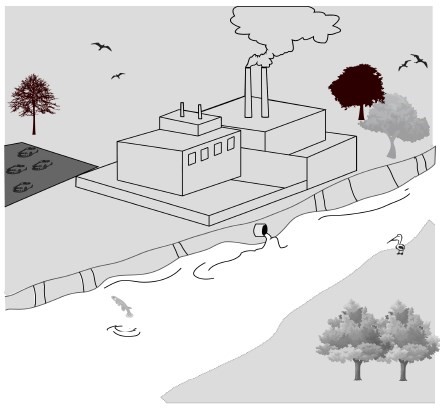

Claim: the consumption of natural resources by humans has a negative impact on the environment. What data would provide evidence for this claim?
Increased human lifespan and increased ice cap size
Increased human population and decreased habitats for plants and animals
Increased consumption of resources by humans and increased biodiversity (variety) in nature
Increased of fossil fuel burning by humans and decreased use of other resources

Some factories that burn coal produce smoke with harmful chemicals, such as sulfur. Scrubbers are devices that are attached to the smokestacks to reduce the amount of sulfur put into the atmosphere. To evaluate the effectiveness of these devices, what data would need to be collected?
The average amount of sulfur in a certain amount of coal
The amount of coal a factory burns each year and how much sulfur it emits (produces)
The increase in the use of scrubbers by factories that burn coal
The amount of sulfur emitted (produced) by a smokestack before and after the scrubber is attached

Ths graph presents data from a city showing the amount of land used to bury solid waste each year. From 1990 to 1999, the amount of space needed to bury waste increased by 1 to 2 square kilometers per year. In the year 2000, the city started a recycling program to slow the increase of land needed for this burying this solid waste. The city claims that since this recycling program started, the amount of land needed for burying solid waste has decreased.
Which evidence would support this claim?
Data showing that by the year 2010, more than 40% of the citizens were participating in the recycling program
Data showing that the land used for burying solid waste in 2010 was less than 22 square kilometers
Data showing that by the year 2010, there was five times more solid waste being buried than being recycled
Data showing that the land used to build a recycling facility is greater than the amount of land used to bury solid waste
Claim: Carbon dioxide (CO2) emissions can be reduced by increasing the amount of electricity produced by wind.
Which pair of graphs, showing data for CO2 emissions and wind production of electricity would support this claim?


As the human population increases, so does the consumption of natural resources. What are some ways this impacts natural ecosystems and environments?
negative impact
positive impact
habitat loss
environmental pollution
What type of data would be required to show that the
amount of carbon dioxide emissions from the burning of fossil fuels for energy can be reduced by using
renewable resources?
the amount of emissions from the burning of fossil fuels
the amount of scrubbers on a smoke stack
the amount of emissions from renewable sources
the amount of renewable resources in a landfill
The people or animals living in a particular area.
population
species
community
consumer
The _____________ the human population, the ______________ the amount of resources being used.
greater, greater
greater, least
least, greater
least, least

________ are resources that are used faster than they can be replaced by natural processes.
natural resources
renewable resources
nonrenewable resources
nuclear resources

Choose all that apply:
Which are renewable resources?
Sun
Oil
Gas
Water
Wind
Which is true about nonrenewable resources?
Pollution from burning fossil fuels damages the Earth
Nonrenewable resources are easy to replace
A disadvantage of nonrenewable resources is that they are less effective than renewable resources
Most nonrenewable resources come from nuclear energy

Burning wood is an example of __________.
biomass energy
solar energy
water energy
wind energy

There is a huge push towards using renewable resources in today's world. Why?
They produce more energy than nonrenewable resources
They produce less pollution than fossil fuels
Big energy companies have most of their money invested in advertising renewable resources
People can become more popular if they stop using petrol in cars

What kind of energy is pictured here?
Water
Wind
Solar
Geothermal

What kind of energy is pictured here?
Water
Wind
Solar
Geothermal

What kind of energy is pictured here?
Water
Wind
Solar
Geothermal

Which fossil fuel is formed from the remains of plants and animals that died in swamps millions of years ago?
Coal
Oil
Natural Gas
None of the above

How are natural gas and oil different from coal?
They are billions of years old instead of millions like coal.
They formed from smaller organisms like algae and zooplankton.
They can only be used to heat homes, but coal can be used in cars.
Natural gas and oil are renewable resources.
What can you do to better manage your energy resources?
Unplug electronics from the wall if you are not using them.
Keep battery powered electronics plugged in at all times to save battery.
Take a car instead of public transportation because it's more fuel efficient.
Always leave the air conditioner on to keep the room cool for when you come home.
Oil, coal, and natural gas are considered __________ ___________ because it takes millions of years for them to form.
nonrenewable resources
renewable resources
energy resources
very expensive
How are fossil fuels formed?
They are made in factories
Dead plants and animals died millions of years ago and were buried under heat and pressure
Dead plants were buried under heat and pressure
Dead animals were buried under heat and pressure
What do fossil fuels need to form?
High pressure and low heat
High pressure and high heat
Low pressure and low heat
Low pressure and high heat
Which fossil fuel is formed only from dead plants in swamps?
Rubber
Petroleum
Coal
Natural Gas
This fossil fuel is formed from the remains of small organisms that lived in the ocean AND is a thick, black liquid
natural gas
coal
oil
steam
Which event began the formation of oil?
the mixing of sea water with minerals
the buildup of sea shells
the eruption of a volcano
the death of anciet marine (ocean) animals

Which fossil fuel is made from the process shown in the picture?
oil
natural gas
coal
petroleum

Which fossil fuel is created by the picture shown?
coal only
oil only
coal and oil
oil and natural gas

This represents the formation of
Coal
oil
Salt
Copper ore

This could result in the formation of
Oil
Gas
Salt
Gold and Silver ore
Hydrothermal gold, silver, uranium deposits result from
Deep burial of plants
Evaporation of water
Deep burial of organisms in seas
Hot water depositing minerals

Formation of Salt deposits result from
Evaporation of lakes and oceans
Deep burial of swamp trees
Deep burial of dead ocean organisms
Release of minerals from hydrothermal zones

Which natural resource found in the region marked with an X is formed in this process?
Who is also known as father of Indian Constitution?
Dr Br Ambedkar
Dr Rajendar Prasad
Pandit Nehru
Sardar Patel
Who was president of Constituent Assembly?
Dr Br Ambedkar
Dr Rajendar Prasad
Maulana Azad
Sardar Pate
How many members were there in constituent assemble?
200
250
300
350
How many members were there in drafting committee?
11
6
8
7
Most of the countries in the world have a...............
Preamble
Secularism
Law and dissent
Constitution
The makers of Indian Constitution wanted to give some special privileges to the down trodden sections of society. (True or False)
True
False
Indian constitution promotes.......
Hindusim
Islam
Budhism
does not promote any religion
India is a not a parliamentary form of democracy.(True or False)
False
True
Indian constitution is a live constitution. (True or False)
True
False
Indian constitution does promote equality in different religions. (True or False)
False
True
The institution that drafted the Constitution of India was called the
Constituent Assembly
National Assembly
Parliament
The problems faced by the makers of the Constitution while writing the Constitution included
Partition
diverse population
princely states
the issue of the kind of government we wanted
The judiciary
controls the executive
controls the legislature
is appointed by the people
protects the rights of the citizens
How many Schedules are contained in the Constitution of India?
13 schedules
14 schedules
12 schedules
11 schedules
Constitution refers to
Verbal spoken rules and regulations
Written rules and regulation which governs a country
It is a set of rules and principles that all persons in a country can agree upon as the basis of the way in which they want the country to be governed
Statements of ministers
On which date the Indian Constitution came into effect
On 26 November 1949
On 26 January 1950
On 26 September 1949
On 26th March 1950
Who is known as the father of Indian Constitution
Pandit Jawaharlal Nehru
Dr BR Ambedkar
Vijayalakshmi Pandit
Sarojini Naidu
Fundamental rights refers to
The list of subjects of the state government
The basic rights which are granted to citizens
The list of subjects of the central government
The list of subjects of both the state and Central Government
How many fundamental rights are given in Indian Constitution
5
6
7
None of these
Which one of the following is not a key feature of the Indian Constitution
separation of power
Secularism
Presidential form of government
Federalism
Who was the chairman of Constituent Assembly?
Dr. B.R. Ambedkar
Dr. Rajendra Prasad
Dr. John Mathai
Jawaharlal Nehru
What is the name of the Kingship or rule of a king?
a. Democracy
b. Constitution
c. Monarchy
d. None of these
Indian Constitution declares _____________ as the supreme power
President
Chief Justice
People
Prime Minister
A formal change to the Constitution.....
amendment
veto
term
bill

Which branch of Parliament makes the laws?
Legislative
Judicial
Executive
Constitution
What do you mean by secular state?
Don’t have any official religion
b. Don’t have any king
c. Don’t have any preamble
d. None of these
The institution that drafted the Constitution of India was called the
Constituent Assembly
National Assembly
Parliament
The people of Nepal organised a movement to establish democracy not once but twice.
True
False
The people of India play a direct role in electing representatives
true
false
not really
Constitution refers to
Verbal spoken rules and regulations
Written rules and regulation which governs a country
It is a set of rules and principles that all persons in a country can agree upon as the basis of the way in which they want the country to be governed
Statements of ministers
On which date the Indian Constitution came into effect
On 26 November 1949
On 26 January 1950
On 26 September 1949
On 26th March 1950
Who is known as the father of Indian Constitution
Pandit Jawaharlal Nehru
Dr BR Ambedkar
Vijayalakshmi Pandit
Sarojini Naidu
Fundamental rights refers to
The list of subjects of the state government
The basic rights which are granted to citizens
The list of subjects of the central government
The list of subjects of both the state and Central Government
How many fundamental rights are given in Indian Constitution
5
6
7
None of these
Which one of the following is not a key feature of the Indian Constitution
separation of power
Secularism
Presidential form of government
Federalism
the Indian state has a------------- form of government.
(a)
Who is also known as father of Indian Constitution?
Dr Br Ambedkar
Dr Rajendar Prasad
Pandit Nehru
Sardar Patel
Indian constitution does promote equality in different religions. (True or False)
False
True
When did the constitution of India come into effect?
27 January, 1949
26 January, 1947
26 January, 1949
26 January 1950
Fundamental rights refers to
The list of subjects of the state government
The basic rights which are granted to citizens
The list of subjects of the central government
The list of subjects of both the state and Central Government
How many fundamental rights are given in Indian Constitution
5
6
7
None of these
Which one of the following is not a key feature of the Indian Constitution
separation of power
Secularism
Presidential form of government
Federalism
which fundamental right safeguards Indian citizens from any kind of discrimination
Right to freedom
Right to equality
E right to get redressal
Right to education
Which of he following is one of the MAIN responsibilities of a citizen?
picking up litter
obeying the law
washing the dishes
running for public office
Which of the following is correct with respect to “Right against exploitation”?
Prohibition of traffic in human beings and forced labour
Freedom as to payment of taxes for the promotion of any particular religion
Protection of interests of minorities
Equality before law
Which is NOT a right under Right to Freedom?
Freedom to form a trade union
Freedom to gather for a violent protest
Freedom to assemble peacefully
Freedom to live and work in any part of India?
Freedom to practise any profession
Why is the power distributed?
One person cannot control the whole country.
People cannot fight against 1 person.
All parts of the country can be governed equally.
What is the difference between Freedom and Equality?
Equality = Freedom
They are the same.
Freedom is the ability to follow any profession. Equality is access to public places.
Freedom is access to public places. Equality is the ability to follow any profession.
There was a people’s struggle in?
1990
1960
7990
1968
Nepal followed Monarchy till 2007. After abolishing Monarchy, which type of government was approved?
(a)
Which part of the Indian Constitution has been referred to as the ‘Conscience’.
Secularism
D.P.S.P
Fundamental Rights
Fundamental Duties
Which is the 3rd tier of government?
Panchayati Raj
Municipal corporation
State government
Central government
When did Indian National Congress (INC) make the demand for a Constituent Assembly?
1934
1935
1946
1947
When did the Maoists join other political parties in Nepal to sign a 12-point agreement?
April 2006
October 2007
November 2005
February 2005
The Constitution prohibits human trafficking, forced labour, and children working under 14 yrs of age. It is mentioned under which Fundament Right?
Right to Freedom
Right to Freedom of Religion
Right to Constitutional Remedies
Right against Exploitation
Which court issue the Writs?
District Courts
Panchayats
Civil Courts/Criminal Courts
Supreme Court/High Courts
Central Government is the tier of which government?
1st
2nd
3rd
4th
When did our Constitution was adopted and was enforced?
26 January, 1950
15 August, 1947
2 October, 1950
26 November, 1949
According to which set of fundamental rules the country functions?
A law
An amendment
A constitution
A preamble
By which amendment the Fundamental duties were included in the Constitution?
38th Amendment
42th Amendment
46th Amendment
50th Amendment
What are the objectives for implementing the fundamental rights according to Dr. B.R. Ambedkar?
To ensure every citizen is benefited
To ensure every citizen is rich
To ensure every citizen has ration card
None of these
What is the significance of the Preamble in the Indian Constitution?
States the objectives of the president
States the objectives of the election
States the objectives of the Constitution
None of these
What is Sovereignty?
Freedom to establish new country
Freedom to govern oneself
Peoples government
None of these
What is Democracy?
Rule of people
Rule of king
Rule of British
Rule of officers
What is a Constitution?
Set of rules of court
Set of rules to govern country.
Set of rules of company
None of these
What type of government India practiced?
Monarchy
Democracy
Anarchy
None of these
What is the name of the Kingship or rule of a king?
Democracy
Constitution
Monarchy
None of these
What defines the introduction to our constitution?
Preamble
Sovereignty
Constitution
None of these
What do you mean by Right to equality?
Rich people are higher than poorer
All are equal before law
Government officer are superior
All are equal after law
Buying and selling of human beings include in which right?
Right to Equality
Right to Freedom
Right against Exploitation
None of these
We celebrate 26 January as Republic Day because__-
India became independent of British Republic
Republic party formed the government
The Constitution of India came into force that declared India as a Republic country
The Constitution of India was signed by the Republic leaders of India
The___________ had put forth the idea of setting up a Constituent Assembly to prepare the Constitution of India.
Simon Commission
Cabinet Mission
Cripps Mission
Mountbatten Plan
Identify the President of the Constituent Assembly that prepared our Constitution.


The constitution of India was prepared and completed between
1935 and 1947
1946 and 1950
1947 and 1948
1946 and 1948
On _________ the Constituent Assembly met for the first time in the Constitution Hall of the Indian Parliament, New Delhi.
9 December 1946
15 August 1947
9 December 1945
15 August 1946
The total membership of our Constituent Assembly initially was of ______ members, but after partition of India in 1947, only_____ members were left in it.
119, 7
100, 82
350,249
389, 299
How many women members were there in our Constituent Assembly?
7
9
15
23

Identify this place. It played a major role in designing the written Constitution of India
Shanti Niketan
Birla House
Sabarmati Ashram
Parliament House

In 1994, India, like America, decided to keep the original copy of the Constitution in a gas chamber at the library of Parliament House. Which gas is used in the chamber?
hydrogen
oxygen
nitrogen
helium
The first amendment in 1950 and the latest amendment in our constitution in 2021 were both related to-
goods and service tax
official language
backward classes
land reforms
The original Indian Constitution was drafted in both Hindi and English.
TRUE
FALSE
Each member of the Constituent Assembly that drafted the Constitution, signed two copies -- one in Hindi and the other in English.
TRUE
FALSE
The Indian Constitution is the longest of any sovereign country in the world.
TRUE
FALSE
Prem Behari Narain Raizada (Saxena), was the man who hand wrote the original Constitution of India in Hindi as well as English
TRUE
FALSE
Israel, Canada, Saudi Arabia, and New Zealand have no written constitution.
TRUE
FALSE
NOT SURE
In __________ , the Indian National Congress made the demand for a Constituent Assembly.
1935
1934
1936
1937
In October 2002 , King_________, began taking over different aspects of the government with the army’s assistance in Nepal.
Madhebendra
Raghavendra
Gyanendra
Birendra
In________, Nepal became a democracy after abolishing the monarchy.
2007
2006
2005
2008
___________is known as the Father of the Indian Constitution.
Dr Baba Saheb Ambedkar
Dr Rajendra Prasad
Jawarharlal Neheru
Mahatma Gandhi
__________ refers to the existence of more than one level of government in the country.
communalism
parliament
federalism
secularism
____________is the third tier of government in India.
Central Govt
State Govt
Panchayati Raj
T he __________is a smaller group of people who are responsible for implementing laws and running the government.
Judiciary
Executive
Legislature
Right to _________ states that the State cannot discriminate against anyone in matters of employment.
Right to freedom
Right against exploitation
Right to Equality
Right to freedom of religion
The practice of untouchability has also been abolished under right to _______.
Right to freedom
Right to equality
Right to freedom of religion
Right against exploitation
_________Right prohibits human trafficking, forced labour , and employment of children under 14 years of age.
Right to equality
Right to freedom
Right against exploitation
Right to freedom of religion
A (a) state is one in which the state does
not officially promote any one religion as the state religion.
T he (a) refers to the system of courts in this country.

