
NEW
Font size
 Worksheets
Early unit 1 Quiz
Total questions: 21
Worksheet time: 34mins
Defined as the amount of matter in an object
volume
mass
length
density
what is the metric unit used to measure length
grams
liters
inches
meters
How many independent variables should you have in an experiment?
two
as many as possible
four
one
The variable that is being measured or observed is called the _______________. Hint: this is the variable that is the result or effect
independent variable
dependent variable
constant
If I floss more, then I will have fewer cavities. What is the independent variable?
Number of cavities
Amount of flossing
Type of floss used
Amount of brushing
Which best describes the purpose of a control group?
to compare its results to those with the experimental group
to have more qualitative data to analyze at the end of the experiment
to compare its results to those of a well-known scientist
to have a sample group that you can use to manipulate the independent variable
The most important lab rule is
always listen to the teacher
never eat in the lab
always wear your goggles
no horse playing


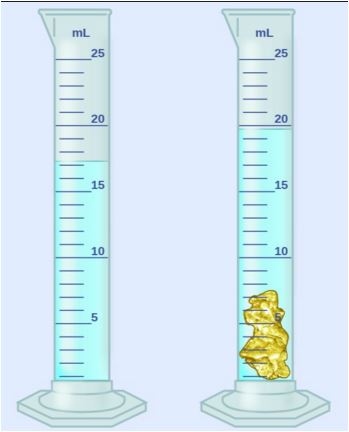
The amount of water displaced is the same as the volume of the object. What is the VOLUME of the object?

How many yards is in 6 miles?
(5280 feet = 1 mile) (3 feet = 1 yard)
31,680 yards
5280 yards
10,560 yards
528 yards
What is a constant in an experiment?
Things that do not change in a experiment. You can have many of these in an experiment.
It's the variable that the scientist changes in the experiment.
It's the variables that are being measured in an experiment
Does the amount of water affect the plant's height?
Which hypothesis is best suited for this scenario.
If the plant receives only 20ml of water, then the plant will grow the shortest compared to those given more water.
Plants need water to grow
If the plant receives sunlight, then the plant will grow the tallest.
How much water does a plant need to grow tall?

