wayground logo

Free Printable Worksheets

Font size

S
M
L
XL
Worksheets

TEST 1 9th Class Chemistry Book

Total questions: 130

Worksheet time: 3hrs 19mins

Name
Class
Date
1.
What is the name of N2O3
a)
Nitrogen trioxide
b)
Dinitrogen oxide
c)
Dinitrogen trioxide
d)
Nitrogen oxide
2.
What is the chemical formula for Tetrasulfur pentoxide?
a)
SO
b)
S4O
c)
S4O5
d)
S5O4
3.
What is the name of C3Cl?
a)
Carbon octachloride
b)
Tricarbon octachloride
c)
Carbon trichloride
d)
Octacarbon trichloride
4.
What is the chemical formula for Nitrogen triiodide?
a)
NI
b)
N3I
c)
NI3
d)
None of these
5.
What is the name of Br6F10 ?
a)
Bromium fluoride
b)
Hexabromine fluoride
c)
Bromium decafluoride
d)
none of the above
6.
What is the chemical formula for CP ?
a)
Carbon phosphide
b)
Monocarbon phosphide
c)
Carbon monophosphide
d)
none of the above
7.
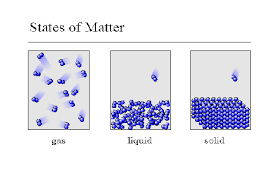
phosphorus trichloride
a)
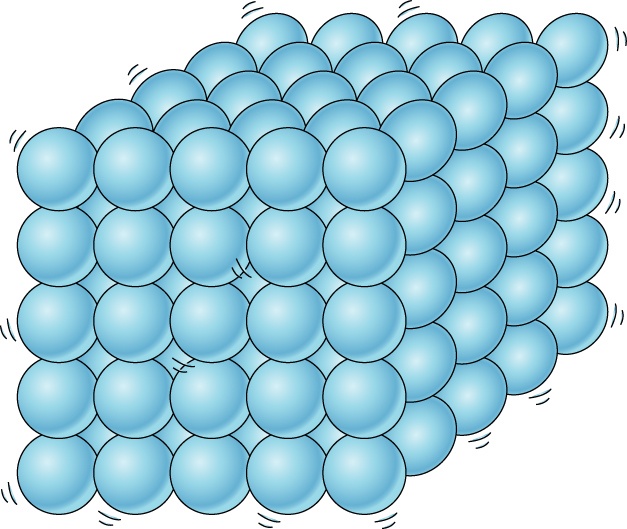
KCl3
b)
PCl3
c)
K3Cl
d)
P3Cl
8.
What is the formula for Hydrosulfuric Acid?
a)
H2(SO3)
b)
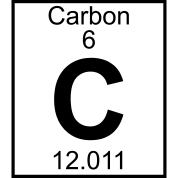
H2S
c)
H2(SO2)
d)
H2(SO4)
9.
Name HF
a)
hydrofluoric acid
b)
Hypofluoric acid
c)
hydrogen fluorine acid
d)
fluoric acid
10.
What is the formula for nitric acid?
a)
HNO2
b)
HNO3
c)
HNO4
d)
H2NO3
11.
Choose the correct shape for this molecule:
a)
Trigonal planar
b)
Trigonal pyramidal
c)
Tetrahedral
d)
Linear
12.
Choose the correct shape for this molecule:
a)
Trigonal planar
b)
Trigonal pyramidal
c)
Bent
d)
Linear
13.
Choose the correct shape for this molecule:
a)
Bent
b)
Trigonal pyramidal
c)
Trigonal planar
d)
Linear
14.
Choose the correct shape for this molecule:
a)
Trigonal planar
b)
Trigonal pyramidal
c)
Bent
d)
Tetrahedral
15.
Choose the correct shape for this molecule:
a)
linear
b)
Trigonal pyramidal
c)
Bent
d)
Tetrahedral
16.

The geometry of a molecule with 4 bonded pairs of electrons and 0 lone pairs of electrons, AB4

a)

Tetrahedral

b)

Trigonal Planar

c)

Bent

d)

Trigonal Pyramidal

e)

Linear

17.

The geometry of a molecule with 2 bonded pairs of electrons and 2 lone pairs of electrons, AB2E2

a)

Tetrahedral

b)

Trigonal Planar

c)

Bent

d)

Trigonal Pyramidal

e)

Linear

18.
*
a)
trigonal pyramid
b)
linear
c)
bent
d)
angular
19.
*
a)
linear
b)
trigonal planar
c)
trigonal pyramid
d)
bent of angular
20.
What is the VSEPR theory used to predict?
a)
Bond Strength
b)
Polarity
c)
Molecular Shape
d)
Electronegativity
21.

What is the molecular shape of the following?

a)

Hexahedral

b)

Square Pyramid

c)

Octahedral

d)

T-Shape

22.

What is the molecular shape of the following?

a)

T-Shape

b)

See-Saw

c)

Trigonal Planar

d)

Octahedral

23.
According to VSEPR, molecules adjust their shapes to keep which of the following as far away as possible?
a)
Pairs of valence electrons
b)
Inner shell electrons
c)
Mobile Electrons
d)
Electrons closest to the nucleus
24.

Electronegativity is a measurement of the ability of a nucleus to:

a)

attract bonding electrons

b)

attract other nuclei

c)

attract electrons in the non-valence energy levels

25.

Which of the following formulas represents a polar molecule?

a)

H2

b)

NI3

c)

CO2

d)

CCl4

26.
Which formula represents a nonpolar molecule?
a)
HBr
b)
H2S
c)
CBr4
d)
PCl3
27.

The geometry of a molecule with 4 bonded pairs of electrons and 0 lone pairs of electrons, AB4

a)

Tetrahedral

b)

Trigonal Planar

c)

Bent

d)

Trigonal Pyramidal

e)

Linear

28.

The geometry of a molecule with 2 bonded pairs of electrons and 2 lone pairs of electrons, AB2E2

a)

Tetrahedral

b)

Trigonal Planar

c)

Bent

d)

Trigonal Pyramidal

e)

Linear

29.

Which has a higher electronegativity

a)

Carbon

b)

Nitrogen

c)

Fluorine

d)

Calcium

30.

What does the Electronegativity chart tell us?

a)

The probability of an atom attracting with a pair of neutrons.

b)

The probability of an atom attracting with a pair of electrons.

c)

The probability of an element attracting with a pair of neutrons.

d)

The probability of an element attracting with a pair of electrons.

31.

What are the two types of polarities

a)

Ionic & Covalent

b)

Solubility & Miscibility

c)

North & South

d)

Polar & Nonpolar

32.
What explains the very high melting and boiling point of water
a)
Strong dipole-dipole bonds between water molecules
b)
Strong hydrogen bonds between water molecules
c)
Dispersion forces which are present in all molecules
d)
Asymmetrical shape of the polar bonds.
33.
All molecules have London forces between them, but dipole-dipole and hydrogen bonding are so much stronger that when they are present we can ignore London forces.  Which of these has ONLY London forces?
a)
I2
b)
NH3
c)
OCl2
d)
SH2
34.

Which substance would have the weakest intermolecular forces of attraction?

a)

CH4

b)

NaCl

c)

H2O

d)

MgF2

35.

Intermolecular forces for: NH3

a)

Dispersion Force

b)

Dipole dipole

c)

Hydrogen bonding

36.
Rank these in order of strength:
covalent bond
London forces
hydrogen bond
dipole-dipole attraction
a)
dipole-dipole>covalent bond>hydrogen bond>London
b)
London>dipole-diple>hydrogen bond>covalent bond
c)
covalent bond>hydrogen bond>dipole-dipole>London
d)
hydrogen bond>dipole-dipole>London>covalent bond
37.
Which of the following molecules has hydrogen bonding?
a)
HCl
b)
HI
c)
HF
d)
HBr
38.

Which of the following intermolecular forces can all types of matter participate in?

a)

London dispersion forces

b)

dipole-dipole forces

c)

hydrogen bonding

d)

none of the above

39.

How many moles are 98.3 grams of aluminum hydroxide, Al(OH)3? (Atomic mass of Al = 27, H= 1, O = 16)

a)

1.26 moles

b)

0.8 moles

c)

7,673.4 moles

d)

150 moles

40.

How many atoms are contained in 25 g of NaBr? (Atomic mass of Na = 23, Br = 35)

a)

102.96 molecules

b)

0.24 molecules

c)

1.45x10²³ molecules

d)

2.34 x 10²⁰molecules

41.

Identify the number of Chlorine atoms in 65.8 g CaCl2.

a)

7.14 x 10²³ atoms

b)

8.71 x 10²³ atoms

c)

1.22 x 10²³ atoms

d)

3.57 x 10²³ atoms

42.

How many moles are 98.3 grams of aluminum hydroxide, Al(OH)3? (Ar Al=27, H=1, O=16)

a)

1.26 moles

b)

0.8 moles

c)

7,673.4 moles

d)

150 moles

43.
How many moles are in 3.01 x 10²² atoms of magnesium?
a)
0.0500 moles
b)
1.81 x 1046 moles
c)
5.00 x 10²¹ moles
d)
5.00 moles
44.
How many molecules are in 2.00 moles of H2O?
a)
124x1024 molecules of H2O
b)
1.20x10²³ molecules of H2O
c)
1.20x1024 molecules H2O
d)
124
45.
How many atoms are in 1.50 moles of Hg?
a)
9.03x10²³ atoms Hg
b)
9.03x1024 atoms Hg
c)
903 atoms of Hg
d)
9.03 atoms of Hg
46.

How many grams are in 1.2 x 1024 molecules of CO? (molar mass of CO = 28 g/mol)

a)

28.2 g

b)

55.8 g

c)

6.02 g

d)

1.2 g

47.

How many grams of silicon (atomic mass = 28.1 amu) would there be in a sample that contained 9.99 x 10²² atoms?

a)

1.69 g

b)

4.66 g

c)

1.66 g

d)

1.79 g

48.

A student needs 65.0 g of copper(II) chloride for an experiment. How many atoms of copper is this?

a)

2.91 x 10^23 atoms

b)

3.91 x 10^25 atoms

c)

2.35 x 10^23 atoms

d)

4.70 x 10^23 atoms

49.

Which of the following statements regarding the mole is incorrect?

a)

A mole is a counting unit equal to 6.02 x 10²³ particles.

b)

The number of particles in a mole is known as Avogadro’s number.

c)

A mole of particles of an element is numerically equal to the atomic mass of the element.

d)

none of the above

50.
How many molecules are in 2.00 moles of H2O?
a)
124x1024 molecules of H2O
b)
1.20x10²³ molecules of H2O
c)
1.20x1024 molecules H2O
d)
124
51.
What is the molar mass of CO2?
a)
22.0 g/mol
b)
28.0 g/mol
c)
44.0 g/mol
d)
56.0 g/mol
52.
What is the molar mass of carbon?
a)
6.0 g/mol
b)
12.0 g/mol
c)
22.4 g/mol
d)
6.02 x 10²³ g/mol
53.
How many moles are in 3.01 x 10²² atoms of magnesium?
a)
0.0500 moles
b)
1.81 x 1046 moles
c)
5.00 x 10²¹ moles
d)
5.00 moles
54.
What is the percent by mass of oxygen in MgO?
a)
20%
b)
40%
c)
50%
d)
60%
55.
What is the percent by mass of sodium in NaCl?
a)
39%
b)
61%
c)
35%
d)
65%
56.
What is the percent by mass of fluorine in CaF2 (gram-formula mass = 78 g/mol)?
a)
24%
b)
49%
c)
51%
d)
65%
57.
What is the percent composition by mass of oxygen in the compound MgSO4 (gram formula mass = 120 g/mol)?
a)
20%
b)
27%
c)
46%
d)
53%
58.
In which compound is the percent composition by mass of Cl equal to 42%?
a)
HClO (gram formula mass = 52 g/mol)
b)
HClO2 (gram formula mass = 68 g/mol)
c)
HClO3 (gram formula mass = 84 g/mol)
d)
HClO4 (gram formula mass = 100 g/mol)
59.
What is the empirical formula for the following:
Pb5Cr5O20
a)
Pb2Cr2O10
b)
PbCr2O7
c)
Pb9Cr4O2
d)
PbCrO4
60.

Which element has an abundance of 39.03% in the compound sodium phosphate, Na3PO4

a)

Na

b)

P

c)

O

d)

None of the above

61.

Which element in the compound potassium cyanide, KCN, has a percent composition of 60.97%?

a)

K

b)

C

c)

N

d)

None of the above

62.
Which pair has the same empirical formula?
a)
NaCrO4 and Na2Cr2O7
b)
C2H4O2 and C6H12O6
c)
C3H6Oand C2H6O2
d)
CH4 and C2H6
63.
A compound consists of 72.2% magnesium(Mg) and 27.8% nitrogen(N) by mass. What is the empirical formula?
a)
Mg4N3
b)
MgN2
c)
Mg3N
d)
MgN
64.
You are given the following percentages: 40.05% S and 59.95% O. Find the empirical formula for these elements.
a)
SO
b)
SO2
c)
SO3
d)
SO4
65.
You are given the following percentages: 40.05% S and 59.95% O. Find the empirical formula for these elements.
a)
SO
b)
SO2
c)
SO3
d)
SO4
66.
What is the molecular formula for a compound with the empirical formula: K2SOand a molecular mass of 696g.
a)
K2SO
b)
K8SO16
c)
K8S4O
d)
K8S4O16 
67.
Given the following: 42.07% Na, 18.89% P, and 39.04% O, determine the empirical formula.
a)
NaPO2
b)
Na2PO3
c)
Na3PO4
d)
NaPO4
68.
Whats the empirical formula of a molecule containing 18.7% of Lithium, 16.3% of Carbon and 65.0% of oxygen?
a)
CO2Li3
b)
Li2CO3
c)
Li3CO2
d)
LiCO5
69.
Which problem is balanced?
a)
PbO2 + 2H2
b)
SO2 + H20 --> H2SO4
c)
2Na + 2H2O --> 2NaOH + H2
70.
What is the little number after an element in a chemical equation called.
Example: H2
a)
Coefficient 
b)
Subscript
c)
Atom
d)
Equation
71.
Balance this equation
_Zn+_HCl-->_ZnCl+_H2
a)
1,1,2,1
b)
1,1,1,2
c)
1,2,1,1
d)
2,1,1,1
72.
Balance this equation.
_Mg + _Cl--> _MgCl2
a)
1, 2,1
b)
already balanced
c)
2,1,1
d)
1,1,2
73.
KNO3 --> KNO2 + O2
What coefficients are needed to balance the reaction?
a)
2, 2, 1
b)
2, 3, 2
c)
1, 2, 2
d)
1, 3, 1
74.
Balance this equation-
__P+ __O--> __P2O3
a)
it is already balanced
b)
2, 1, 3
c)
1, 2, 3
d)
1, 3, 2
75.
At higher temperatures
a)
particles in an object have less energy
b)
particles in an object move faster
c)
a gas contracts
76.
What happens when my glass of water is sitting in the sun and disappears into a gas?
a)
evaporation
b)
burning
c)
melting
d)
freezing
77.
Which form of matter does not take the shape of its container?
a)
liquid
b)
gas
c)
solid
d)
air
78.
How is a gas defined?
a)
Indefinite shape, indefinite volume
b)
Definite shape, definite volume
c)
Found in stars
d)
Definite volume, indefinite shape
79.
Particles (molecules) in a ______________________ have more energy than the other states of matter.
a)
gas
b)
solid
c)
liquid
80.

The slower the particles in a substance move,

a)

the colder it is.

b)

the warmer it is.

c)

the more energy it has.

81.

What state of matter?

a)

Solid

b)

Liquid

c)

Gas

d)

Plasma!!!

82.

How can you stop the movement of particles?

a)

Increase the temperature

b)

Decrease the temperature

c)

You can't.

d)

Hold them still with your hands.

83.

Which process could cause a material to change state from gas to liquid?

a)

Adding heat

b)

Adding energy

c)

Removing particles

d)

Removing energy

84.
When the temperature of matter increases the particles...
a)
speed up and move closer
b)
speed up and move farther apart
c)
slow down and move closer together
d)
slow down and move farther apart
85.
If the tops were removed from the cylinders, the following would happen:
a)
The solid would fly out of the container
b)
The liquid would fly out of the container.
c)
The gas would fly out of the container.
d)
They ALL would fly out of the container.
86.
Which is a way that a piece of paper can go through a chemical change?
a)
fold the paper in half
b)
soak the paper in water
c)
burn the paper with fire
d)
cut the paper with scissors
87.
Which of these is an example of a new substance being formed?
a)
a nail rusting
b)
a wall being painted
c)
water changing to steam
d)
paper being folded
88.
Which example best describes a physical change?
a)
iron rusting
b)
charcoal burning
c)
an ice cube melting
d)
a marshmallow burning
89.
What does the 6 represent?
a)
atomic mass
b)
atomic number
c)
element name
d)
chemical symbol 
90.
What does 12.011 represent?
a)
atomic mass
b)
atomic number
c)
element name
d)
chemical symbol 
91.
What does the C represent?
a)
atomic mass
b)
atomic number
c)
element name
d)
chemical symbol 
92.

the basic structural unit of matter

a)

atom

b)

matter

c)

element

d)

nucleus

93.

a collection of atoms of one type that cannot be broken down into simpler substances by ordinary chemical or physical means

a)

element

b)

subatomic particle

c)

electron

d)

matter

94.

Which group does Hydrogen belong to?

a)

Group 1

b)

Group 2

c)

Group 3

d)

Group 4

95.

Which group does Aluminum belong to?

a)

Group 3

b)

Group 13

c)

Group 6

d)

Group 26

96.

Which period is Oxygen found in?

a)

Period 1

b)

Period 2

c)

Period 3

d)

Group 16

97.

Which Period is Gold (Au) found in?

a)

Group 11

b)

Group 6

c)

Period 11

d)

Period 6

98.

Which element is found in Period 4, Group 8?

a)

Iron

b)

Oxygen

c)

Nickel

d)

Silver

99.

Which element is found in Group 2, Period 3?

a)

Sc

b)

Cu

c)

Na

d)

Mg

100.

Which element is in the SAME GROUP as Oxygen?

a)

Hydrogen

b)

Helium

c)

Sulfur

d)

Carbon

101.

Which element is in the SAME PERIOD as Helium?

a)

Hydrogen

b)

Neon

c)

Nitrogen

d)

Potassium

102.

What Group and Period does Chlorine (Cl) belong to?

a)

Group 3, Period 17

b)

Group 2, Period 17

c)

Group 17, Period 3

d)

Group 17, Period 4

103.

What does malleable mean?

a)

able to be hammered or rolled into sheets

b)

will break easily

c)

able to be pulled into a wire

d)

is shiny

104.

Which is a property of metals?

a)

Malleable

b)

Good insulator

c)

Used in food

d)

Brittle

105.
If a material can easily be drawn into the shape of a wire, it is
a)
Ductile
b)
Magnetic
c)
Malleable
d)
Reactive
106.

Vanadium (V) is a good conductor, malleable and ductile. What type of element is vanadium?

a)

Metal

b)

Nonmetal

c)

Metalloid

d)

Superconductor

107.

Silicon is a semiconductor and has properties of both metals and nonmetals. What type of element is Silicon?

a)

Metal

b)

Nonmetal

c)

Metalloid

d)

Superconductor

108.
All of these properties describe metals except...
a)
malleable
b)
conductors
c)
brittle 
d)
shiny
109.
Which element is a metalloid?
a)
Titanium
b)
Selenium
c)
Potassium
d)
Polonium
110.

Which elements are to the right of the zig zag?

a)

metals

b)

nonmetals

c)

metalloids

d)

superconductors

111.

Which is an example of a metalloid?

a)

Boron

b)

Aluminum

c)

Chlorine

d)

Sodium

112.

Which elements are found along the zig-zag line?

a)

metals

b)

nonmetals

c)

metalloids

d)

superconductors

113.

An ionic compound forms between a _______ and _______.

a)

metal and non-metal

b)

two metals

c)

two non-metals

114.

Name the ionic compound, LiCl

a)

lithium chlorine

b)

lithium chloride

c)

lithium chlorate

d)

lithium monochloride

115.

Name the ionic compound, CaCO3

a)

calcium carbide

b)

calcium carbon trioxide

c)

calcium carbon oxide

d)

calcium carbonate

116.
K20 - name?
a)
potassium dioxide
b)
potassium oxide
c)
potassium oxygen
d)
dipotassium dioxide
117.

What is the formula for diphosphorus pentoxide?

a)

P2O5

b)

PO5

c)

P5O2

d)

Po2O5

118.

What is the name for SiCl4?

a)

silicon tetrachloride

b)

silicon quadchloride

c)

monosilicon tetrachloride

d)

silicon chloride

119.

What is the chemical formula of sulfur hexabromide?

a)

SBr₆

b)

S₆Br

c)

S(VI)Br

d)

SBr4

120.
When metals bond with non-metals they form what type of bonds
a)
covalent
b)
ionic
c)
cooperative
d)
lewis
121.

Name the ionic compound, CaCO3

a)

calcium carbide

b)

calcium carbon trioxide

c)

calcium carbon oxide

d)

calcium carbonate

122.

Name the molecular compound CO

a)

carbon monoxide

b)

monocarbon monoxide

c)

carbide

d)

oxygen carbide

123.
K20 - name?
a)
potassium dioxide
b)
potassium oxide
c)
potassium oxygen
d)
dipotassium dioxide
124.

Name the following compound:

CO2

a)

monocarbon dioxide

b)

carbon oxide

c)

carbon dioxide

d)

oxygen carbonide

125.
Where are the non-metals located on the periodic table?
a)
All over
b)
On the left side of the "staircase"
c)
On the right side of the "staircase"
126.
What is the proper name for CaCl2?
a)
Calcium dichloride
b)
Monocalcium dichloride
c)
Calcium chloride
d)
Calcium chlorine
127.

What is the correct formula of phosphorus trichloride?

a)

P2Cl3

b)

P3Cl3

c)

PCl3

d)

PCl5

128.

What is the correct molecular formula for sodium nitrate?

a)

NaNO2

b)

Na3N

c)

Na3NO

d)

NaNO3

129.

What is the name for AlBr3?

a)

aluminum bromide

b)

aluminum tribromide

c)

aluminum bromine

d)

monoaluminum tribromide

130.
Name this compound:
Cs2S
a)
cesium sulfide
b)
cesium sulfate
c)
cesium II sulfate
d)
cesium II sulfide