wayground logo

Free Printable Worksheets

NEW

Font size

S
M
L
XL
Worksheets

Type of Symbiosis P4B

Total questions: 20

Worksheet time: 18mins

Name
Class
Date
1.

One species benefits, the other is unaffected

a)

symbiosis

b)

parasitism

c)

mutualism

d)

commensalism

2.

One species benefits, the other species is harmed

a)

symbiosis

b)

parasitism

c)

mutualism

d)

commensalism

3.

Both species benefit

a)

symbiosis

b)

parasitism

c)

mutualism

d)

commensalism

4.

This is any close relationship between any two different species in an ecosystem

a)

symbiosis

b)

parasitism

c)

mutualism

d)

commensalism

5.
What type of symbiosis?  Hummingbirds feed on nectar from flowers.  The flowers are pollinated by hummingbirds as they move from flower to flower.
a)
commensalism
b)
mutualism
c)
parasitism
d)
predation
6.
A close, long-term relationship in which 2 different organisms live in close association with each other. 
a)
Carrying Capacity
b)
Coexistence
c)
Limiting Factor
d)
Symbiosis
7.

Which of the following is NOT a symbiotic relationship?

a)

Competition

b)

Commensalism

c)

Mutualism

d)

Parasitism

8.

What term describes organisms striving for the same limited resources?

a)

Competition

b)

Predation

c)

Mutualism

d)

Commensalism

9.
Yucca flowers are pollinated by yucca moths. The moths lay their eggs in the flowers where the larvae hatch and eat some of the developing seeds. Both species benefit. 
a)
parasitism
b)
commensalism
c)
mutualism
10.
Cattle egrets forage (feed) in fields among cattle. The egret gets easy access to flying insects stirred up by the cattle, and the cattle don't care if they are there or not.
a)
mutualism
b)
commensalism
c)
competition
d)
parasitism
11.
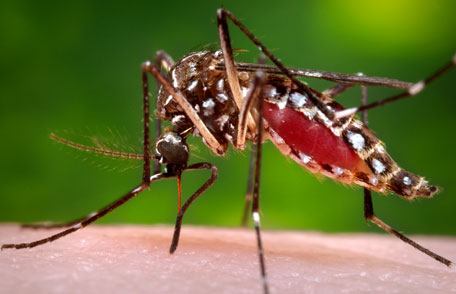
When a mosquito bites you, you are the __________ and the mosquito is the  ____________.
a)
host, hostess
b)
parasite, host
c)
host, parasite
d)
prey, predator
12.
a)
Parasitism
b)
Mutualism  
c)
Commensalism 
d)
Predation
13.
If a hawk eats a snake, the snake is the...
a)
Predator
b)
Alpha
c)
Prey
d)
Mutualistic partner
14.
An animal that eats only plants is an...
a)
carnivore
b)
omnivore
c)
herbivore
d)
decomposer
15.
A connection of food chains with many food energy paths in an ecosystem is a ____________
a)
ecosystem
b)
food web
c)
environment
d)
population
16.
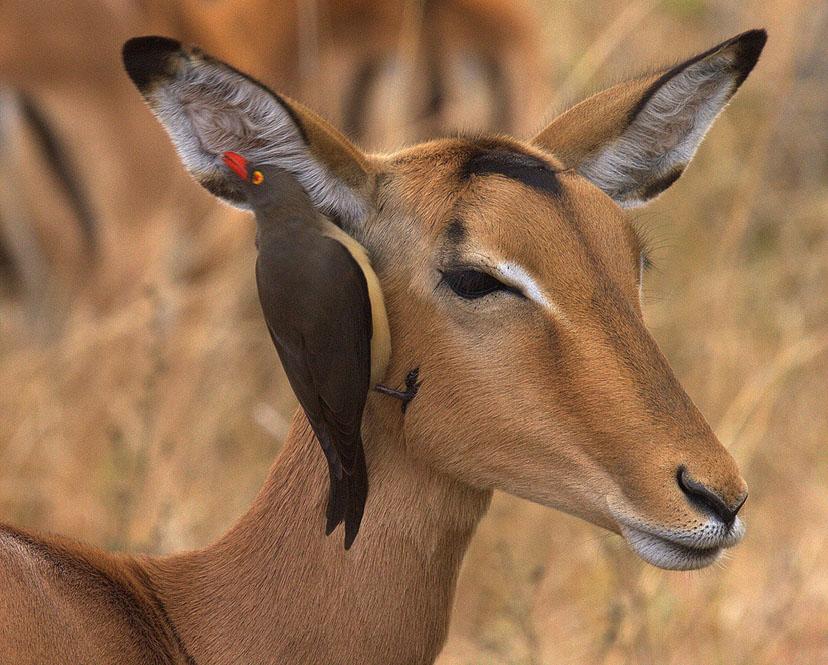
Red-billed oxpeckers are birds that often feed on parasites that infest impala.  This is an example of _______.
a)
commensalism
b)
mutualism
c)
neutralism
d)
competition
17.

Aphids are tiny insects that live on and eat the leaves of plants, removing vital nutrients from the plants.

a)

Predation

b)

Parasitism

c)

Commensalism

d)

Mutualism

18.

Clown fish live among anemones, acting as a lure for the sea anemone's prey. The clown fish get protection and shelter from the anemone. This is an example of which type of symbiosis?

a)

Commensalism

b)

Mutualism

c)

Parasitism

19.

A bee and a flower work together to benefit each other. This is an example of a ______. The bee helps the flower by pollinating it and the flower helps the bee by providing it with nectar.

a)

commensalistic relationship

b)

parasitic relationship

c)

mutualistic relationship

20.

Lactobacilli are a type of bacteria that live in our lungs and destroy many of the microorganisms that enter our respiratory system. They are highly adapted to living in our lungs and can't survive in many other habitats.

a)

mutualism

b)

commensalism

c)

parasitism