wayground logo

Free Printable Worksheets

NEW

Font size

S
M
L
XL
Worksheets

Enzymes

Total questions: 25

Worksheet time: 21mins

Name
Class
Date
1.

Which category of macromolecules do enzymes belong to?

a)

Carbohydrates

b)

Proteins

c)

Fats/Lipids

2.

What does an enzyme need in order to work properly?

a)

The right amount of oxygen & CO2

b)

The right temperature & amount of water

c)

The right temperature & pH

d)

The right temperature & pressure

3.

Enzymes are specific. This means that an enzyme only works with molecules that are....

a)

the right size and shape

b)

broken down already

c)

present in water

d)

too big for the body to handle

4.

What does the term optimum mean for enzyme temperature?

a)

The lowest temperature at which the enzyme works

b)

The temperature which gives the highest enzyme activity

c)

The temperature which gives the lowest enzyme activity

d)

The highest temperature before denaturing occurs
5.
Enzymes are...
a)
nucleic acids
b)
proteins
c)
lipids
d)
carbohydrates
6.
Where do substrates bind on an enzyme?
a)
voltage-gated channels
b)
surface receptor
c)
calcium channels
d)
active site
7.
What is another name for enzymes?
a)
chemical catalysts
b)
microorganisms
c)
biological catalysts
d)
inorganic catalysts
8.
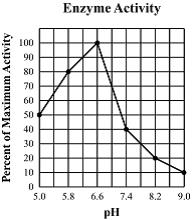
Which of the following conclusions can be drawn from this graph?
a)
The optimum pH of the enzyme is 6.6.
b)
The optimum pH of the enzyme is 5.8
c)
The enzyme’s activity increases as pH increases 5.0 to 9.0
d)
The enzyme’s activity is greater around pH of 8.0 .
9.
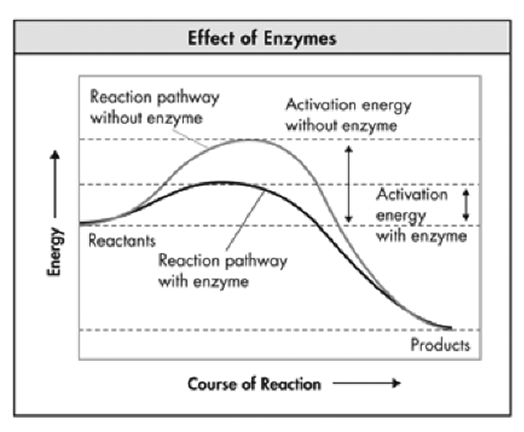
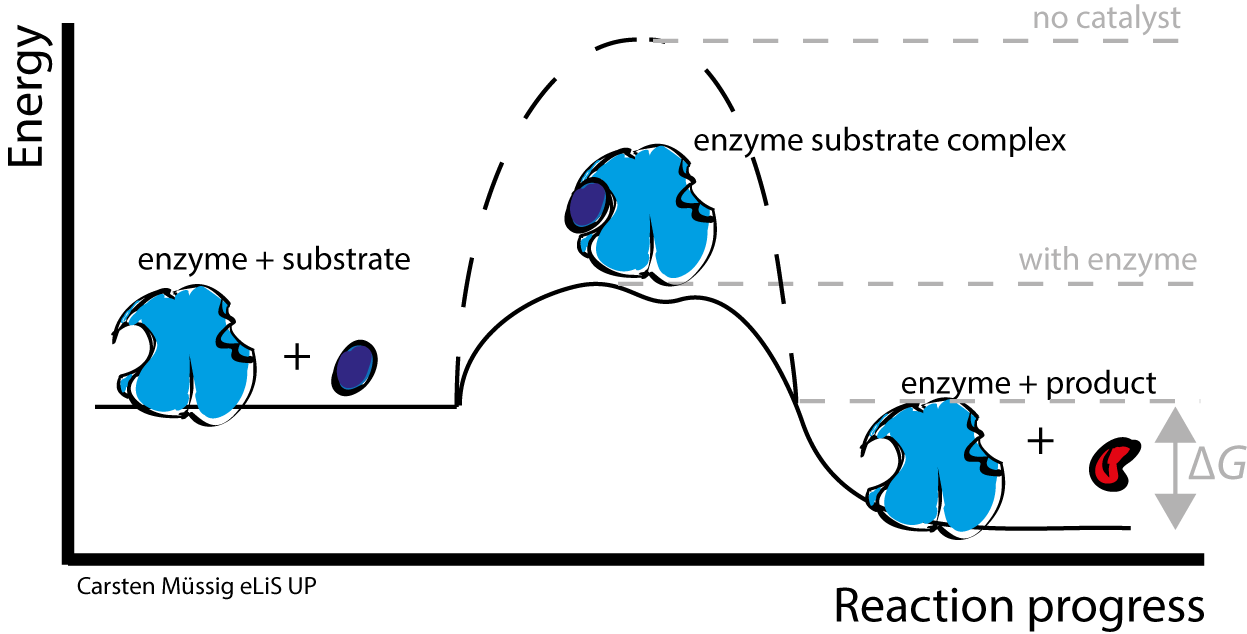
The graph shows how enzymes affect reactions in cells. Which statement best summarizes the information shown in the graph?
a)
Enzymes increase the energy of the reactants.
b)
Enzymes decrease the energy level of the products.
c)
Enzyme decrease the activation energy of the reaction.
d)
Enzymes reverse the direction of the reaction.
10.
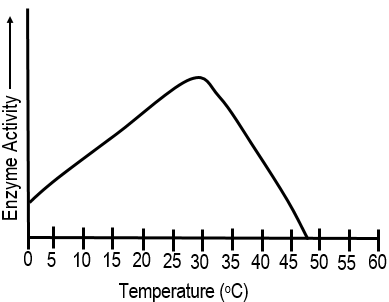
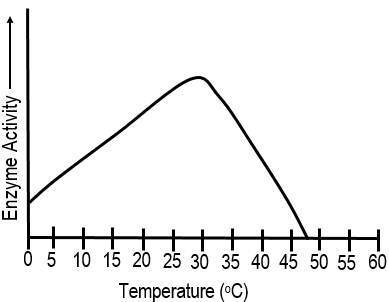
Based on the graph, what is the optimal temperature for this enzyme? 
a)
15oC
b)
40oC
c)
30oC
d)
35oC
11.
What is the function of an enzyme?
a)
enzymes break themselves into small pieces
b)
enzymes slow down chemical reactions
c)
enzymes speed up chemical reactions
d)
enzymes combine products to form reactants 
12.
Any substance that is acted upon by an enzyme is called a(n)?
a)
Coenzyme
b)
Substrate
c)
Vitamin
d)
Polypeptide
13.
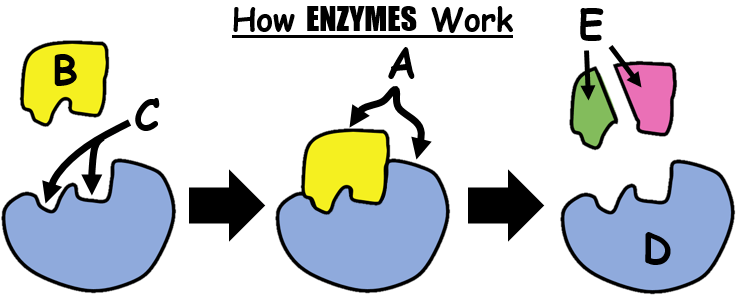
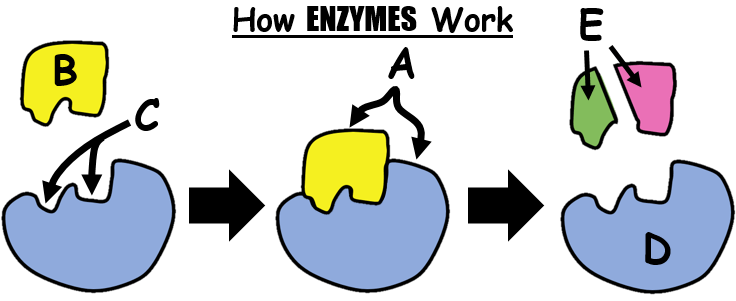
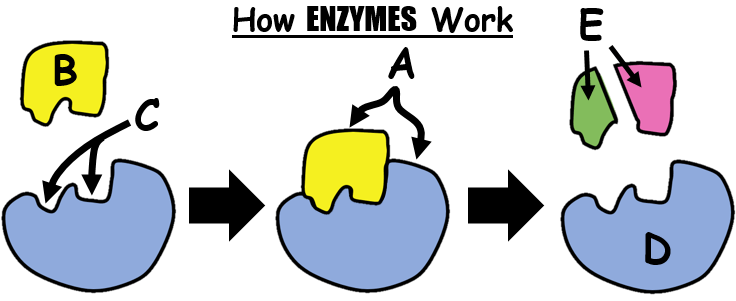
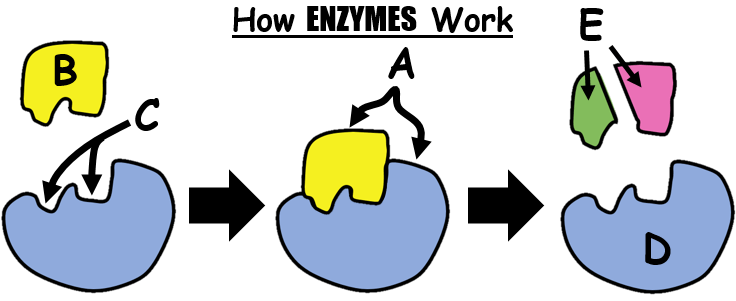
Letter D...
a)
active site
b)
enzyme
c)
substrate
d)
products
14.
Letter B...
a)
active site
b)
enzyme
c)
substrate
d)
products
15.
Letter C...
a)
active site
b)
enzymes
c)
substrate
d)
products
16.
Letter E...
a)
active site
b)
enzyme
c)
substrate
d)
products
17.
An enzyme speeds up a reaction by
a)
lowering the activation energy.
b)
raising the activation energy.
c)
releasing energy.
d)
absorbing energy.
18.

What happens when enzymes are heated to a high temperature?

a)

The enzymes die.

b)

The shape of the enzyme are changed and it denatures

c)

The enzymes' amino acid sequence changes.

d)

The enzymes remain the same

19.
The molecule an enzyme is working on is called the:
a)
Substrate
b)
Solvent
c)
Allosteric Inhibitor
d)
CoEnzyme
20.
Based on the graph, what temperature does this enzyme work best? 
a)
15 C
b)
40 C
c)
30 C
d)
47 C
21.
Enzymes will make a reaction go _______ and use ______ energy.
a)
faster, less
b)
faster, more
c)
slower, less
d)
slower, more
22.
Enzymes are composed of which of the following monomers? 
a)
amino acids
b)
carbohydrates
c)
nucleotides
d)
monosaccharides
23.
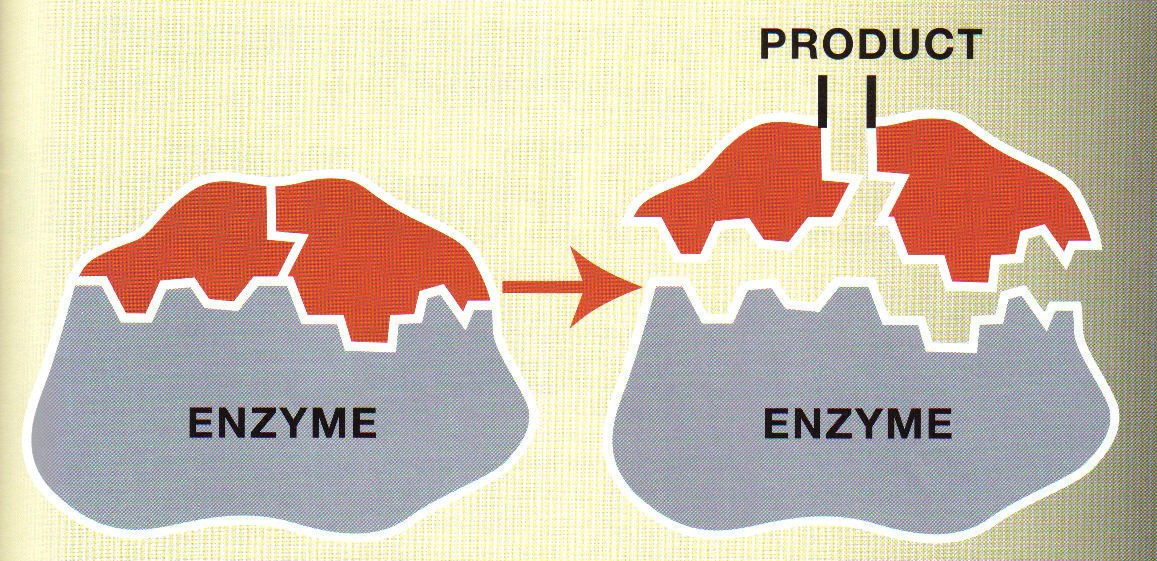
After the enzyme and substrate bind together and perform the reaction, what does the substrate become?
a)
a substrate
b)
an enzyme
c)
a product
d)
an active site
24.

Why can't a substrate bind to an enzyme when it is denatured?

a)

The substrate changes shape

b)

The product changes shape

c)

The enzyme-substrate complex changes shape

d)

The active site changes shape

25.

What determines the specific shape of an enzyme?

a)

The sequence of glucose molecules in the carbohydrate chain

b)

The sequence of amino acids in the protein chain

c)

The sequence of fatty acids in the lipid

d)

The sequence of proteins in the amino acid chain