wayground logo

Free Printable Worksheets

Font size

S
M
L
XL
Worksheets

12. Cellular Transport

Total questions: 20

Worksheet time: 18mins

Name
Class
Date
1.
Moving from areas of LOW concentration to areas of HIGH concentration is called?
a)
Passive Transport
b)
Active Transport
c)
Diffusion
d)
Osmosis
2.
What means of particle transport requires energy?
a)
passive
b)
active
c)
facilitated
d)
osmosis
3.
What is the diffusion of water through a selectively permeable membrane?
a)
active transport
b)
osmotic pressure
c)
facilitated diffusion
d)
osmosis
4.
Diffusion is the movement of particles
a)
from low to high concentration
b)
from  high to low concentration
c)
from equilibrium to areas of high concentration
d)
all of the above
5.
What is it called when a cell is placed in a solution that has a greater concentration on the outside of the cell than inside?
a)
Hypotonic
b)
Hypertonic
c)
Isotonic
d)
Osmosis
6.
____ is the molecule that provides energy for active transport.
a)
DNA
b)
ADP
c)
ATP
d)
RNA
7.
When there is the same concentration of solute molecules outside the cell as inside.
a)
Hypotonic
b)
Hypertonic
c)
Isotonic
d)
Homeostasis
8.

Which type of transport does NOT require energy?

a)

osmosis

b)

passive transport

c)

diffusion

d)

All are correct

9.
Where is there a high concentration of bbq smoke?
a)
In the bbq pit
b)
In the house
c)
Two streets over
d)
In the atmosphere
10.
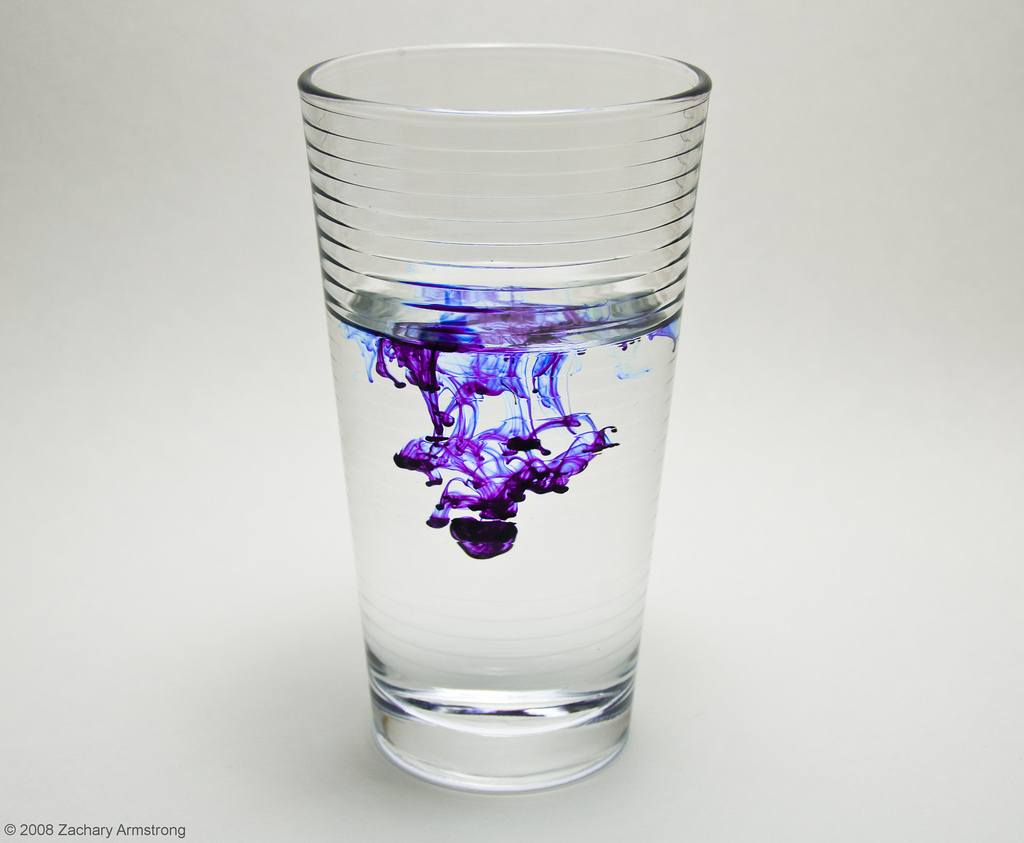
Where is there a low concentration of dye?
a)
at the bottom of cup
b)
in the color
c)
at the top of cup 
d)
no concenteraion gradient
11.
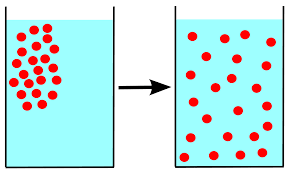
The picture below is an example of _________________.
a)
osmosis
b)
isotonic
c)
diffusion
d)
active transport
12.

How long does diffusion last?

a)

Until the concentration of particles in the system is equal

b)

(Select this answer and I swear i'll make it harder for you in the assessment task)

c)

Until a region in the system has a greater concentration of particles than the other

d)

Until the particles disappear from the system

13.
Osmosis is the movement of _____ across a membrane.
a)
food
b)
energy
c)
oxygen
d)
water
14.
A person should never drink salty water because their cells would
a)
shrink
b)
expand
15.
In this image, the cell is using which type of molecular transport?
a)
Osmosis
b)
Diffusion 
c)
Endocytosis
d)
Exocytosis 
16.

The diagram shows a cell in a solution.

If the dots represent sugar which solution is more concentrated?

a)

Inside the cell

b)

Outside the cell

c)

Neither they are equal (equilibrium)

17.

The diagram shows a cell in a solution.

If the dots represent sugar, what direction will water flow?

a)

Into the cell

b)

Out of the cell

c)

Into and out equally (equilibrium)

18.

The diagram shows the percentage of sugar in the beaker and in the cell.

In what direction will water flow?

a)

Into the cell

b)

Out of the cell

c)

Into and out equally (equilibrium)

19.

A substance that can be dissolved by a solvent to create a solution

a)

Solvent

b)

Solute

c)

Solution

20.

The diagram shows water leaving a red blood cell.

The cell below is in a _________ solution.

a)

Strong

b)

Weak