
 Worksheets
Periodic properties and variations
Total questions: 25
Worksheet time: 13mins
who classified elements into triads
Newland
Mendeleeff
Dobereiner
none of these
Moseley's table was based on
triad
atomic weight
atomic number
ISOTOPES
HORIZONTAL ROWS
groups
periods
tables
field
Across a period, the ionization potential_________
Increases
Decreases
none of the above
Remains the same
Down the group, electron affinity __________
increases
none of the above
Remains the same
Decreases
The most reactive non-metals comprise Group__________ of the Periodic Table.
15
17
16
14
Identify the element belonging to third period and 17th group of the periodic table.
Bromine
Silicon
Sulphur
Chlorine
An element having electronic configuration 2, 8, 18, 3 belongs to which group of the Modern
Periodic Table?
13th group
3rd group
15th group
18th group
Among the elements given below, the element with the least electronegativity is:
Carbon
Fluorine
Boron
Lithium
The non-metals are present
On the left hand side of the periodic table
On the right hand side of the periodic table
In the middle of the periodic table
In the center of the periodic table
The metallic character of elements across the period from left to right.
Increases
First Decreases than increases
First Decreases than increases
Decreases
Elements of Group 16 have 6 valance electrons. The valency of Group 16 elements is:
6
5
3
2
Number of shells across the period:
Decreases
All of above
Remains same
Increases
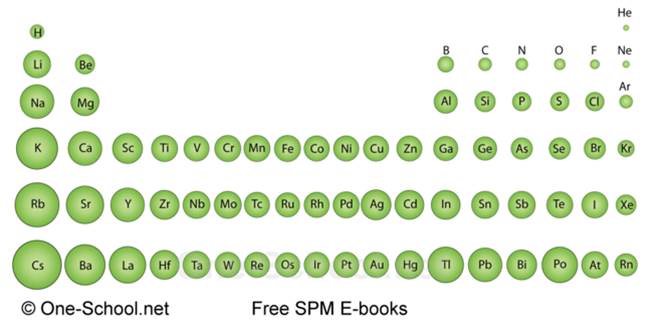
As you move across a row (period) on the periodic table, the atomic radius ______________________
Increases
Decreases
Stays the same
Explodes
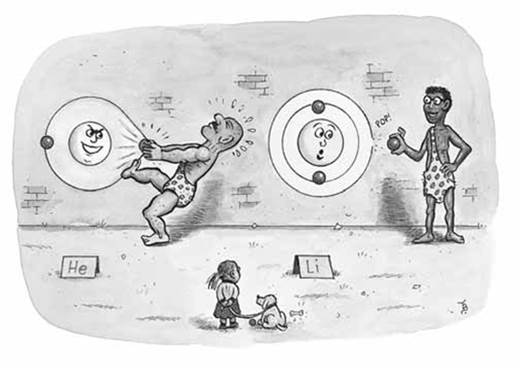
Ionization energy is the energy needed to _________ an electron.
Fission
Explode
Remove
Add
As you move across a row on the periodic table, ionization energy ______________________
Decreases
Increases
Stays the same
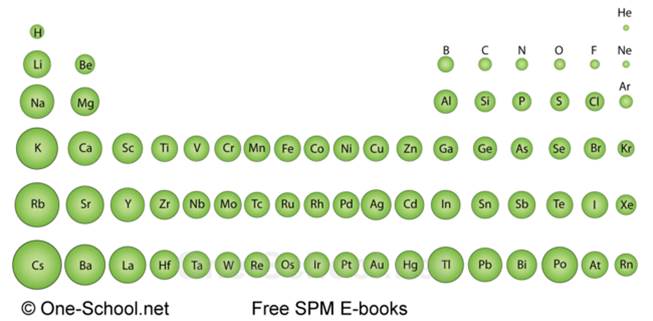
Which group of elements has the lowest ionization energy?
Group 1
Group 2
Group 3
Group 4
The number of protons in one atom of an element is that element’s
mass number.
balanced charge
atomic number
isotope
Which list of elements contains only metals?
carbon, iodine, tin
tin, copper, cesium
helium, iron, copper
iodine, carbon, argon
As you move from left to right across a period, the number of valence electrons
increase
stays the same
increases then decreases
decreases
Zero group elements
alkali metals
halogens
alkaline earth metals
noble gases
Period 3 has ....... shells
2
3
1
13
Silicon is a
noble gas
non metal
metal
metalloid
Amphoteric oxide
Na2O
MgO
Al2O3
P2O5
Which of these is a strong base
NaH
MgH2
AlH3
SiH4

