Worksheets
Change Over Time (Evolution)
Total questions: 10
Worksheet time: 6mins
Which of the following affects natural selection? Select all that apply.
overproduction
variation
age
competition
Helpful variations in a population become adaptations suited to a particular environment. The beak of a finch is an example of an adaptation that is suited to
the predators of the finch
the nesting site of the finch
the wing span of the finch
the food supply of the finch

Why did dark moths have a survival advantage when they were near factories?
They could hide in the birds shadow.
They could push the white moths into the flames.
They did not have a survival advantage.
They blended in with the dark tree trunks.

Which of the following provide evidence that evolution occurs? Select all that apply.
fossil record
similarities in animal behavior
similarities in body structure
variations in populations
similarities in early development

All are true statements, except...
The organisms look nearly identical at their first stage of development.
This image suggests that all of the animals have a common ancestor.
The tortoise and the fish look the most similar through development.
The rabbit and the human (man) look most alike because they are both mammals.
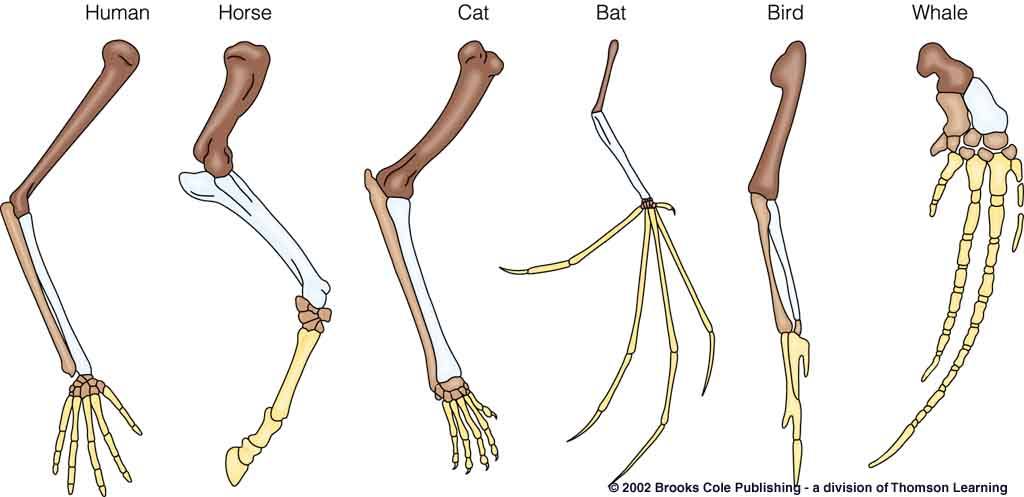
Which of the following pieces of evolution evidence deals with comparing similar structures in various species?
fossil record
comparative embryology
comparative biochemistry
comparative anatomy

Which describes how these limbs have changed over time?
The bones have become stronger.
The toes have reduced in number.
The bones have become shorter.
They have gained additional toes.

What conclusion can be made from this picture?
Whales and their ancestors have always been ocean dwellers.
Ancestors of whales had fewer bones than modern whales.
Whales and their ancestors have always been ocean dwellers.
Ancestors of whales may once have been able to walk.