
 Worksheets
Exposure Triangle
Total questions: 36
Worksheet time: 40mins
Which adjustment changes sensitivity to light?
Shutter Speed
Aperture
ISO
Which adjustment changes the speed in which the shutter opens and closes?
Shutter Speed
Aperture
ISO
Which adjustment can give you more or less blur in the background?
Shutter Speed
ISO
Aperture
If I raise the number of my ISO, does my image get brighter or darker?
Brighter
Darker
Doesn't change
Which adjustment can give your image more grain/noise?
Aperture
ISO
Shutter Speed
If you want a brighter image, do you need a higher number aperture or smaller number aperture?
Higher
Smaller
Doesn't Change
If you want more in focus in your image, do you need a higher F-number or smaller F-number?
Higher
Smaller
Impossible
Which adjustment is measured in fractions of a second?
Shutter Speed
ISO
Aperture
F-stop
Which is a better shutter speed setting for a moving subject: 1/30 or 1/500?
1/30
1/500


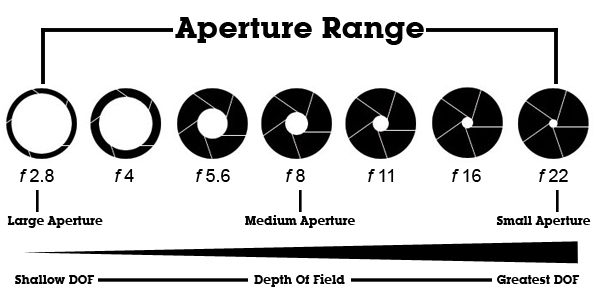

True or False: All photography is based on light.
True
False

Exposure is a measure of how dark or bright a photograph is.
True
False
If you only want your subject in focus, and the rest of the image blurred, what aperture would work best for you?
f4
f10
f22
f16
If you are shooting a fast moving sporting event, what shutter speed should you use?
1/60
1/125
1/500
1'
If you want to blur a waterfall, what shutter speed might you use?
1/20
1/250
To create an image where one thing is in focus but the rest is blurred, the photographer would use _____.
Post editing
Shutter Speed
ISO
aperture
Once a photographer has their ISO, Aperture, and Shutter speed set, they will never have to touch those settings again for any other environment.
True
False
To capture motion in a photograph, the photographer would ____ ____ the shutter.
not use
slow down
speed up
Which of the following apertures produce the deepest depth of field?
F 1.4
F 8
F 11
F 22
The best way to control exposure on an image is to use
ISO
Aperture
Shutter Speed
All three
An image that is too bright is
over exposed
under exposed
An image that is too dark is _____.
over exposed
under exposed

This image shows a
fast shutter speed
slow shutter speed

This image shows a
fast shutter speed
slow shutter speed
What unit of measurement is used for ISO, aperture, and shutter speed?
(a)
Each bar/click on the camera settings is equal to
1/3 Stop
1 Stop
1/4 Stop
1/3 Second
What type of light meter is built into the Canon Rebel T6i?
(a)
If I am adding 1 stop of light to my settings, I have (a) the amount of light.
If I want to decrease my exposure by 1 stop, I would change my shutter speed from 1/200 to_____.
1/400
1/200
1/500
1/1000
If I want to increase my exposure by 1 stop, I can change my aperture from f8 to_____.
f5.6
f11
f16
f22

