wayground logo

Free Printable Worksheets

Font size

S
M
L
XL
Worksheets

Unit 1a midpoint review

Total questions: 23

Worksheet time: 15mins
Name
Class
Date
1.
The summary at the end of an experiment that explains the results is... 
a)
conclusion
b)
procedures
c)
materials
d)
responding variable
2.
What is the first step in the scientific method?
a)
Make an observation --> Question
b)
Design and conduct an experiment
c)
Make an hypothesis
d)
Share your results
3.
A testable prediction about a scientific investigation is a(n)
a)
Question
b)
Observation
c)
Hypothesis
d)
Experiment
4.
Stephen predicted that seeds would start to grow faster if an electric current traveled through the soil in which they were planted.
a)
recognize a problem
b)
test the hypothesis with an experiment
c)
form a hypothesis
d)
draw conclusions  
5.

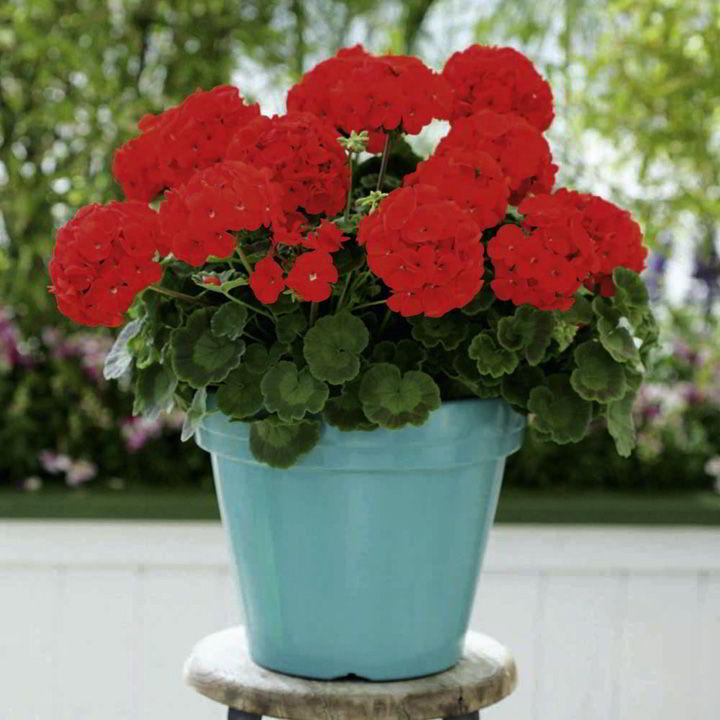
Susan said, “If I fertilize my geranium plants, then they will have more flowers.”

a)

recognize a problem

b)

test the hypothesis with an experiment

c)

form a hypothesis

d)

draw conclusions

6.

Susan said, “If I fertilize my geranium plants, then they will have more flowers.”

a)

recognize a problem

b)

test the hypothesis with an experiment

c)

form a hypothesis

d)

draw conclusions

7.
Information you obtain through your senses, such as touch, sound and sight.
a)
observation
b)
hypothesis
c)
question
d)
conclusion
8.
A prediction or guess based on observations.
a)
data
b)
scientific process
c)
hypothesis
d)
question
9.

Which of the following is an observation about this picture?

a)
The boy has fallen off his bike.
b)
The boy is in a lot of pain.
c)
The boy has injuries to his knees
d)
The boy learned his lesson about wheelies
10.

Scenario: you walk into the science classroom and see an unfamiliar adult at the front of the room. You also see that Mrs Waterhouse is not in the room. You wonder where she could be. Which of these is an inference?

a)
You walk into science.
b)
You see an unfamiliar adult.
c)

You do not see Mrs. Waterhouse

d)

"Maybe she's home sick today" 

11.

Which of these statements is an inference about this picture?

a)
There is a red candle on the window sill.
b)
The moon is full.
c)
It is Christmas time.
d)
There's snow on the tree.
12.

Which of the following is an observation about the man in this picture:

a)
The man hates his purple shirt.
b)
The man has a purple shirt.
c)
The man is having a bad day.
d)
This man is upset because he's hungry
13.
Observations like measurements are ____________ observations
a)
quantitiative
b)
qualitative
c)
operational
d)
scientific
14.
Observations like the color or texture of an object are ________________ observations.
a)
quantitative
b)
qualitative
c)
operational
d)
scientific
15.

This variable is the one thing that changed on purpose...

a)

Dependent Variable

b)

Control

c)

Independent Variable

16.

What is the DEPENDENT variable (effect) in this experiment?


"Does eating breakfast improve test scores?"

a)

eating breakfast or not

b)

the grade you got on the test

c)

what time you get up in the morning

d)

how tasty the breakfast is

17.

You are testing how the amount you water a plant affects its growth. What would be the INDEPENDENT VARIABLE in this experiment.

a)

They type of pot you put the plants in.

b)

The amount you water each plant.

c)

The amount of sunlight the plants get.

d)

The amount the plant grows.

18.

The things that are kept the same to ensure the results are due to the experiment is called..

a)

Constant

b)

Dependent Variable

c)

Independent Variable

19.

This part of the experiment serves as a comparison, or a baseline

a)
experimental group
b)
control group
c)
data
d)
variables
20.

When is a hypothesis written?

a)

before you decide on a question

b)

after the experiment

c)

before the experiment

d)

after the conclusion

21.
Scientific theories are based on
a)
general assumptions of how systems work.
b)
mathematical principles that can be proven true.
c)
large amounts of data collected over time.
d)
observations from within only one scientific discipline.
22.

Which of these explain how a natural phenomenon works or happens?

a)

theory

b)

law

23.
What is a law?
a)
Describes what happens
b)
Explains a process