
 Worksheets
Biomolecules Test Review
Total questions: 20
Worksheet time: 13mins

A student makes a Venn diagram to compare the functions of carbohydrates and lipids.
Which cellular function of carbohydrates and lipids should be placed in the shared section of the Venn diagram?
hormone production
structural support of cell walls
energy storage
catalyst for chemical reactions

A table of four types of carbohydrates is shown.
Which list correctly matches the functions to the types of carbohydrates?
Energy: glycogen and starch
structure: cellulose and chitin
Energy: cellulose and chitin
Structure: glycogen and starch
Energy: chitin and glycogen
Structure: cellulose and starch
Energy: cellulose and starch
Structure: chitin and glycogen
An advertisement for a health supplement for dogs claims to build lean muscle and strengthen tendons and ligaments, as well as provide energy. Which two biomolecules must the supplement contain to provide these benefits?
Carbohydrates and lipids
Proteins and carbohydrates
Nucleic acids and carbohydrates
Lipids and nucleic acids
For an enzyme to be able to catalyze a reaction, the active site must -
be occupied by an inhibitor
increase the activation energy level
have a complementary shape to the substrate
cause the enzyme to be destroyed in the reaction
Enzymes are proteins that have a three-dimensional shape that is specific to a particular substrate. Environmental conditions can change the shape of the protein.
What is the most likely result f the shape of the enzyme changes?
The substrate will change its shape to match the enzyme.
The enzyme will be able to bind to more diverse substrates than before
The products made from the enzyme and substrate will be changed.
The enzyme will no longer be able to catalyze the reaction with the substrate.

The graph shows the reaction rate for an enzyme across a range of temperatures and pH.
Based on these data, this enzyme functions best at what temperature and pH?
Temperature of 27°C and pH of 4
Temperature of 37°C and pH of 6
Temperature of 40°C and a pH of 8
Temperature of 50°C and pH of 10
Biochemical reactions that require high temperatures to proceed are able to take place at body temperature within the cells of living organisms. Which factor is mainly responsible for allowing biochemical reactions to proceed at body temperature?
The cellular enzymes act as catalysts.
The small size of cells keeps reactants together.
The pH of the cytoplasm increases reaction rate.
The reactants are present in small quantities in the cell.
Many people are lactose intolerant and cannot digest dairy products. What enzyme are their bodies most likely lacking?
lipase
lactase
maltase
protease
Which is a function of lipids?
to supply cells with quick–release energy
to provide the body with insulation
to store genetic information
to regulate cell processes
Which best explains the function of the sequence of nucleotides?
It provides energy.
It carries genetic information.
It allows DNA to be successfully copied.
It determines the shape of the DNA molecule.
What are the subunits of DNA and their function?
nucleotides that store information
monosaccharides that provide quick energy for the cell
lipids that store energy and provide insulation
proteins that provide the building blocks for the structural components of organisms
Which organic molecule is primarily used by cells as a source of energy?
amino acid
fatty acid
glucose
protein
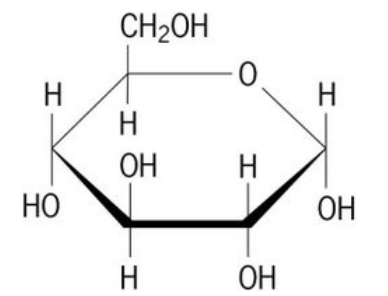
What are the three main functions of Carbohydrates.
Short term energy, storage of energy, structure for plants and insects
catalyst, immune system support, hair and nails
Stores genetic information, hereditary information
long term energy, water proof, insulation
What are the three main functions of a Protein?
Short term energy, storage of energy, structure for plants and insects
Catalyst, immune system support, structure for hair and nails
Stores genetic information, contains hereditary information
long term energy, water proof, insulation
When a molecules inhibits an enzyme..
the enzyme is still able to function
the enzyme is no longer able to function
the enzyme is ruined forever
the enzyme dissolves into amino acids

