
 Worksheets
IGCSE CS: Ch.1 Number bases (CIE 0478, 23-25)
Total questions: 16
Worksheet time: 15mins
Computers store and transmit information using _________ digits.
Denary
Binary
Octal
Hexadecimal
Octal numbers use digits from 0 to ________.
8
1
7
F
01101000 + 00110100 = ________
11011100
10011100
10011100
01111100
Logically shifting all the digits of a binary number one place to the LEFT is the same as...
Multiplying the number by -1
Multiplying the number by 2
Dividing the number by 2
Dividing the number by 0
Convert the following decimal numbers into hexadecimal: 10, 12, 13, 16.
A, C, D, 10
A, C, E, F
A, C, D, F
A, C, E, 10
What is the decimal equivalent of the binary number 10110110 (using two's complement form)?
-74
182
-72
150
When you convert HEX E3A7 to binary, what are the first four digits (i.e. the four leftmost digits) of the resulting binary number?
0111
1010
1000
1110
How many sixty-fours are there in the number OCT 731?
(a)
Draw to add the two binary numbers in this image. Show any carry digits.
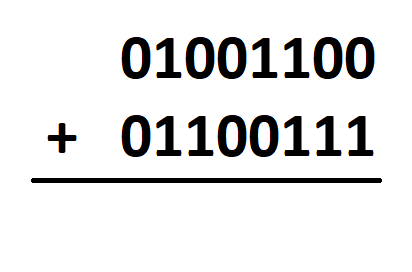
Base 3 numbers are also called ternary numbers. The last digit in a ternary number is the "one" place, and the second-last digit is the "three" place. What value does the fifth-last digit represent?
(a)
Which of the following is TRUE about binary numbers in two's-complement form?
They can only represent numbers half as large as numbers in normal form
The lowest (rightmost) digit indicates the number's sign (+ve/-ve)
They can only represent half as many negative numbers as positive ones
They must always have eight digits
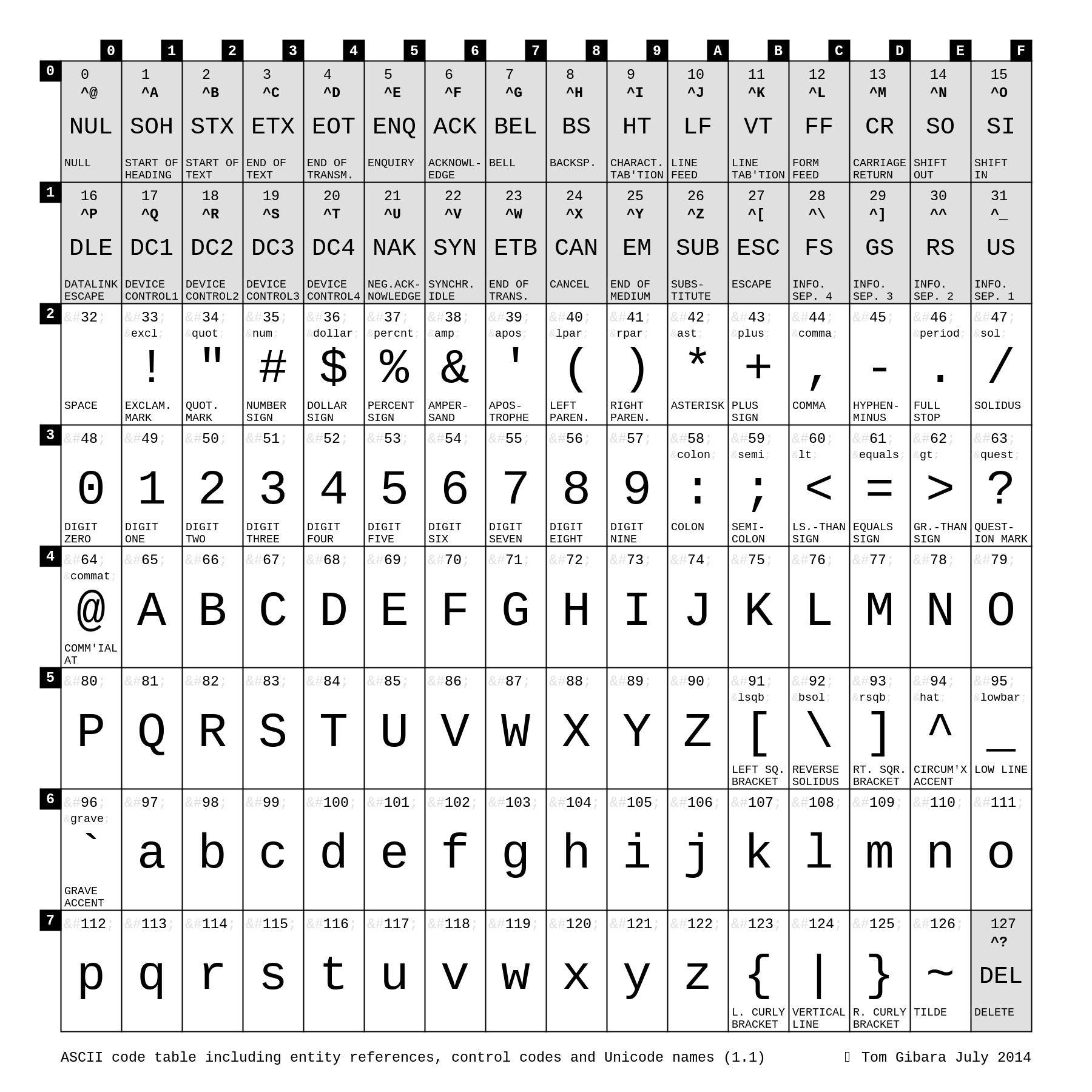
Mr. Dan sends you the following hexadecimal-encoded message: 46 75 68 6F. What does this message say when decoded using ASCII code (see image)?
(a)
A number has six ones, three eights, and two sixty-fours. Write this number in octal form.
(a)
A number has a one, no twos, a four, no eights, no sixteens, a thirty-two, and a sixty-four. Write this number in eight-bit binary form.
(a)
A number has seven ones, eleven sixteens, three two-hundred-and-fifty-sixes, and twelve four-thousand-and-ninety-sixes. Write this number in hexadecimal form.
(a)
POLL (open answer): How confident do you feel with number bases so far?
100%–90%: I'm pretty good with all of it
89%–70%: There are a few things I don't understand, but it's getting better
69%–55%: I'm a bit lost and need some help
<54%: I'm really struggling with them

