wayground logo

Free Printable Worksheets

Font size

S
M
L
XL
Worksheets

Year 12 Revision

Total questions: 199

Worksheet time: 3hrs 26mins

Name
Class
Date
1.
A flash flood carried a raft of Amazon ants away from their original population. There is enough distance between the two groups, that they will never meet in nature again. What type of reproductive barrier is this?
a)
behavioral isolation
b)
temporal isolation 
c)
gametic isolation
d)
geographic isolation 
2.
The flowers of pink tulips open in the morning, while the flowers of lavender tulips open in the early afternoon. The bees that pollinate these tulips cannot carry pollen back & forth between the two types of tulips because of their flowers being closed at different times of day. What type of reproductive barrier is this?
a)
behavioral isolation
b)
hybrid sterility 
c)
temporal isolation
d)
mechanical isolation 
3.
The term for the formation of new and distinct species over the course of evolution is...
a)
speciation
b)
biological species concept
c)
reproductive barrier
d)
natural selection
4.
What is a species? 
a)
A group of organisms that can mate with each other and produce fertile offspring. 
b)
A group of organisms that can mate and produce offspring even if those offspring are infertile.
c)
A group of organisms that genetically are very different from each other. 
d)
Indivual organisms that live in the same environment. 
5.

A new river forms and splits two populations, causing ______________ speciation

a)

Sympatric

b)

Allopatric

c)

Extreme

d)

Convergent

6.

Orcas occur in the same habitat but some are avoiding each other and do not interbreed. They have different diets, vocal behavior, and social structures. What type of speciation is this?

a)

Allopatric

b)

Sympatric

c)

Complex

d)

Covergent

7.

when the organism develops different courtship rituals which do not attract main population this is a part of ____________ speciation.

a)

Allopatric

b)

Sympatric

c)

Simple

d)

Temporal

8.

The emergence of a mountain range is an event that would lead to _______________ speciation

a)

Allopatric

b)

Sympatric

c)

Temporal

d)

Behavioral

9.

The emergence of new rivers or streams is a type of ____________ isolation.

a)

Temporal

b)

Mechanical

c)

Behavioral

d)

Geographic

10.

When the Grand Canyon in Arizona formed, two populations of one squirrel species were separated by the giant canyon. This is an example of _____________ speciation.

a)

Allopatric

b)

Sympatric

c)

Simple

d)

Divergent

11.

Different finch populations lived on separate islands with different environments. They evolved to best adapt to those particular environments and can no longer mate. What type of speciation is this?

a)

Allopatric

b)

Sympatric

c)

Temporal

d)

Mechanical

12.

The Western Skunk mates in the fall and the Eastern Skunk mates in the spring. This is a type of

a)

prezygotic barrier

b)

postzygotic barrier

c)

allopatric barrier

d)

polyploidy

13.
A bumble bee has just enough weight to open up the snapdragon flower and get the nectar/pollen inside.  Other insects cannot do this. This adaption is an example of........
a)
convergent evolution
b)
co-evolution
c)
divergent evolution
d)
speciation
14.

The large-scale events of speciation are called...

a)

macroevolution

b)

simplification

c)

adaptation

d)

microevolution

15.

Which of the following statements accurately describes the role of mutations in evolution

a)

Mutations are the raw material for evolution, but most mutations do not result in evolution.

b)

Most mutations result in a species becoming more dangerous or aggressive.

c)

An organisms can decide to mutate if the environment makes a mutation necessary for survival.

d)

Mutations are almost always beneficial for an individual.

16.

During microevolution, a(n) __________________ will become more or less common within a population.

a)

species

b)

allele

c)

ribosome

d)

fossil

17.

Which of the following is required for a population to diverge into two separate species?

a)

The two populations must have evolved different physical appearances.

b)

The two populations must have mutated at least 10 times.

c)

The two populations must have become reproductively isolated.

d)

The two populations must have evolved analogous structures.

18.

Which of the following means "genetic changes in a species over time"

a)

natural selection

b)

speciation

c)

evolution

d)

fitness

19.

Which are causes of speciation? Choose all that apply

a)

Isolation caused by mountains, rivers and man-made structures

b)

preference for different foods

c)

change in environment

d)

different mating behaviors

20.

Species not closely related evolve similar traits due to their similar environment

a)

Convergent evolution

b)

divergent evolution

c)

parallel evolution

21.

Species from very different areas of the world evolve in a similar manner in order to survive

a)

convergent evolution

b)

parallel evolution

c)

divergent evolution

22.

Species from the same ancestor accumulate differences over time

a)

convergent evolution

b)

divergent evolution

c)

parallel evolution

23.

The three species pictured do not share a common ancestor, yet have evolved to have a similar anatomy and life style. This is an example of ?

a)

Homologous Structures

b)

Divergent Evolution

c)

Vestigial Organs

d)

Convergent Evolution

24.

The three species pictured share a common ancestor and have adapted so that each lives in a different environment. This is an example of

a)

Law of Superposition

b)

Evolutionary Arms Race

c)

Divergent Evolution

d)

Convergent Evolution

25.

The yucca moth depends on the small soap weed for food, and the small soap weed is only pollinated by the yucca moth. This is an example of

a)

Evolutionary Arms Race

b)

Convergent Evolution

c)

Coevolution

d)

Adaptive Radiation

26.
What is the term for a feature that allows an organism to survive in its environment?
a)
adaptation
b)
variation
c)
homologous structure
d)
vestigial structure
27.
All the individuals of a species that live in a particular area are called a 
a)
group
b)
population
c)
variation
d)
fossil
28.
In the graph shown, how many species of lizards seem to have beneficial adaptations?
a)
1
b)
2
c)
3
d)
4
29.
What most likely caused the finches on the Galapagos Islands to have beaks that were differnt from the finches living on the South American mainland?
a)
They were different types of food available on the island.
b)
The finches on the islands had to drink salt water.
c)
There were different types of predators living on the island.
d)
The finches on the mainland built different types of nests.
30.
Mutations are important because they bring about
a)
death of the organism in which they develop
b)
genetic variation needed for a population to evolve
c)
benefits for the individual, not for the population
d)
Hardey-Weinberg equilibrium within a population
31.
What increases genetic variation when animals move from one population to another
a)
genetic drift
b)
sexual selection
c)
bottleneck effect
d)
gene flow
32.
This mechanism of evolution occurs when populations migrate.
a)
Extinction
b)
Gene flow
c)
Genetic drift
d)
Natural Selection
33.

A yellow morph and green morph of an insect lives in the rainforest canopy. You would expect:

a)

the green population to increase and the yellow to decrease

b)

both populations should stay the same

c)

both populations will increase

d)

the green population to decrease and the yellow to increaseThis is a wrong answer
34.
Darwin said that within a species there will be _________________________
a)
nothing different
b)
variation/differences
35.

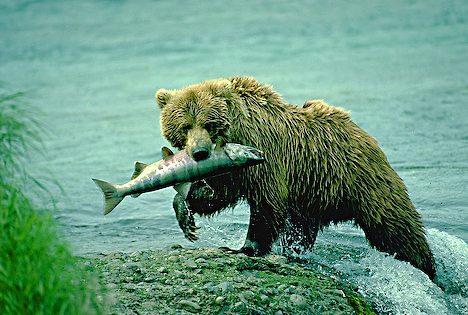
A grizzly bear survives because he is well-adapted to his environment. When he reproduces he passes on those traits to his offspring. this process is called

a)

Natural Selection

b)

Selective Breeding

c)

Random mutations

d)

Variations in a species

36.

A random change in allele frequencies over generations brought about by chance.

a)

genetic drift

b)

gene flow

37.

In the 1800s, hunters killed all but twenty of a large population of northern elephant seals

a)

genetic drift

b)

gene flow

38.

Emigration

a)

genetic drift

b)

gene flow

39.

May result when heterozygotes are selected AGAINST.

a)

directional selection

b)

stabilizing selection

c)

disruptive selection

40.

Phenotypic forms at both ends of the range are favored and the intermediate forms are selected against.

a)

directional selection

b)

stabilizing selection

c)

disruptive selection

41.

Type of selection that was seen in the beak size of the ground finch during times of drought

a)

directional selection

b)

stabilizing selection

c)

disruptive selection

42.

Cockroaches becoming increasingly resistant to pesticides is an example of

a)

disruptive selection

b)

genetic drift

c)

directional selection

d)

stabilizing selection

43.
A virus killed most of the seals in the North Sea (e.g. dropped the population from 8000 to 800).  In an effort to help preserve the species, scientists caught 20 of the remaining seals and used them to start a new population in the northwest Pacific Ocean.  Which of the following statements would accurately describe the new   population?  
a)
The new seal population is genetically less diverse than the original population 
b)
The new seal population is genetically more diverse than the original population
c)
There is equal genetic variety compared  to the original population 
d)
None of the answers
44.

Genetic drift (bottleneck or founder) tends to ___________ genetic variation (diversity)

a)
Increase
b)
Decrease
c)
Stabilize
d)
Exaggerate 
45.
Gene Flow tends to ___________ genetic variation (diversity)
a)
Increase
b)
Decrease
c)
Stabilize
d)
Exaggerate 
46.
Why are advantageous traits more likely to be passed onto offspring?
a)
Because they are more likely to survive and reproduce.
b)
Because they come from dominant alleles.
c)
Because they come from recessive alleles.
d)
Because the trait is an acquired phenotype.
47.

Which is NOT an example of a genotype?

a)

YY

b)

Yy

c)

Y

d)

yy

48.

The genotype Dd is...

a)

homozygous

b)

heterozygous

49.

Chromosomes are only inherited from one parent.

a)

True

b)

False

50.

If brown (B) is dominant and red (b) is recessive for hair color. What is the phenotype of (Bb)?

a)

brown hair

b)

red hair

51.

The phenotype are the physical traits that are expressed in an organism.

a)

True

b)

False

52.

Coat color in a dog breed is determined by incomplete dominance where three colors are produced (Brown, tan and white), and the brown coat allele (B) has incomplete dominance over the white coat allele (b). Which offspring ratio would be expected from a cross between a brown dog and a white dog?

a)

A. 2 BB: 2 Bb

b)

B. 4 Bb

c)

C. 1 BB: 2 Bb: 1 bb

d)

D. 2 BB: 2 bb

53.

A cross between a red flower and a white flower produces red and white spotted flowers. Which type of inheritance pattern is indicated by these results?

a)

A. polygenic

b)

B. codominance

c)

C. multiple alleles

d)

D. incomplete dominance

54.

Human blood type is determined by multiple alleles (A, B, and O). Which ratio would result from a cross between a man with Type AB blood and a woman with Type O blood?

a)

A. 50% Type A, 50% Type O

b)

B. 75% Type A, 25% Type B

c)

C. 50% Type A, 50% Type B

d)

D. 100% Type O

55.

Suppose the following point mutation occurred in the DNA. Will this mutation affect the protein resulting from this gene sequence?

Original DNA Sequence: ATA TTA AAT GGC CCG CCC GGG

Mutated DNA Sequence: ATA TTA AAT GGC CAG CCC GGG

a)

A. Yes, because all mutations change the resulting protein.

b)

B. No, because the amino acid sequence has not been changed.

c)

C. Yes, because the 5th amino acid in the sequence has changed.

d)

D. No, because mutations in the DNA do not affect the mRNA sequence.

56.

The Punnett square above illustrates a dihybrid cross for cats. The traits are long tail (s), short tail (S), brown hair (B), and white hair (b). What are the genotypes of the parents that produces the probabilities shown in the Punnett square above?

a)

A. Ssbb x ssBb

b)

B. Ssbb x SSBB

c)

C. SsBb x SsBb

d)

D. SSBb x SsBb

57.

A woman develops skin cancer after prolonged exposure to ultraviolet radiation from sun tanning. Would her future children be at risk of inheriting this skin cancer?

a)

A. Yes, if she had a baby after developing skin cancer.

b)

B. Yes, this is a mutation in the DNA of her somatic cells.

c)

C. No, this condition does not affect the woman's egg cells.

d)

D. No, babies cannot get skin cancer because they are immune.

58.

When a plant with red flowers (CRCR) is crossed with a plant that has white flowers ( CWCW), the resulting offspring has pink flowers ( CRCW). If two pink flowers are crossed, what is the probability of having a pink flower?

a)

A. 0%

b)

B. 25%

c)

C. 50%

d)

D. 75%

59.

A geneticist studying the inheritance of flowers performed a series of crosses. The results from the crosses are listed in the data table above. Based off the data above, which mode of inheritance is flower color?

a)

A. codominance

b)

B. incomplete dominance

c)

C. complete dominance

d)

D. polygenic

60.

In humans having two eye brows is a completely dominant trait, the recessive trait is expressed as having a single connected eyebrow. If a two parents who are heterozygous for the eyebrow trait had an offspring what is the probability that their child would express the recessive phenotype?

a)

A. Their offspring has a 0% chance of expressing the recessive phenotype.

b)

B. Their offspring has a 25% chance of expressing the recessive phenotype.

c)

C. Their offspring has a 75% chance of expressing the recessive phenotype.

d)

D. Their offspring has a 100% chance of expressing the recessive phenotype.

61.
AB blood type is an example of what type of inheritance?
a)
complete dominance
b)
incomplete dominance
c)
codominance
d)
polygenic inheritance
62.
If this image were real, it would represent what type of inheritance?
a)
incomplete dominance
b)
codominance
c)
polygenic inheritance
d)
compete dominance
63.
What percentage of the offspring will have this recessive disease?
a)
0%
b)
25%
c)
50%
d)
75%
64.
I have 1 X chromosome and 1 Y chromosome. What am I?
a)
Male
b)
Female
65.
Colorblindness is a recessive, X chromosome sex-link disorder. Cross the parents to figure out which percentage of their offspring will be colorblind.
a)
25%
b)
0%
c)
75%
d)
50%
66.
What genotype is missing from this Punnett Square?
a)
RrYy
b)
RRYY
c)
rryy
d)
RrYY
67.

How many pairs of chromosomes does each person have?

a)

46

b)

23

c)

2

d)

1,046,023

68.

The trait that will always be expressed if at least one copy of an allele is present.

a)

Recessive

b)

Dominant

c)

DNA

69.

The trait that will be expressed only if two copies of the allele are present.

a)

Recessive

b)

Dominant

c)

DNA

70.
One form of a gene is called_______________
a)
a DNA
b)
a Phenotype
c)
a trait
d)
an allele
71.
How much of your DNA do you inherit from your mom?
a)
10%
b)
25%
c)
50%
d)
it varies
72.
The Law of Segregation states: 
a)
alleles are inherited together
b)
alleles separate during gamete formation
c)
only dominant genes are inherited
73.
The Law of Independent Assortment states: 
a)
most genes are inherited together
b)
only dominant genes are inherited
c)
recessive genes can never be expressed
d)
genes that control different characteristics are inherited separately and are not related
74.
What mutation has occurred here? 
T-G-A-C-C-A
T-G-A-G-C-A
a)
Substitution
b)
Deletion
c)
Insertion
d)
Frameshift 
75.
In a molecule of double-stranded DNA, the amount of Adenine present is always equal to the amount of
a)
cytosine
b)
guanine
c)
thymine
d)
uracil
76.
DNA molecule segment is : TTACGCAAG
The mutated DNA segment is TTACGCAAC. This is an example of ___ mutation.
a)
Substitution
b)
Insertion
c)
Inversion
d)
Translocation
77.
Guanine bonds with ______________.
a)
Adenine
b)
Guanine
c)
Cytosine
d)
Thymine
78.
Any change in the sequence of DNA is...
a)
transgenic shift
b)
Single Genotype
c)
Monohybrid Trait
d)
Mutation
79.
Identify the DELETION mutation from the following DNA sequence: 
ATG CCA AAT
a)
ATG TCA AAT
b)
ATG CCT AAA T
c)
ATC CA  AT
d)
ATG CCA AAT
80.
Original: ATC CAT
Mutation: ATC GCAT
What mutation occurred?
a)
deletion
b)
insertion
c)
silent
d)
transverse
81.
DNA molecule segment is : TTACGCAAG
The mutated DNA segment is TTCGCAAG. This is an example of ___ mutation.
a)
Substitution
b)
Deletion
c)
Insertion
d)
Inversion
82.
DNA molecule segment is : TTACGCAAG
The mutated DNA segment is TTCGCAAG. This is an example of ___ mutation.
a)
Substitution
b)
Deletion
c)
Insertion
d)
Inversion
83.

What are the three structural components of a nucleotide

a)

Phosphate group

b)

Pentose sugar

c)

Oxygen group

d)

nitrogenous base

84.

The process in which a strand of DNA is copied into an RNA strand for the purpose of protein synthesis

a)

Translation

b)

Replication

c)

Transcription

d)

Mutation

85.

____________: The process by which the sequence of nucleotides in a messenger RNA is converted by a ribosome and transfer RNAs into a polypeptide with a specific sequence of amino acids

a)

Translation

b)

Replication

c)

Transcription

d)

Mutation

86.

_____________: A change in the DNA sequence of a chromosome

a)

Translation

b)

Replication

c)

Transcription

d)

Mutation

87.

Original Strand:

TACCCGGTCDTAAC​

​New Strand:

​TACCCGGTCDTAAC

​Based on the above information, what type of mutation is shown?

a)

Substitution

b)

Deletion

c)

Insertion

d)

No mutation

88.

Original Strand:

TACCCGGTCDTAAC​

​New Strand:

​ACCCGGTCDTAAC

​Based on the above information, what type of mutation is shown?

a)

Substitution

b)

Deletion

c)

Insertion

d)

No mutation

89.
Protein molecules around which DNA is tightly coiled in chromatin
a)
Histones
b)
Whey
c)
Casein
d)
Hemoglobin
90.

The study of changes in organisms caused by modification of gene expression rather than alteration of the genetic code itself

a)

hypogenomics

b)

epigenetics

c)

microgenomics

d)

none of these

91.

True or False: Epigenetic changes are permanent.

a)

True

b)

False

92.

True or False: Epigenetic changes can be passed on to future generations.

a)

True

b)

False

93.
At what stage in the life of identical twins is the epigenome expected to be most similar?
a)
Age 6 months
b)
Age 21
c)
Age 55
d)
Trick quesiton; the epigenome never changes
94.
What type of RNA carries the DNA message out of the nucleus to the ribosomes?
a)
mRNA
b)
tRNA
c)
RNA
d)
DNA
95.
What do we call the process of turning DNA into mRNA?
a)
Translation
b)
Transcription 
c)
Replication
96.
When DNA is transcribed to RNA.... 
a)
A pairs with U
b)
C pairs with U
c)
A pairs with T
d)
C pairs with T
97.
Amino acids are the building blocks of... 
a)
DNA
b)
RNA
c)
Atoms
d)
Proteins
98.
Where does transcription take place?
a)
nucleus
b)
cytoplasm
c)
ribosome
99.
True or false:  RNA is double-stranded.
a)
true
b)
false
c)
it depends on the type
100.
_______ is made during transcription and ________ is made during translation.
a)
mRNA / a protein
b)
a protein / mRNA
c)
Ribosome / Nucleus
d)
mRNA / tRNA
101.
Codons contain ______ bases
a)
1
b)
3
c)
6
d)
9
102.
Which is the organelle that makes proteins?
a)
Nucleus
b)
Ribosomes
c)
Rough ER
d)
Golgi Apparatus
103.
Brings the amino acids to the ribosome
a)
mRNA
b)
tRNA
c)
rRNA
d)
DNA
104.

In humans, the haploid number of chromosomes is ____.

a)

23

b)

46

c)

69

d)

92

105.

Which of the following is the best definition for MEIOSIS?

a)

the process of two haploid cells uniting

b)

the counting of chromosomes within a diploid cell

c)

a two-step process that reduces the number of chromosomes in half such that there is only one copy of all the chromosomes

d)

the equational division of a cell into two identical copies

106.

In which stage of MEIOSIS does crossing over occur? (The exchange of genetic material between chromosomes in a tetrad.)

a)

Anaphase I

b)

Metaphase I

c)

Prophase I

d)

Telophase I

107.

In Anaphase I, the _________ are separated by the pulling of the spindle fibers to opposite poles of the cell.

a)

homologous pairs of chromosomes

b)

sister chromatids

c)

centromeres

d)

centrosomes

108.

At the start of Meiosis II, which of the following is NOT true?

a)

There are two cells.

b)

The cells are haploid.

c)

The chromosomes are paired up as homologues.

d)

DNA is present as two sister chromatids joined at the centromere.

109.

In Anaphase II, the _________ separate.

a)

Homologues

b)

Sister Chromatids

c)

Tetrads

d)

Centrioles

110.
What causes genetic variation in meiosis?
a)
chromosomes lining up
b)
crossing over of chromosomes
c)
separation of chromosomes
d)
chromosomes pulling apart
111.
If the Diploid number of Carrots is 18, the haploid number is
a)
18
b)
9
c)
27
d)
36
112.
The chromosomes that pair up during meiosis, are called __________ chromosomes.  
a)
homozygous 
b)
asexual
c)
homologous
d)
genes
113.
Crossing over creates
a)
male genotype
b)
genetic variation (differences)
c)
DNA replication
d)
mitosis
114.
Which of the following best describes meiosis?
a)
It is carried out in all tissues theat require cell replacement
b)
It occurs only in cells in the reproductive structures of an organism
c)
It happens in all of the tissues except the brain and spinal cord
d)
It is the first stage of mitosis
115.
What phase is represented?
a)
metaphase 1
b)
metaphase 2
c)
anaphase 1
d)
anaphase 2
116.
products of meiosis are genetically
a)
different
b)
identical
117.

The exchange of pieces of chromatin between homologous chromosomes during Prophase I of meiosis is called

a)

independent assortment

b)

mutation

c)

crossing over

d)

random fertilization

118.

Which process is shown in the image?

a)

crossing over

b)

independent assortment

c)

segregation

d)

mutation

119.

What contributes to genetic variation?

a)

crossing over

b)

law of independent assortment

c)

law of segregation

d)

gene linkage

120.
What type of cells are spermatids?
a)
diploid
b)
Haploid 
c)
somatic
d)
stem
121.

Complete oogenesis results in the formation of:

a)

1 ovum; 3 polar bodies

b)

1 secondary oocytes;2 polar bodies

c)

1 ovum; 3 secondary oocytes

d)

1 ovum; 1 polar body

122.

Oogenesis is the process in the ovary that results in the

production of female gametes. Which statement about

oogenesis in humans is false?

a)

Oogenesis begins before birth

b)

The process of oogenesis is completed when the egg cell

is penetrated by sperm

c)

Oogenesis continues throughout the life of individual

d)

In oogenesis, unequal cytokinesis results in one single

large daughter cell, which goes on to form the egg

123.

Oogenesis can be define as

a)

production of ovum in ovary

b)

production of secondary oocyte in ovary

c)

production ovum in vagina

d)

production secondary oocyte in vagina

124.
What is the purpose of PCR?
a)
To produce millions of copies of DNA.
b)
To produce millions of copies of a specific region of DNA
c)
To add nucleotides to a DNA sequence
d)
To watch polymerase work.
125.
What does PCR stand for?
a)
Polymerase Chronic Reagent
b)
Principle Chorionic Reliability
c)
Polymerase Chain Reaction
d)
Probably Cannot React
126.
Which of the following best describes the role of primers?
a)
Frame the beginning and end of the target sequence
b)
Copy the DNA 
c)
Cause DNA strands to separate
d)
Heat the sample
127.
PCR happens in 3 steps (denaturing, annealing, extending) or 1 "cycle". How many times are cycles typically repeated?
a)
1
b)
10
c)
30
d)
Over 1 billion
128.

This laboratory procedure is known as

a)

CLONING

b)

gel electrophoresis

c)

chromatography

d)

use of a dichotomous key

129.

In preparation for an electrophoresis procedure, enzymes are added to DNA in order to

a)

convert the DNA into gel

b)

cut the DNA into fragments

c)

change the color of the DNA

d)

produce longer sections of DNA

130.

A student performed a gel electrophoresis experiment. The results are represented in the diagram

below. Compared to the fragments at the top of the gel, the fragments at the lower end are

a)

larger, and move slower

b)

larger, and move faster

c)

smaller, and move faster

d)

smaller, and move slower

131.
Based on these results whose blood was found in the blood stain at the crime scene?
a)
Bob
b)
Sue
c)
John
d)
Lisa
132.
Which suspect is likely guilty?
a)
Suspect #1
b)
Suspect #2
c)
Suspect #3
133.
What is the purpose of gel electrophoresis?
a)
helps cut DNA
b)
count the genes in DNA
c)
separates DNA based on size
d)
allows for an exact replicated organism
134.
Why do the fragments of DNA in gel electrophoresis travel away from the negative electrode?
a)
DNA is negatively charged so attracted to the positive end of the unit
b)
DNA is positively charged to attracted to the negative end of the unit
c)
the agarose gel in negatively charged
d)
the agarose gel is positively charged
135.
Which is the primary purpose of using restriction enzymes in gel electrophoresis?
a)
It allows the strands of DNA to be cut into various lengths for testing
b)
It restricts the number of base pairs that can be tested in a sample
c)
It makes the testing simpler by moving the strands into the gel faster
d)
It charges the DNA strands
136.

Once DNA has been extracted from the nucleus of a cell, it is exposed to ______ ______ that act like biochemical scissors to cut the DNA.

a)

restriction enzymes

b)

gel agarose

c)

clotting factors

d)

electric shock

137.
Which two bat species are most closely related?
a)
 Bat 1 and Bat 2
b)
Bat 1 and Bat 3
c)
Bat 2 and Bat 3
d)
There’s no way to tell
138.
Which man is the father of this baby?
a)
Father 1
b)
Father 2
c)
Father 3
d)
None of them
139.

Because DNA is composed of alternating sugar and phosphate molecules, DNA is known as a double helix.

a)

True

b)

False

140.
Which enzyme has the job of unzipping the double helix?
a)
Helicase
b)
Polymerase
c)
Ligase
d)
Primerase
141.
If a strand reads:
3' A A A T T T C 5'
The matching strand would read...
a)
5' T T T A A A G 3'
b)
3' T T T A A A G 5'
c)
5' A A A T T T C 3'
d)
3' U U U A A A G 5'
142.
This picture is illustrating the ____ nature of DNA.
a)
anti-parallel
b)
deoxyribosic
c)
helical
d)
radioactive
143.
The enzyme that splits open the DNA creates what's called a fork - where the DNA separates into the lagging strand and the ______ strand.
a)
leading
b)
leveraging
c)
Okazaki
d)
ligase
144.
Polymerase is able to replicate the new DNA ______ along the leading strand.
a)
continuously
b)
only in short fragments
c)
very slowly
d)
prokaryotically
145.
What is the shape of DNA?
a)
Double helix
b)
Triple helix
c)
Flat, bilayer
d)
Three-pronged rigid ladder
146.
DNA replication turns one strand of DNA into two new strands of DNA. What percent of each new strand is the old strand?
a)
Half of each new DNA is the old DNA
b)
The old strand of DNA was digested, so none
c)
The new DNA is entirely made up of the old DNA
d)
About every sixth base comes from the old DNA
147.
Sometimes, DNA is called "semi-conservative." Why might this be?
a)
The old strand is "conserved" and used to make the new strands
b)
Uracil is "conserved" in that it is only used to make the new strands
c)
ATP is "conserved" via the usage of facilitated diffusion
d)
Ligase is "conserved" in that it is denatured by the process
148.
A monomer of DNA is called a(n)
a)
Monosaccharide
b)
Amino Acid
c)
Triglyceride
d)
Nucleotide
149.
Which of the following best describes a DNA molecule?
a)
double helix
b)
contains ribose
c)
made of amino acids
d)
contains Uracil
150.
In a molecule of double-stranded DNA, the amount of Adenine present is always equal to the amount of
a)
cytosine
b)
guanine
c)
thymine
d)
uracil
151.
Which organelle is DNA usually found in?
a)
cell membrane
b)
vacuole
c)
ribosome
d)
nucleus
152.
Nitrogenous bases are joined by which type of bond?
a)
polar bonds
b)
ionic bonds
c)
covalent bonds
d)
hydrogen bonds
153.
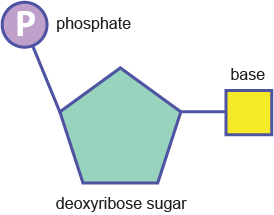
Nucleotides are made up of a sugar, phosphate, and..?
a)
nitrogenous base
b)
nucleic acid
c)
cholesterol
d)
fatty acid
154.
A five-carbon sugar found in DNA.
a)
ribose
b)
guanine
c)
deoxyribose
d)
helicase
155.
DNA polymerase is a(n)
a)
lipid
b)
enzyme
c)
sugar
d)
starch
156.
What are the 4 nitrogenous bases in DNA?
a)
adenine, thymine, cytoplasm, and guanine
b)
adenine, thymine cytosine, and guanine
c)
adenine, thymine, cytosine, and gylcerol
d)
adenine, thymine, cytosine, and glucose
157.
What does DNA stand for?
a)
Deoxyribonucleic acid
b)
Denitrogenous acid
c)
Deribonucleic acid
d)
Diribonucleic acid
158.
Which 2 molecules form the sides (backbone) of the DNA ladder?
a)
deoxyribose sugar and adenine
b)
deoxyribose sugar and a hydrogen bond
c)
deoxyribose sugar and the nucleus
d)
deoxyribose sugar and phosphate
159.
The enzyme that unzips the DNA to prepare for replication
a)
helicase
b)
replicase
c)
polymerase
d)
synthase
160.
A process in which DNA has the unique ability to make an exact copy of itself.
a)
Replication
b)
Translation
c)
Transcription
161.
Which of the following units are repeatedly joined together to form a strand of DNA?
a)
amino acids
b)
nucleotides
c)
fatty acids
d)
polysaccharides
162.
This picture is illustrating the ____ nature of DNA.
a)
anti-parallel
b)
deoxyribosic
c)
helical
d)
radioactive
163.
Polymerase is able to replicate the new DNA ______ along the leading strand.
a)
continuously
b)
only in short fragments
c)
very slowly
d)
prokaryotically
164.
Which enzyme is responsible for adding nucleotides?
a)
Topoisomerase
b)
DNA Polymerase
c)
Ligase
d)
Primase
165.
The enzyme that splits open the DNA creates what's called a fork - where the DNA separates into the lagging strand and the ______ strand.
a)
leading
b)
leveraging
c)
Okazaki
d)
ligase
166.
DNA replication turns one strand of DNA into two new strands of DNA. What percent of each new strand is the old strand?
a)
Half of each new DNA is the old DNA
b)
The old strand of DNA was digested, so none
c)
The new DNA is entirely made up of the old DNA
d)
About every sixth base comes from the old DNA
167.
Sometimes, DNA is called "semi-conservative." Why might this be?
a)
The old strand is "conserved" and used to make the new strands
b)
Uracil is "conserved" in that it is only used to make the new strands
c)
ATP is "conserved" via the usage of facilitated diffusion
d)
Ligase is "conserved" in that it is denatured by the process
168.
DNA replication results in two DNA molecules,
a)
each one with two original strands
b)
each one with two new strands
c)
each one with one new strand and one original strand
d)
one with two new strands and the other with two original strands
169.

direction new nucleotides are synthesized on the new strand

a)

5' to 3' (new nucleotides added to the 3' end)

b)

3' to 5' (new nucleotides added to the 5' end)

c)

3' to 5' (new nucleotides added to the 3' end)

d)

5' to 3' (new nucleotides added to the 5' end)

170.
Which sequence of DNA bases would pair with this partial strand
CAT TCA CTG
a)
ATG TGA CAG
b)
TAC ACT GTC
c)
GTA AGT GAC
d)
CAT TCA CTG
171.
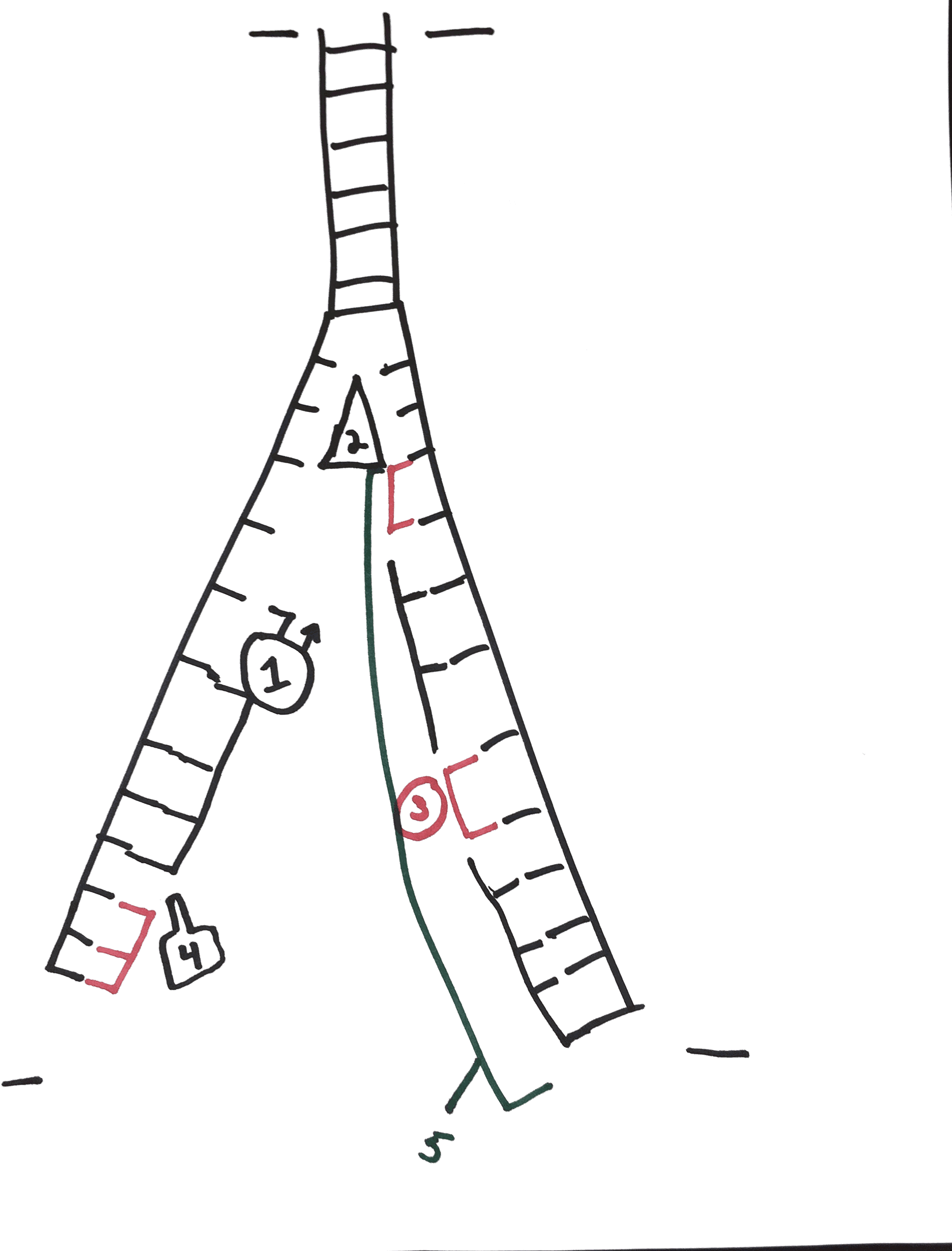
order of replication
a)
3, 4, 2, 1
b)
3, 1, 4, 2
c)
2, 1, 4, 3
d)
3, 4, 1, 2
172.

#3 setting Primers

a)

Ligase

b)

Helicase

c)

Polymerase

d)

Primase

173.
What is the order of succession shown in this figure?
a)
A, B, C, D
b)
B, A, D, C
c)
C, D, A, B
d)
D, A, B, C
174.
After a volcanic eruption, lava covers the land. What is the order that plants grow to repopulate the area?
a)
Lichens → Shrubs → Grasses → Trees
b)
Lichens → tree → shrubs→Grasses
c)
Grasses → Lichens → Shrubs → Trees
d)
Lichens → Grasses → Shrubs → Trees
175.
Final illustration (#8) shows
a)
pioneer species
b)
climax community
c)
only biotic factors
d)
only abiotic factors
176.
Succession type?
a)
primary succession
b)
secondary succession
c)
tertiary succession
d)
variable succession
177.
Succession type?
a)
primary succession
b)
secondary succession
c)
tertiary succession
d)
variable succession
178.
This is an example of...
a)
Climax communities
b)
Secondary succession
c)
Lichen
d)
Pioneer species
179.
A pioneer species is...
a)
a large organism
b)
the first organisms to adapt to a new environment 
c)
The best organism 
d)
Abiotic organisms 
180.
Succession that occurs in an area with NO SOIL
a)
ecological succession 
b)
primary succession 
c)
secondary succession
d)
pioneer speciles
181.
a stable ecological community that has reached equilibrium
a)
ecological succession 
b)
climax community
c)
secondary succession
d)
pioneer speciles
182.

What are the 3 types of transects?

a)

Quadrats, Line & Belt

b)

Line, Belt & Point

c)

Line, Point & Vertical

d)

Horizontal, Vertical & Diagonal

183.

What form of sampling selects members of a population at regular intervals?

a)

Random

b)

Stratified

c)

Systemic

184.

What form of sampling divides members of a population into categories and then samples proportionally?

a)

Random

b)

Stratified

c)

Systemic

185.

In which form of sampling do all members of a population have an equal chance of being selected.

a)

Random

b)

Stratified

c)

Systemic

186.

Which form of classifying organisms is based on morphology?

a)

Taxonomy

b)

Phylogenetics

187.

Which curve on this graph represents r-selected species? Select an answer from I, II or III.

a)

1

b)

2

c)

3

188.

Which column represents r-strategists? Answer column A or column B.

a)

Column A

b)

Column B

189.

Changes in a community along a factor such as altitude

a)

Succession

b)

Zonation

c)

Insolation

d)

Latitude

190.

Which classification system considers the reproductive cycle of organisms?

a)

K-selection

b)

Linnaean system

c)

molecular phylogeny

d)

cladistics

191.

Identify the percentage frequency of Cyclorana novaehollandiae

a)

14%

b)

20%

c)

26%

d)

30%

192.

Identify the species richness of Site A

a)

2

b)

6

c)

15

d)

78

193.

Identify which species shares the most common ancestory with Sarcophilus harrisii

a)

Perameles gunni

b)

Sminthopsis crassicaudata and Dasyurus maculatus

c)

Sminthopsis crassicaudata and Myrmecobius faciatus

d)

Myrmecobius faciatus and Dasyurus maculatus

194.

A field biologist is classifying an ecosystem that has the following characteristics:

  • mean annual biotemperature: 4 degree celcius
  • annual precipitation: 180 mm
  • potential evapotranspiration ratio (PER): 1.20

Identify the ecosystem from the life zone system shown

a)

dry scrub

b)

moist tundra

c)

desert

d)

dry tundra

195.

Certain species are dependent upon one another and so may be classified or grouped together, as conservation strategies must take management of both of them into account.

Identify the species interaction being described

a)

predation

b)

competition

c)

symbiosis

d)

disease

196.

Identify a method by which scientists can minimise bias in their randomised sampling of an ecosystem

a)

using transects

b)

using quadrats

c)

using random number generators

d)

recording the location of sample sites so that further surveys can be carried out

197.
a)

0.14

b)

0.86

c)

0.61

d)

1.0

198.

A field researcher noted the following characteristics of a surveyed area.

  • main vegetation: eucalyptus trees 5 - 10 m in height
  • average transects canopy cover: 39%

Use Specht's classification table to classify the plant community

a)

low open forest

b)

open forest

c)

tall open forest

d)

woodland

199.

The species that are more closely related are:

a)

Ephydtia muelleri and Laminaria digitata

b)

Ephydtia muelleri and Sargassum fusiforme

c)

Laminaria digitata and Sargassum fusiforme

d)

None of the species are related