
NEW
Font size
 Worksheets
Unit 1 & 2 Review - Geometry
Total questions: 25
Worksheet time: 38mins
How is the distance formula correctly written:
d = (y1 − y2)2 −(x2 − x1)2
d = (x2 − x1)2 + (y2 − y1 )2
d = (y1 − y2)2 + (x2 − x1)2
d = (x)2− (y)2

How is AB written in the distance formula?
d = (5−3)2 + (0−−2)2
d = (2−5)2 + (3 −0)2
d = (5−3)2 − (0−−2)2
d = (4−3)2 − (2−4)2

The distance formula is another way to write which of the following?
quadratic formula
slope formula
Pythagorean theorem
none of these answers
Find the midpoint: (3,9),(−1,−5)
(−1,−2)
(2,7)
(−2,−7)
(1,2)

Find the midpoint:
(−23,−25)
(−1,−3)
(−21,−25)
(−3,−1)
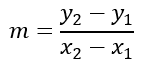
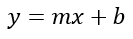
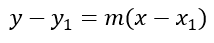
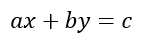
What is the slope formula?

Which of the following is true about the conditional statement below?
If a man is 7 feet tall, then he plays basketball.
Hypothesis: a man is 7 feet tall
Conclusion: he plays basketball
Hypothesis: IF a man is 7 feet tall
Conclusion: THEN he plays basketball
Hypothesis: THEN he plays basketball
Conclusion: IF a man is 7 feet tall
Hypothesis: he plays basketball
Conclusion: a man is 7 feet tall

Which of the following is true about the conditional statement below?
If you are in Alaska, then you are
cold.
Hypothesis: you are in Alaska
Conclusion: you are
cold
Hypothesis: IF you are in Alaska
Conclusion: THEN you are
cold
Hypothesis: THEN you are
cold
Conclusion: IF you are in Alaska
Hypothesis: you are
cold
Conclusion: you are in Alaska
Which of the following is the CONVERSE of the statement below?
If an object is a ring, then it is
made of gold.
If an object is made of gold, then it is a ring.
If an object is not a ring, then it is not made of god.
If an object is not made of gold, then it is not a ring.
There is no converse of the statement.

Which of the following is the CONVERSE of the statement below?
If an object is a bird, then it can fly.
If an object can fly, then it is a bird.
If an object is not a bird, then it cannot fly
If an object cannot fly, then it is not a bird
There is no converse of the statement
Which of the following is the INVERSE of the statement below?
If an object is a computer, then it
has a hard drive.
If an object is not a computer, then it does not have a hard drive.
If an object does not have a hard drive, then it is not a computer.
If an object has a hard drive, then it is a computer.
There is no inverse of the statement.

Which of the following is the INVERSE of the statement below?
If an object is a battery, then it is
rechargeable.
If an object is not a battery, then it is not
rechargeable.
If an object is rechargeable, then it is not a battery.
If an object is not rechargeable, then it is not a battery.
There is no inverse of the statement.

Which of the following is the CONTRAPOSITIVE of the statement below?
If a species walks on two feet, then
it is human.
If a species is not human, then it does not walk on two feet.
If a species is human, then it walks on two feet.
If a species does not walk on two feet, then it is not human.
There is no contrapositive of the statement.
Which of the following is the CONTRAPOSITIVE of the statement below?
If a gem is a ruby, then it is red.
If a gem is not red, then it is not a ruby.
If a gem is not a ruby, then it is not red.
If a gem is red, then it is a ruby.
There is no contrapositive statement.
Which of the following is the BICONDITIONAL of the statement below?
If there is lightning, then there is thunder.
If there is not lightning, then there is not thunder.
If there is thunder, then there is lightning.
There is lightning if and only if (iff) there is thunder.
There is no biconditional statement.

Which of the following is the BICONDITIONAL of the statement below?
If it is water, then it is wet.
If it is not wet, then it is not water.
If it is wet, then it is water.
It is water if and only if (iff) it is wet.
There is no biconditional statement.
If the conditional statement was "If an angle is acute, then it has a measure less than 90°.", which type of statement is the following?
An angle is acute if and only if (iff) it has a measure less than 90°.
Biconditional
Converse
Inverse
Contrapositive
If the conditional statement was "If an angle is acute, then it has a measure less than 90°.", which type of statement is the following?
If an angle does not have a measure less than 90°, then it is not acute.
Contrapositive
Converse
Biconditional
Inverse
If the conditional statement was "If an angle is acute, then it has a measure less than 90°.", which type of statement is the following?
If an angle has a measure less than 90°, then it is acute.
Converse
Contrapositive
Biconditional
Inverse
If the conditional statement was "If an angle is acute, then it has a measure less than 90°.", which type of statement is the following?
If an angle is not acute, then it does not have a measure less than 90°.
Inverse
Contrapositive
Biconditional
Converse

