
Font size
 Worksheets
Non-contact forces
Total questions: 35
Worksheet time: 35mins

An electric motor
does not involve magnetic fields
does not require a voltage source
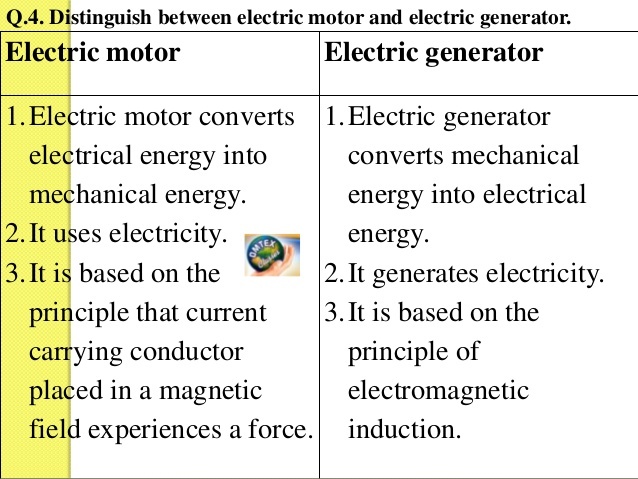
takes electrical energy and transfers it into mechanical energy
takes mechanical energy and transfers it into electrical energy.

An electric motor changes electrical energy to _________ energy.
mechanical
chemical
potential
electrical
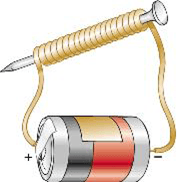

What type of device is being shown?
Electromagnet
Electric motor
Electric generator
Electromagnetic Induction

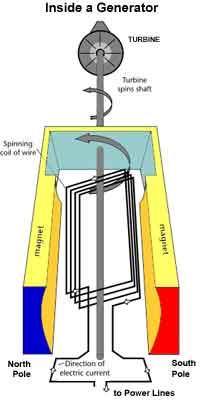
What type of device is shown?
Electromagnet
Simple Electric motor
Electric generator
Electromagnetic induction


What must the student do in the picture, in order to induce electricity and move the the galvonometer
nothing
move the magnet
add more loops of wire
unplug the galvnonmeter

What conclusion can you draw from this graph?
As current increases, magnetic strength decreases.
As current decreases, magnetic strength increases
As current increases, magnetic strength increases.
There is no relationship between current and magnetic strength.
Generators generate
electricity
mechanical energy
heat
chemical energy

Which electromagnet is stronger?
A
B

Which electromagnet is stronger?
A
B

What effect will changing the number of loops in the coil from 4 loops to 2 loops have when using the coil to induce current with the bar magnet, as shown?
The voltage will double, the current will be cut in half
The voltage will be cut in half, the current will be cut in half
The voltage will double, the current will double
There will be no effect
thermal; mechanical

Static electricity is an excess build up of __________.
protons
neutrons
electrons

An object becomes electrically charged when the atoms in the object gain or lose
electrons
protons
neutrons
all of the above
The difference between attraction and repulsion is that to attract is to pull something closer and repel is to push something away.
True
False

The force that causes objects with mass to attract one another.
Weight
Gravity
Mass
Magnetism

Why do planets orbit the Sun?
The Sun is the only celestial object that has a gravitational pull.
The Sun’s chemical composition makes it attract planets.
Only celestial bodies that emit light, like the Sun, can be at the center of an orbit.
The Sun is the most massive object in our solar system, so it exerts the greatest gravitational pull.


What TWO ways can you increase gravitational attraction between two objects?
Give the objects more mass
Make the objects closer to each other
Give the objects less mass
Make the objects further to each other
If air resistance and friction were removed, a hammer and a feather would fall
at different rates
the same rate

On what planet will this rover have the greatest MASS?
Mars
Earth
Jupiter
they are all the same
On what planet will this rover have the greatest WEIGHT?
Mercury
Venus
Saturn
they are all the same

This is a device used to increase or decrease voltage.
generator
motor
transformer
electromagnet

