wayground logo

Free Printable Worksheets

NEW

Font size

S
M
L
XL
Worksheets

Unit 1 Test A Review

Total questions: 42

Worksheet time: 41mins
Name
Class
Date
1.
Which biomolecule contains pastas and breads?
a)
Lipid
b)
Protein
c)
Nucleic Acid
d)
Carbohydrate
2.
Which biomolecule is made of nucleotides and contain you DNA?
a)
Carbohydrate
b)
Lipids
c)
Protein
d)
Nucleic Acid
3.
Which biomolecule helps form muscles?
a)
Nucleic Acid
b)
Carbohydrate
c)
Protein
d)
Lipids
4.
Which biomolecule is responsible for insulation and energy storage?
a)
Protein
b)
Nucleic Acid
c)
Lipid
d)
Carbohydrate
5.
What do monomers do?
a)
Bonds to make a Polymer
b)
Creates Protiens
c)
Stores energy
d)
Splits to make more cells
6.
The monomer of a protein is called...
a)
an amino acid
b)
a monosaccharide
c)
a fatty acid
d)
a nucleotide
7.
Building blocks of polymers.
a)
monomer
b)
polypeptide
c)
monosaccharide
d)
glycerol
8.
What is the function of a nucleic acid?
a)
Stores genetic information
b)
Stores energy
c)
Quick source of energy
d)
Builds structures
9.
Carbon, Hydrogen, Oxygen and Nitrogen are elements in what biomolecule?
a)
Carbohydrate
b)
Lipid
c)
Protein
d)
Nucleic acid
10.
What elements are common to all 4 biomolecules?
a)
Carbon, hydrogen, nitrogen
b)
Carbon, Nitrogen, Phosphorus
c)
Carbon, Hydrogen, Oxygen
d)
Carbon, Hydrogen, Phosphorus
11.

Which biomolecule makes up cell membranes?

a)

Protein

b)

Carbohydrate

c)

Lipid

d)

Nucleic acid

12.
What biomolecule do enzymes belong to? 
a)
Carbohydrate
b)
Lipid
c)
Nucleic Acid
d)
Protein
13.
Enzymes catalyze reactions by ___________ Activation Energy.
a)
Increasing
b)
Decreasing
14.
What 3 letters do enzymes typically end in?
a)
-ose
b)
-ase
c)
-ese
d)
-tic
15.
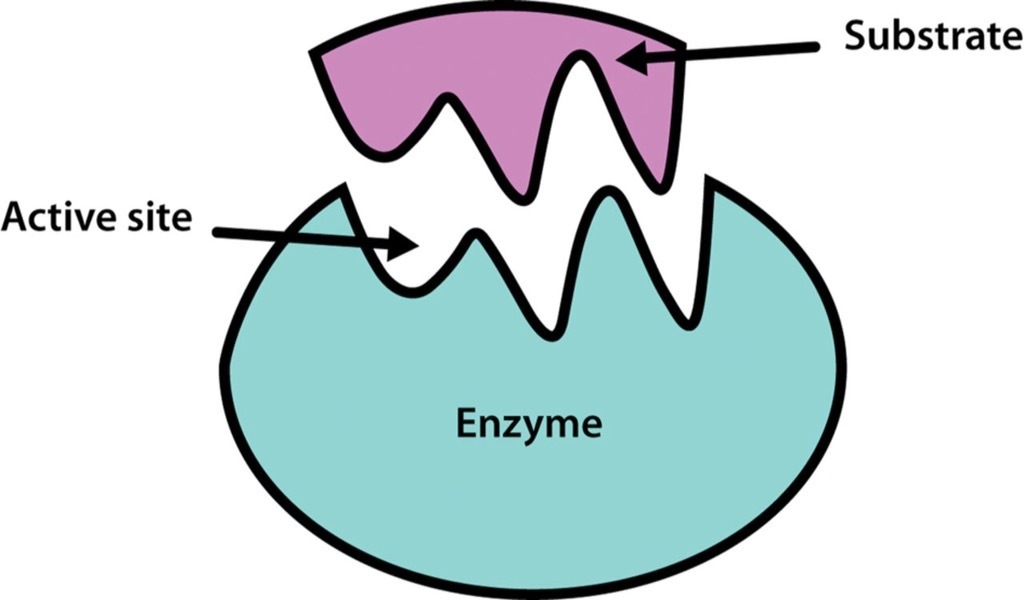
Any substance that is acted upon by an enzyme is called a(n)?
a)
Coenzyme
b)
Substrate
c)
Vitamin
d)
Polypeptide
16.
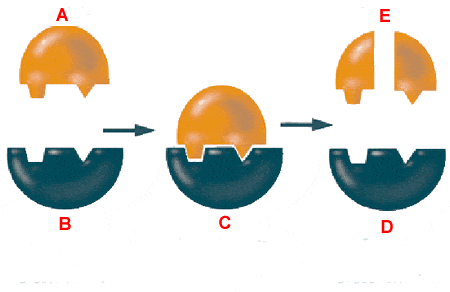
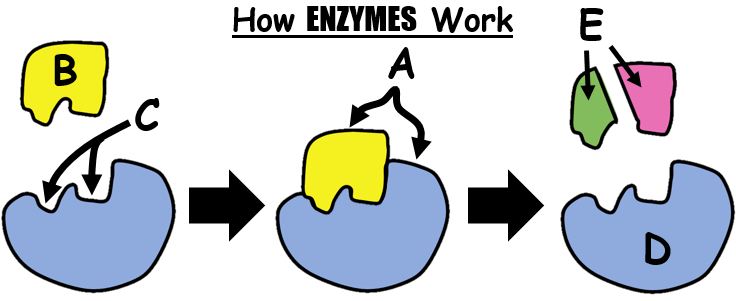
In the diagram, what is letter A? 
a)
product
b)
substrate
c)
enzyme-substrate complex
d)
active site
17.
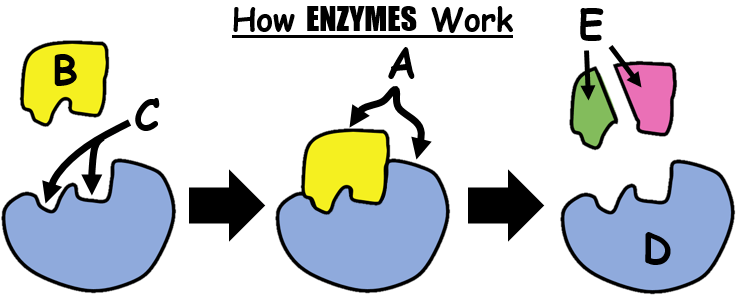
Letter D...
a)
active site
b)
enzyme
c)
substrate
d)
products
18.
Letter B...
a)
active site
b)
enzyme
c)
substrate
d)
products
19.
Enzymes provide a site where reactants called substrates can be brought together in an enzyme-catalyzed reaction. The site is called the
a)
enzyme substrate complex.
b)
reaction site.
c)
active site.
d)
lock and key.
20.
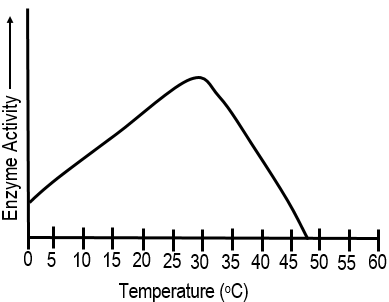
Based on the graph, what is the optimal temperature for this enzyme? 
a)
15oC
b)
40oC
c)
30oC
d)
35oC
21.

How does an enzymes shape relate to its function?

a)

the shape of the enzyme has no relation to its function

b)

the enzyme is shaped specially for certain substrates to perform a specific reaction

c)

the enzyme shape acts as a receptor to certain products

d)

the enzyme shape can fit into specific substrates to cease a reaction

22.

Changes in pH and temperature can ___________________ an enzyme which causes it to lose its shape and affects its function.

a)

puncture

b)

denature

c)

double

d)

delete

23.

What is a substance called if it speeds up a chemical reaction?

a)

reusable

b)

catalyst

c)

specific

d)

fragile

24.

Letter B...

a)

substrate

b)

active site

c)

enzyme

d)

products

25.

Letter E...

a)

active site

b)

products

c)

substrate

d)

enzyme

26.

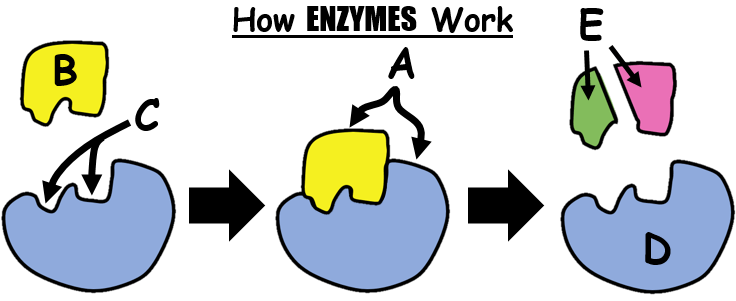
Letter C...

a)

products

b)

substrate

c)

enzymes

d)

active site

27.

What happens when enzymes are heated to a high temperature?

a)

The shape of the enzyme are changed and it denatures

b)

The enzymes die

c)

The enzymes' amino acid sequence changes

d)

The enzymes remain the same

28.

What happens to an enzyme when it is denatured?

a)

Activation energy is lowered

b)

It becomes stronger

c)

It loses its shape

d)

Activation energy is raised

29.

Polysaccharides break down into:

a)

amino acids

b)

monosaccharides

c)

glycerol

d)

nucleotides

30.

If you eat the entire order of fries, what are the 2 primary nutritional benefits that they can give your body?

a)

quick energy and stored energy

b)

muscle and bone building

c)

stored energy and nucleic acids

d)

quick energy and muscle building

31.

Which combination is incorrect?

a)

Carbohydrate

C, H, O

b)

Lipid

C,H,O

c)

Protein

C,H,O,N,P

d)

Nucleic Acid

C,H,O,N,P

32.

The monomers of nucleic acids are

a)

nucleotides

b)

amino acids

c)

glucose

d)

monosaccharides

33.

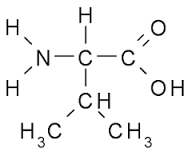
Which monomer is listed?

a)

amino acid

b)

glucose

c)

fatty acid

d)

triglyceride

34.

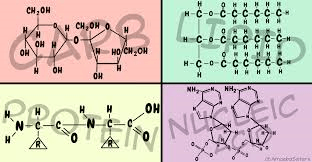
Which macromolecule is pictured?

a)

nucleic acid

b)

carbohydrate

c)

lipid

d)

protein

35.

Which macromolecule is pictured?

a)

carbohydrate

b)

lipid

c)

protein

d)

nucleic acid

36.
What is the function of a nucleic acid?
a)
Stores genetic information
b)
Stores energy
c)
Quick source of energy
d)
Builds structures
37.

The chemical agents responsible for breaking down large molecules of food nutrients intro smaller molecules are called:

a)

enzymes

b)

amino acids

c)

nucleic acids

d)

carbohydrates

38.

Which Graph shows that an enzyme works best at a pH of 4?

a)
b)
c)
d)
39.

Which graph shows that an enzyme works best at 15 degrees?

a)
b)
c)
d)
40.

Which Enzyme works best at a temperature of 37?

a)

Enzyme A

b)

Enzyme B

41.

Which Enzyme works best at warmer temperatures?

a)

Enzyme A

b)

Enzyme B

42.

What can we conclude from the graph? At a a pH of 3..

a)

Enzyme A works best

b)

Enzyme B works best

c)

Enzyme A works but low activity

d)

Enzyme B works but low activity