Wayground logo

Free Printable Worksheets

Font size

S
M
L
XL
Worksheets

Introduction to cell energies

Total questions: 40

Worksheet time: 52mins

Name
Class
Date
1.
This process releases chemical energy from sugars and other carbon-based molecules to make ATP when oxygen is present.
a)
photosynthesis
b)
light-independent reaction
c)
cellular respiration
d)
light-dependent reaction
2.

Glucose is broken down into pyruvic acid during which process

a)
Krebs cycle
b)
Calvin cycle
c)
Glycolysis
d)
Photosynthesis
3.
Aerobic respiration is different from anaerobic respiration in that aerobic respiration needs...
a)
chlorophyll
b)
carbon dioxide
c)
glucose
d)
oxygen
4.
What is the correct equation for cellular respiration?
a)
6O2 + C6H12O6 -> 6CO2 + 6H2O + Energy
b)
6O2 + C6H12O6 + Energy -> 6CO2 + 6H2O
c)
6CO2 + 6H2O -> 6O2 + C6H12O6 + Energy
d)
6CO2 + 6H2O + Energy -> 6O2 + C6H12O6
5.
Where does the Krebs Cycle take place?
a)
mitochondria
b)
chloroplast
c)
cytoplasm
d)
nucleus
6.

Which molecule isn't a high energy hydrogen carrier?

a)
FADH2
b)
NADH
c)
oxygen
7.
The energy in ATP is stored 
a)
in the bond between the second and third phosphate
b)
in the bond between the first and second phosphate
c)
in the bond between the adenosine and the first phosphate
d)
I like turtles
8.
The splitting of the glucose molecule is called?
a)
synthesis
b)
denaturalization
c)
glycolysis
d)
dissolving
9.

What are the reactants (taken into) of cellular respiration? (Mark all of them!)

a)

oxygen

b)

glucose

c)

carbon dioxide

d)

water

e)

energy

10.

what are the reactant of Krebs cycle

a)

pyruvate and NADH only

b)

acetyl CoA and oxygen

c)

NADH and FADH2

11.

What is the role of Chlorophyll in photosynthesis?

a)

It breaks the hydrogen bonds in water molecules

b)

It converts light energy into chemical energy contained in bonds

c)

It releases absorbs green light waves and reflects all of the other ones

d)

it provides energy for the light dependent reactions

12.

The overall reactions of photosynthesis are best summarized as …

a)

12 CO2 + 6 H2O → C6H12O6 + 12 O2 + 6 H2O.

b)

C6H12O6 + 6 O2 + 6 H2O → 6 CO2 + 12 H2O.

c)

6 CO2 + 12 H2O → C6H12O6 + 6 O2 + 6 H2O.

d)

6 CO2 + 12 H2O → C6H12O6 + 12 O2.

13.

Select all that are raw materials for Photosynthesis.

a)

Water

b)

Carbon Dioxide

c)

Oxygen

d)

Sunlight (Light Energy)

e)

Glucose (Sugar/food)

14.
Which choice correctly shows the gases that enter and exit plants during photosynthesis?
a)
Enter: Oxygen
Exit: Carbon dioxide
b)
Enter: Water vapor
Exit: Glucose
c)
Enter: Carbon dioxide
Exit: Oxygen
d)
Enter: Light
Exit: Water vapor
15.
Which terms best describe heterotrophs?
a)
Plants; producers
b)
Animals; producers
c)
Plants; consumers
d)
Animals; consumers
16.
Which terms best describe autotrophs?
a)
Plants; producers
b)
Animals; producers
c)
Plants; consumers
d)
Animals; consumers
17.
Which type of organisms perform photosynthesis?
a)
Autotrophs
b)
Heterotrophs
18.

An organism that obtains organic food molecules by eating other organisms or their byproducts and that cannot synthesize organic compounds from inorganic material.

a)

Autotrophs

b)

Heterotroph

c)

Omnitrophs

d)

Herbitrophs

19.

An organism that produces its own nutrients from inorganic substances or from the environment instead of consuming other organisms.

a)

Autotrophs

b)

Heterotroph

c)

Omnitrophs

d)

Herbitrophs

20.
The Kreb's Cycle is also known as:
a)
The Pyruvic Cycle
b)
The Respirational Cycle
c)
The Citric Acid Cycle
d)
The Berk Cycle
21.
Which of the following is not an end product of the Kreb's cycle?
a)
FADH2
b)
CO2
c)
pyruvate
d)
ATP
22.
Which process is the largest contributor to the release of CO2 
a)
Citric Acid Cycle or Krebs Cycle
b)
Pyruvate Oxidation
c)
Glycolysis
d)
Oxidative Phosphorylation 
23.
Before entering Krebs Cycle, pyruvate is:
a)
Oxidized
b)
Reduced
c)
Isomerized to Acetyl-CoA
d)
Phosphorylated
24.

What is the first stage of the Calvin Cycle?

a)

Carbon fixation

b)

Reduction

c)

Regeneration of RUBP

d)

Primary

25.

What is the second stage of the Calvin Cycle?

a)

Carbon fixation

b)

Reduction

c)

Regeneration of RUBP

d)

Secondary

26.
Which is not a phase of the Calvin Cycle?
a)
Carbon Fixation
b)
Reduction
c)
Regeneration of RuBP
d)
Regeneration of Oxaloacetate
27.
What are the parts of the ATP molecule?
a)
adenine, thylakoids, stroma
b)
stroma, grana, chlorophyll
c)
adenine, ribose, phosphate groups
d)
NADH, NAHPH, FADH
28.
Which of the following results in the storage of energy in terms of the ATP/ADP cycle?
a)
The breaking of the bond between the 5-carbon sugar and the 1st phosphate group
b)
The addition of a phosphate group
c)
The removal of a phosphate group
d)
The addition of glucose 
29.

What is the process through which the majority of ATP is produced?

a)

Photosynthesis

b)

Respiration

c)

Exercise

d)

Nucleotides

30.
Energy is released from ATP when _______________________.

a)
a phosphate group is added
b)
adenine bonds to ribose
c)
a phosphate group is removed
d)
ATP is exposed to sunlight
31.

The process of meiosis is depicted in the diagram below.

The daughter cells produced during meiosis are used for what purpose?

a)

growth

b)

tissue repair

c)

di􀃠erentiation

d)

reproduction

32.
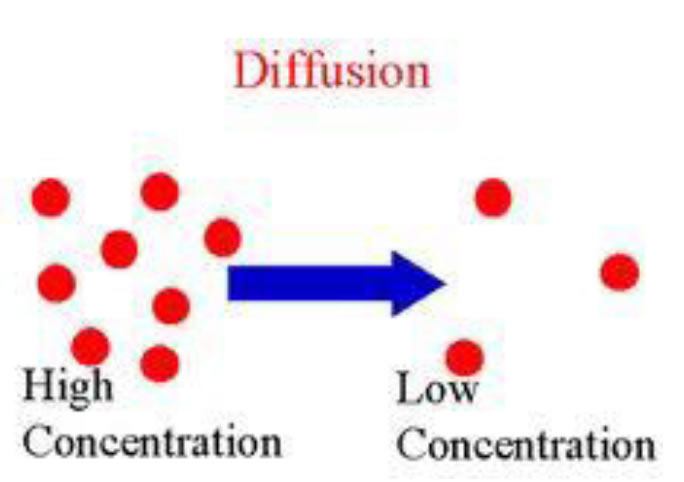
Movement of particles from high to low concentration. 
a)
Passive Transport
b)
Active Transport
33.
Osmosis is a form of ______________. 
a)
Passive Transport
b)
Active Transport
34.
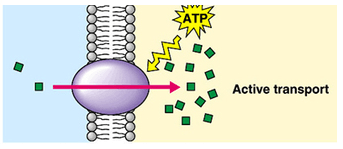
ATP is a form of energy.
a)
Passive Transport
b)
Active Transport
35.

Humans have ________ pairs of chromosomes.

a)

21

b)

23

c)

46

d)

None of the above

36.

The purpose of meiosis is to form ________ cells.

a)

body

b)

sex

c)

somatic

d)

brain

37.
Mitosis produces cells with haploid or diploid number of chromosomes?
a)
Haploid
b)
Diploid
38.
Body cells have diploid or haploid number of chromosomes?
a)
Haploid
b)
Diploid
39.
Which process and type of resulting cells are represented?
a)
mitosis, gametes
b)
mitosis, body cells
c)
meiosis, gametes
d)
meiosis, body cells
40.
Which of the following best describes meiosis?
a)
It is carried out in all tissues that require cell replacement. 
b)
It occurs only in cells in the reproductive structures of organisms. 
c)
It happens in all tissues except the brain and spinal cord
d)
It is the first stage of mitosis